
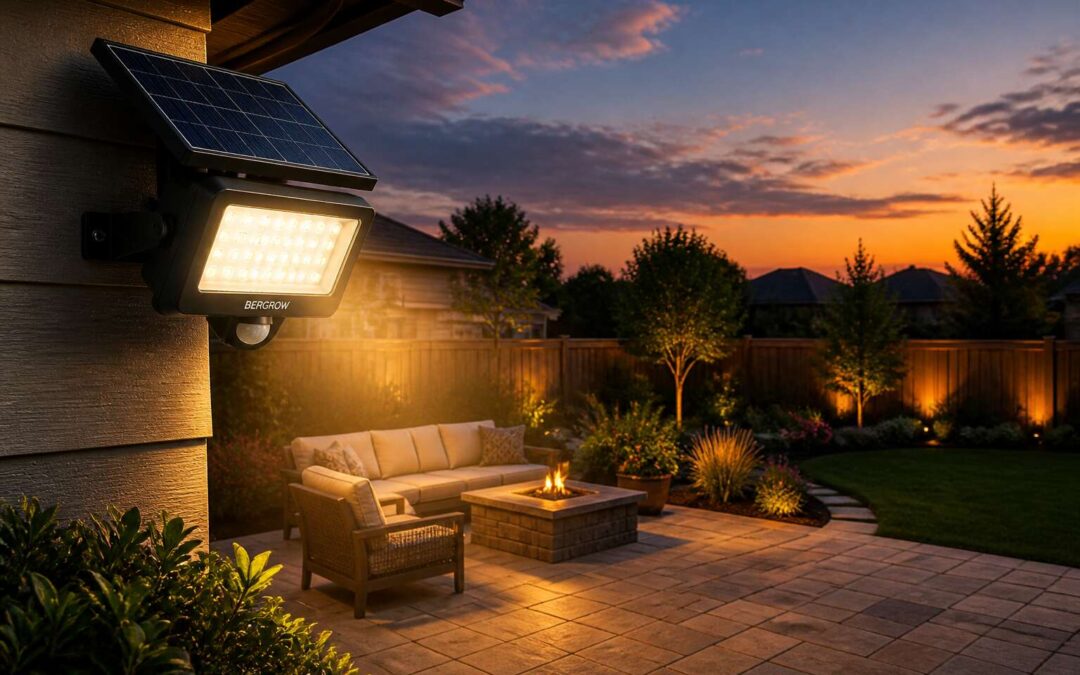
Understanding Solar Floodlight Technology
Solar Panels: How They Convert Sunlight to Power
The sun beats down on South African farms and townships with a ferocity that makes solar adoption a natural fit. Inside each panel, boron and phosphorus layers create an electric field. When photons strike the silicon, they dislodge electrons, forcing them to travel through a circuit. This direct current flows into a battery, storing the energy for evening use.
Modern flood lights outdoor solar rely on monocrystalline or polycrystalline cells. Their efficiency depends on:
- The angle of installation relative to the equator
- Local cloud cover and seasonal light variations
These factors determine how long your flood lights outdoor solar will burn after sunset. In regions like the Highveld, winter sunlight remains abundant, so a modest panel often suffices. Coastal mist can reduce output, requiring larger arrays for the same performance.
Battery Storage and Capacity Explained
Most buyers examine the panel wattage, yet the battery determines whether your flood lights outdoor solar survive a Karoo winter night. I have watched too many installations fail because the owner ignored the storage side. Battery capacity is measured in ampere hours, but that number alone misleads. A 20 Ah battery attached to a 30 watt LED array drains in hours. The same battery powers a 10 watt fixture all night.
- Sealed lead acid batteries accept roughly 500 cycles if you respect the 50% discharge limit.
- Lithium iron phosphate cells offer 2,000 or more cycles and tolerate an 80% drain.
Depth of discharge changes the real cost per year, and most buyers never account for it! Multiply the usable capacity by the system voltage to see actual watt hours. That figure, not the advertised lumens, tells you how long your flood lights outdoor solar will run.
LED Chips and Lumens for Brightness
One lumen per watt was once the ceiling. Today, quality LED chips in flood lights outdoor solar deliver 150 lumens per watt or more. That gap changes everything about what you can expect from a fixture!
Lumens measure total light emitted. Lux measures what reaches the ground. A 10 watt LED producing 1,500 lumens looks identical to a 20 watt halogen on paper, but the chip quality and beam pattern decide whether that light lands where you need it. This is what separates a good chip from a poor one:
– Luminous efficacy: above 130 lumens per watt is worth paying for
– Colour rendering index: 70 or higher suits outdoor security work
– Beam angle: narrow for perimeter glare, wide for soft yard coverage
A flood lights outdoor solar unit with an inflated lumen rating and a weak chip will disappoint. The chip controls colour, heat, and lifespan. Do not buy on wattage alone.
Types of Solar Floodlights: Integrated vs. Split Design
South Africa receives some of the most generous solar irradiance on the planet, yet hardware choice often comes down to a single decision: integrated versus split design. Integrated flood lights outdoor solar cram the panel, battery, sensor, and LED into one slim housing. They install in minutes, ideal for a boundary wall or gate. Split designs separate the panel from the lamp unit, allowing the panel to face north while the light aims where intruders might approach. That separation matters on a property with a shaded courtyard or a high roof overhang.
- Integrated units reduce cabling and theft risk
- Split units allow larger panels and higher capacity batteries
For a South African property, split designs often outperform integrated flood lights outdoor solar when the sun path is obstructed. Integrated models win on speed of installation. The split approach offers flexibility that suits real-world shading patterns.
Key Factors for Choosing Solar Floodlights
Determining the Right Brightness Level for Your Space
South Africa gets more than 2,500 hours of sunshine a year, yet many flood lights outdoor solar fail because brightness is chosen by guesswork. The right level depends on what the light must do, not on the biggest number on the box.
Start by measuring the distance between the fixture and the ground. A light mounted at 4 metres needs a different beam angle than one at 2.5 metres. Factor in ambient light. A farm needs more raw output than a driveway with a streetlamp nearby.
For a practical checklist:
- Identify the surface: a wall, parking bay, or walkway.
- Note the surface reflectance. Dark asphalt absorbs light; pale plaster bounces it back.
- Decide whether you want a broad wash or a focused spot.
With those details, brightness becomes a calculation. Coverage area divided by beam spread, adjusted for mounting height, tells you what to expect from flood lights outdoor solar.
Motion Sensors and Lighting Modes
In South Africa, a motion sensor can cut energy draw by up to 70%, turning one charge into three nights of surveillance! The trick is matching the sensor’s range to the actual path of movement. A beam that sweeps a gate is useless if the sensor picks up cats on the pavement.
Lighting modes matter just as much. Some flood lights outdoor solar offer a dimmed standby glow that jumps to full brightness on detection. Others flip from off to on, which startles but saves power. I have seen setups where the mode is set once and never revisited, even as trees grow.
Evaluate these sensor and mode factors:
- Detection angle: wider covers more ground but triggers more false alarms.
- Standby brightness: a 10% glow extends battery life without total darkness.
- Duration after trigger: 15 seconds suits a doorway; 60 seconds suits a yard.
The best flood lights outdoor solar choice depends on whether you want to deter, welcome, or illuminate.
Weather Resistance: IP Ratings and Durability
The IP rating is the small print that determines whether your flood lights outdoor solar survive a Highveld summer. Most units claim IP65, which stops dust and low-pressure water jets. But in South Africa, the real enemies are UV radiation and condensation. A unit mounted on a north-facing wall bakes all afternoon, then cools at night. The swing pulls humid air inside the housing.
Material choices affect how long the unit resists that stress:
- Polycarbonate casings handle UV exposure without becoming brittle.
- Aluminium bodies dissipate LED heat, slowing driver degradation.
- Tempered glass rejects hail that cracks plain acrylic.
The weakest point is still the lens gasket. Once that rubber seal hardens, moisture enters and corrodes the solder joints. I have seen units fail within one season because of that seal. Water damage accounts for most early failures in flood lights outdoor solar installations along the coast, where salt air in Durban attacks exposed screws and Cape Town’s winter rain tests every seam.
Adjustable Panels and Mounting Flexibility
The angle of your fixture matters more than the wattage. A fixed unit wastes half its potential. Pick a flood light with a head that tilts and swivels, especially on uneven South African plots where mounting surfaces are never square.
Adjustable panels let you aim the solar collector at true north while directing the lamp where needed. On a Free State farm, I have installed units with the panel facing east for morning sun while the lamp covers the kraal at night. Flood lights outdoor solar need this flexibility.
- Check the bracket uses stainless steel bolts.
- Confirm the tilt range exceeds 180 degrees.
- Verify the panel rotates independently.
Mounting height changes detection angles and beam spread. A lower mount gives a wider pool but invites theft. A high mount reduces glare but needs a stronger bracket. For flood lights outdoor solar, choose arms with multiple pre-drilled holes.
Battery Life and Recharge Time Considerations
A battery’s true measure is not how long it glows on a summer night, but how it behaves on the third day of winter cloud. Solar flood lights outdoor solar need cells that recover quickly from deep discharge. The recharge window shrinks when panels face a dusty Free State horizon, so a unit that needs eight hours of full sun is a liability.
Lithium iron phosphate chemistry handles heat, and its charge curve stays predictable. Check the time from empty to full under typical irradiance, not the lab number. Also verify the battery management system allows partial charging without degradation.
Some numbers to compare:
– Charging current in amperes influences real-world recovery speed.
– Cutoff voltage determines how much usable capacity remains overnight.
Those figures reveal whether the light will still flicker at 3 a.m. when the grid is far away.
Installation and Placement Strategies
Selecting the Optimal Mounting Height
Mounting height determines what your flood lights outdoor solar can actually illuminate. Set them too low, and you create blinding glare while leaving the ground in shadow. Too high, and you wash light across rooftops instead of the intended surfaces. A practical rule: position the fixture so the centre of the beam lands on the middle of the target area. For secure perimeter lighting, that often means 2.5 to 3 metres above ground. For large driveways or loading bays, go higher, around 4 to 5 metres, but then widen the spacing between units.
Consider these adjustments:
- For pathways, aim for 2 to 2.5 metres.
- For entrances and doorways, 3 metres works best.
- For open yards, 4 metres or more prevents dark pockets.
These flood lights outdoor solar perform best when the mounting height matches the beam angle. The right height reduces glare, improves coverage, and keeps the fixture out of easy reach.
Angling the Solar Panel for Maximum Sun Exposure
The sun’s arc stays north of the sky at midday in South Africa. Your flood lights outdoor solar panel must face that truth. Point the panel due north, then angle it to match your latitude. Johannesburg sits near 26 degrees south, Cape Town around 34 degrees, Durban about 30 degrees. Each degree of tilt error reduces winter charging and shortens the runtime of your flood lights outdoor solar.
Shade remains the silent enemy of solar performance. A single wall or roof edge can starve the panel during morning hours. Split designs let you mount the panel in open sky while the light guards your doorway. Integrated units demand sharper placement. South-facing walls should be avoided entirely.
June’s low winter sun demands a steeper tilt. December calls for a flatter angle. A midpoint works for most seasons:
- Johannesburg: 26 degrees fixed, or adjust from 15 to 35
- Cape Town: 34 degrees fixed, or adjust from 25 to 40
- Durban: 30 degrees fixed, or adjust from 20 to 38
Avoiding Common Installation Mistakes
Most installations fail before the sun rises. A panel mounted too low collects dust and grime. A light fixed under an eave traps heat, which shortens battery life. Placement details separate reliable flood lights outdoor solar from units that constantly test your patience.
- Fixing the lamp where it cannot shed water, allowing moisture to reach the seal.
- Mounting the panel where reflected glare causes overheating.
- Using undersized anchors that loosen with seasonal temperature shifts.
Split designs let the panel sit in open air while the lamp guards the entrance. Integrated units need sharper judgment, especially in coastal regions where salt air accelerates corrosion. The mounting surface must breathe, the wires must stay dry, and the fixture must never sit in still air.
Wiring-Free and Wireless Setup Tips
South Africa’s sun is a free utility, yet most wiring failures come from cables, not panels. Wireless flood lights outdoor solar remove that failure point entirely. A split system places the PV cell in full sun while the lamp guards a doorway. No trenching, no conduit, no electrician. The only contract you sign is with daylight.
- Point the panel north for winter sun. Northern exposure suits the southern hemisphere.
- Keep the lamp within five meters of the panel to avoid voltage drop.
- Use stainless steel clips for cables, not plastic ties that crack in UV.
Mount the panel at forty degrees for Cape Town’s latitude, flatter for Durban’s humidity. The wireless design lets you move the lamp after a test night without drilling new holes. That agility is the hidden advantage.
Using Timers and Remote Controls Effectively
A timer makes your flood lights outdoor solar dependable without attention. Set dusk to dawn for security, or narrow the window to the hours when activity peaks. The remote control adjusts from your chair, not a ladder.
Programme the lamp to burn fully at nine, dim by midnight, extinguish by four. That preserves battery for the grey Cape winter. Match each unit to its own remote frequency, or one signal may wake the whole yard.
- Schedule maximum brightness for the first two hours after dusk
- Lower output when human traffic thins
- Test remote range before fixing the lamp, walls swallow signal
Placement alters timer logic. A lamp aimed at the street ignores the pathway where you walk. Point the sensor away from passing headlights, then use the remote override for evening guests.
Maintenance and Longevity
Cleaning the Solar Panel and Light Fixture
The South African sun is relentless, and so is the dust it bakes onto surfaces. Regular cleaning keeps your flood lights outdoor solar at their peak. Grime on the photovoltaic panel blocks sunlight and reduces charging efficiency. Wipe the panel every few weeks with a soft, damp cloth and mild detergent. Avoid harsh chemicals or abrasive pads, which scratch the glass and dim output.
The light fixture needs similar attention. A dusty lens cuts illumination markedly. When you clean the panel, give the LED housing a wipe too. Useful supplies:
- A microfiber cloth for streak-free cleaning
- Mild dish soap mixed with warm water
- A soft brush for stubborn corner grime
Check for loose screws and dried-out seals during the same session, as a secure housing is the best defence against moisture intrusion. Doing this every few months extends the life of your flood lights outdoor solar setup.
Replacing Batteries and Extending Lifespan
Most lithium batteries in flood lights outdoor solar start losing capacity after roughly 500 charge cycles. A unit that cycles daily reaches that mark in under two years. When your light dims earlier each evening, the battery is usually the culprit.
Swapping the battery is straightforward on integrated designs, though you will need to unseal the housing. A standard 18650 cell costs a fraction of a new fixture. On split models, access is easier, but check the connector polarity.
Common indicators that a battery is failing:
- Runtime shrinks even after a full day of sun
- The panel charges, but the light flickers
- Swollen or leaking cells
Avoid letting the battery drain completely. Most controllers cut off at a safe voltage, but partial discharge cycles keep the chemistry stable. Heat degrades cells, so shade the unit during peak summer afternoons. A battery that lasts three years in Johannesburg can fail in eighteen months in Upington, so keep the flood lights outdoor solar away from direct roof heat.
Troubleshooting Flickering or Dim Lights
In my experience, flickering usually means a loose connection, not a dying battery. Wind vibration can loosen screw terminals over time. Open the housing and check each contact point. Tighten them gently. A broken solder joint on the LED board causes the same stutter. A replacement driver board is often cheaper than a new unit.
Dimming during the early evening may point to the photocell. Oxidation on the sensor’s glass reduces sensitivity. The light then runs at partial brightness. Rub the sensor with fine sandpaper or replace it!
Check these in order:
- Loose wiring between the panel and controller.
- Corroded contacts on the LED module.
- Photocell obstruction.
These issues affect any flood lights outdoor solar, especially near the coast.
Seasonal Care and Storage Advice
South African winters bring dust and morning dew. I have seen flood lights outdoor solar stop performing because the fixture sat ignored for three months. Seasonal care prevents neglect, it does not fix failure.
When summer storms arrive, check the seals around the lens and controller box. Water finds the smallest gap! Adjust the panel angle as the sun’s arc shifts. A fixed position that worked in March may miss the afternoon light by June. Two checks keep the mounting solid:
- Clear leaves from the mounting bracket.
- Tighten pivot bolts after strong wind.
Storage advice applies to units removed during renovation or long overcast periods. Keep the battery connected if you plan to use the unit within a month; a full discharge shortens its life. For longer storage, disconnect and label the wires. These routines extend the service life of flood lights outdoor solar without any replacement parts.
Top Applications and Use Cases
Enhancing Home Security at Entry Points and Driveways
At the front gate, darkness covers more than the garden path. A visitor stays a stranger until the flood lights outdoor solar catch them in their beam. This shift from shadow to light often deters trouble before it starts.
Driveways present their own challenge. Long shadows stretch across gravel and concrete, and car headlights create moving pools of glare. Positioned correctly, solar floodlights eliminate these blind spots and cover the entire approach in even light.
Think about the spaces that matter most:
- Garage entrances where vehicles pause and doors swing open
- Side passages that connect the front of the home to the back
- Gate motors and access points where people tend to linger
Each location needs a different beam angle. The goal stays the same, to remove any place where someone could hide.
Illuminating Gardens, Patios, and Backyards
By late afternoon, the braai area becomes the heart of a South African home, but once the sun drops, that space turns to shadow without dependable lighting. Flood lights outdoor solar keep the patio functional and welcoming from the first braai of spring to the last swim of autumn.
Walk the edges of your yard and note what sits in darkness. In my own setup, the herb garden beside the steps and the bench under the peach tree were invisible after sunset. Each space deserves its own wash of light, positioned to avoid harsh glare while preserving the evening mood.
A few placements reward attention:
- Patio ceilings and pergolas for even ambient spread
- Garden beds with low-mounted fixtures to highlight texture
- Paths and stepping stones with narrow beams for safe passage
When the panels absorb winter sun, the same light reaches every corner of the backyard.
Commercial Uses for Parking Lots and Pathways
Crime and collisions share one preventable cause: darkness. Commercial properties live this reality every evening. Facility managers know that a shadowed lot is a risk. Safer spaces attract more customers. Dimly lit corridors of asphalt invite trouble.
Flood lights outdoor solar remove the barriers that keep parking areas dark. No trenching, no electrical bills, no dependence on municipal supply. Load shedding matters less when fixtures store their own energy during the day.
Consider these high-value placements:
- Parking lot perimeters where theft risks spike after dark
- Crosswalks and pedestrian lanes linking the lot to the entrance
- Stairwells and ramps that turn treacherous in low light
Each installation serves a different purpose. The common denominator is consistent illumination.
Rural and Off-Grid Lighting Solutions
Rural South Africa has a peculiar relationship with darkness. The grid either forgets you exist or schedules your electricity to disappear. Farms, game lodges, and remote homesteads have learned to expect little from municipal supply. This is where flood lights outdoor solar become less of a luxury and more of a survival tool.
Consider the farmer checking livestock at midnight. A torch in one hand and a rifle in the other. One dropped bolt and the search begins. Solar floodlights remove that problem. They charge during the day and illuminate at night, independent of Eskom.
- Water pumps and borehole sites, where dropped tools vanish into darkness
- Outbuildings and feed storage, far from the main house
- Game viewing decks, where guests want drama without the diesel generator hum
The best part, these fixtures keep working when municipal supply takes its scheduled nap.