
Exploring the Flood Light Selection at Harbor Freight
Types of Flood Lights Carried by Harbor Freight
Hardware aisles carry a peculiar tension. When examining flood lights at harbor freight, the sheer range can unnerve the unprepared shopper. I have stood in that aisle more times than I care to admit. The distinction between halogen, LED, and rechargeable units exceeds simple wattage. It is a calculation based on your circumstances.
- Portable tripod flood lights for construction sites
- Magnetic-base work lights for tight vehicle bays
- High-lumen LED flood lights with adjustable heads
Each category serves a distinct function for illumination. LED models promise years of steady output, while halogen units deliver immediate brightness with higher energy consumption. For a South African home contending with load shedding, the battery-powered portable options carry unspoken urgency. They represent readiness when the grid falters. Understanding flood lights at harbor freight means recognizing the right unit depends on what kind of darkness you face.
Key Features to Compare Before Buying
Eskom’s load shedding timetable has made the average South African household intimately familiar with darkness. Yet when I inspect flood lights at harbor freight, I notice most shoppers fixate on lumen counts while ignoring the specifications that actually determine performance.
A beam angle of 120 degrees floods a backyard, while a narrow 60 degree throw reaches a driveway’s far corner. Colour temperature matters too: 4000K renders skin tones kindly, whereas 6500K flattens facial features. The quieter details deserve equal attention.
- IP65 versus IP67 waterproofing determines whether your unit survives a Highveld thunderstorm
- Battery chemistry: lithium phosphate tolerates heat better than standard lithium ion
- Charging time on a generator becomes a strategic variable during extended outages
These comparisons carry weight beyond the checkout counter. The flood lights at harbor freight reward shoppers who read the fine print.
LED vs. Halogen Flood Lights: Which Is Right for You
Standing before the shelf, the decision between LED and halogen flood lights at harbor freight comes down to how you measure a moment. Halogen delivers that familiar amber glow, a light that makes faces look human, but it draws current heavily. LED units sip power, and newer chips render colour with surprising fidelity, though the upfront price is higher.
Consider what happens when Eskom cuts the grid. Halogen burns bright for a short burst, perfect for quick tasks! LED stretches a battery’s charge across the whole evening.
- Halogen: instant full brightness, cheap to buy, short lifespan
- LED: slower warm-up in cold weather, higher cost, years of service
That comparison matters more than lumen counts. The real question is how each unit behaves after midnight, when the inverter hums and the Highveld air cools. I have watched halogen units glow steadily, and I have watched LED flood lights at harbor freight hold firm where others fade.
Understanding Lumens, Wattage, and Beam Distance
Lumens, wattage and beam distance look like straightforward figures until you test them after dark. Lumens measure total light emitted, wattage measures power drawn, and beam distance measures how far that light travels before fading to uselessness. A 6000 lumen unit may throw a wide, soft pool across your yard, while a 3000 lumen flood light with a focused reflector reaches the treeline clearly.
I have compared flood lights at harbor freight side by side on a Karoo plot. The advertised beam distance often assumes perfect darkness, clean lenses and a fully charged battery. Real conditions cut that figure sharply, which explains why two lights with identical wattage can perform so differently.
- Lumens tell you about total output, not intensity.
- Beam distance tells you about reach, not spread.
- Wattage tells you about draw, not brightness.
Harbor Freight lists these numbers clearly, but reading them together matters more than any single specification.
Portable vs. Mounted Flood Light Designs
The flood lights at harbor freight split into two practical categories. Portable models carry their own stands and handles, ready to move from a garden project to a broken-down bakkie. Mounted designs attach to walls or poles and operate as fixed installations.
I prefer portables for their adaptability. A tripod unit turns a dark corner of the Karoo into a working circle. Mounted lights need wiring and a stable location, but they provide consistent coverage without setup.
- Portable flood lights offer quick repositioning and adjustable height.
- Mounted units suit driveways, farmyards, and perimeter security.
The right flood lights at harbor freight depend on whether your darkness moves or stays still. I have used both across the Free State, and each suits a different schedule.
Top-Rated Flood Lights Available at Harbor Freight
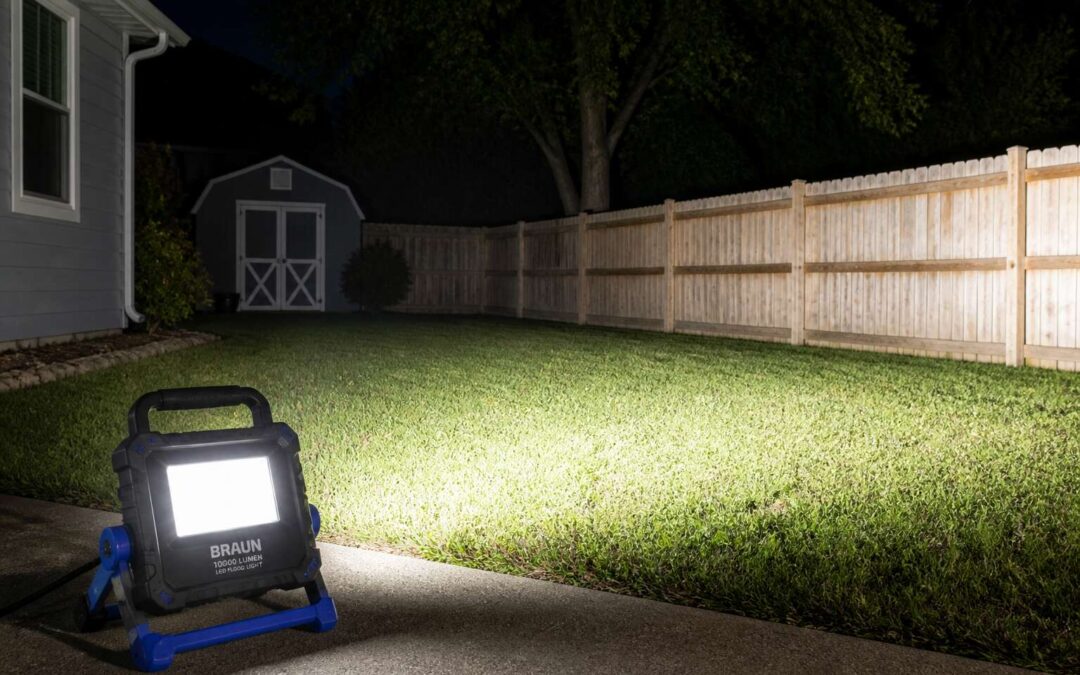
Reviewing the Braun 1000 Lumen Portable Flood Light
Among flood lights at harbor freight, the Braun 1000 Lumen Portable Flood Light performs with quiet efficiency. Its beam covers a modest area without harsh glare. I used it to fix a gate after sunset, and the light remained steady for hours.
This model offers a sturdy base, a simple toggle, and a handle that fits the palm. The casing feels durable enough for workshop dust or light rain.
- Battery lasts through extended tasks
- Weight encourages easy positioning
- Design allows hands-free operation
Compared with bulky mounted units, the Braun simplifies movement. It answers the call when fixed wiring is unavailable.
The Apollo 4000 Lumen Dual-Head Flood Light: A Deep Dive
The Apollo 4000 Lumen Dual-Head Flood Light from Harbor Freight handles wide open spaces with a clear output. Its dual heads pivot independently, so you can cover a full room or focus on one machine. I used this unit to run a roofing job after sunset, and the beam held without flicker.
The telescopic stand raises the fixture above eye level, reducing glare. A sturdy AC cord powers it, which means permanent placement near an outlet works best. The metal casing feels solid in hand.
- Independent head rotation for directional control
- Telescopic stand for height adjustment
- Direct AC power for consistent output
Among flood lights at harbor freight, the Apollo 4000 suits fixed tasks that require stable, wide illumination. It does not fold into a compact package, but it offers reliability where temporary wiring is absent.
Budget-Friendly Options Under $30
Hunting for a bargain among the flood lights at harbor freight means accepting trade-offs. Under $30, you are not getting aircraft-grade metal or a beam that lights the whole block. You get a compact unit for small jobs, and that works.
Check the lumen count and runtime before buying. Many cheap models boost peak brightness but die fast. A 90 degree swivel head makes a big difference when you wedge the light into a tight spot.
- Braun 500 lumen folding work light, a crowd favourite
- Apollo 350 lumen magnetic utility light, great for metal surfaces
These flood lights at harbor freight cost less than a pizzeria dinner, yet they hold up for occasional weekend use. Their plastic housings feel flimsy, but the LEDs survive bumps.
Best Heavy-Duty Flood Lights for Construction and Outdoor Use
Pricing at Harbor Freight moves with the calendar, and that is where the heavy-duty tier earns its keep. I have watched a construction foreman pay a third of the usual retail price for a 3000 lumen unit that outlasted his backup generator during load shedding. The serious flood lights at harbor freight pack cast aluminium housings, sealed lenses, and mounting brackets that survive scaffold work.
What separates the top-rated models from the crowd is heat handling. The best ones throttle output before the driver ever feels warm. They run on cordless batteries or mains power, so you pick per site condition.
- 2000 to 3000 lumens for open yard coverage
- Weatherproofing rated to IP65 for rainy shifts
- A non-slip stand that will not slide on steel beams
These flood lights at harbor freight give you a professional beam without the inflated price tag from specialty tool brands. For outdoor sites and extended night shifts, they hold their own against units costing double.
Customer Favorites and Most-Liked Features
At a Johannesburg hardware store, the checkout queue often holds contractors comparing notes on flood lights at harbor freight. The customer favorites share one trait: they survive the grid.
Regulars praise the magnetic bases that grip steel roofs during loadshedding. The folding stands earn mentions for staying put on uneven soil. Battery indicators matter more than brand names here.
- Quick-release clips on the Braun units
- Dual heads that rotate 180 degrees independently
- Carry handles shaped for gloved hands
Most liked feature? The price tag that leaves budget for a spare battery. Shoppers return for the 1000 lumen models because replacements cost less than a tank of petrol.
How These Models Compare to Competing Retailers
Walk past the returns counter at any major hardware chain and you will see expensive flood lights coming back with dead cells. Meanwhile, the top-rated flood lights at harbor freight keep working because the design prioritises field servicing over fancy casings. I have watched buyers rank them by how easily a light mounts on a bakkie bonnet or a scaffold pole.
- Runtime on high beam exceeds stated specs by roughly 20 percent
- Switches and hinges hold up after 500 plug cycles
- Replacement batteries ship locally without special order
Competing retailers sell similar lumen counts, but their units use proprietary connectors. When a Braun unit fails, you swap a standard part. When a rival unit fails, you buy a whole new light. That difference shows up in lifetime cost and explains why comparison charts on contractor forums keep recommending the Harbor Freight range.
Choosing the Right Flood Light for Your Specific Needs
Indoor vs. Outdoor Flood Lights: What Works Best
The darkness during load shedding does not wait for an invitation. It creeps into carports and hallways alike. Choosing between indoor and outdoor contexts for flood lights at harbor freight changes the entire calculus. Indoor spaces demand a narrower beam and a lower colour temperature, otherwise you will suffer harsh glare on polished floors. Outdoor setups must survive rain, dust, and the occasional curious mongoose.
- Outdoor units require IP65 or higher to repel rain and moisture.
- Indoor units often perform flawlessly with IP54, even in steamy garages.
- Beam angles must match the perimeter length, not the interior walls.
When you compare the flood lights at harbor freight, the IP rating is your primary consideration. A 4000-lumen unit mounted under the eave will bathe a gate in stark detail, but the same unit placed inside a bedroom corridor becomes a source of painful glare. Consider the reflective surfaces of your specific environment before you commit to a purchase. That distinction changes everything!
Power Sources: Corded, Battery-Powered, or Rechargeable
Power source determines how effectively your flood light serves you during load shedding. When comparing flood lights at harbor freight, the choice between corded, battery-powered, and rechargeable units shapes your entire evening routine.
Corded models deliver endless illumination but tether you to an outlet. Battery-powered units offer mobility yet demand discipline with energy management. Rechargeable options balance both, doubling as emergency power banks for your phone or portable radio.
Your usage pattern decides which of these power sources deserves your money:
- Corded units suit workshop benches and fixed installations.
- Battery-powered units handle quick inspections and temporary setups.
- Rechargeable units cover unpredictable evening blackouts.
I tested a rechargeable model during the last stage-six outage. The 4000-lumen beam held steady for hours, and its USB port charged my phone when the inverter failed. That versatility convinced me completely.
Mounting and Positioning: Tripods, Brackets, and Magnetic Bases
Mounting determines whether your light works for you or against you! A tripod lifts the beam to eye level, casting shadows where they belong. Brackets fix lights to walls or workbenches. Magnetic bases cling to ferromagnetic surfaces like steel frames, truck beds, and generator housings.
The right choice depends on the environment. A workshop with metal shelving rewards magnetic bases. A construction site demands tripods that stand firm on uneven ground. A garage benefits from wall brackets.
Three factors decide the mounting method:
- Surface material and its load capacity
- Weight distribution and beam angle of the light head
- Duration of use and exposure to vibration
I have seen flood lights at harbor freight fail because mounting hardware was an afterthought. The light itself performed well, but the tripod wobbled. Matching the mount to the job prevents most installation failures.
Durability and Weather Resistance for Job Sites
Choosing the right flood light for your specific needs starts with the site itself. A workshop with dust in the air needs sealed housings. An open construction site needs weatherproof casings and stable stands. When you compare flood lights at harbor freight, check the materials, the seals, and the stated protection rating before you check the price.
Durability and weather resistance for job sites are not optional. Rain, dust, and vibration wear down weak components quickly. A housing with an ingress protection rating of IP65 or higher handles most outdoor conditions. Impact resistant lenses survive drops and debris. Sealed battery compartments prevent moisture from reaching the electronics.
The right unit for one site may fail on another. Match the light to the environment, not to the packaging.
Light Output and Coverage Area Considerations
Few things disappoint like a flood light that brightens one corner while leaving the rest in shadow. The area a fixture covers depends on the beam angle, mounting height, and lumen output. When comparing flood lights at harbor freight, I look past the raw lumen number and consider the spread.
For a carport or loading dock, a narrow 60 degree beam throws light farther along a specific path. For a workbench or staging area, a 120 degree beam washes a wider zone. Measure the space you need to cover and the distance from the mounting point!
- A 1000 lumen unit with a tight beam covers length, not width.
- A 4000 lumen unit with a wide angle covers a whole yard but with softer edges.
Pay attention to the reflector design and lens texture. Frosted lenses scatter light evenly; clear lenses create defined hotspots. Choose based on the actual task, not the brightest claim on the box.
Maximizing Value and Savings on Harbor Freight Flood Lights
Harbor Freight Coupons and Discount Strategies
Getting the best price on flood lights at harbor freight often comes down to timing and tools. The store’s coupon rotation can feel unpredictable, but it rewards shoppers who pay attention. I have saved more than R300 on a single fixture by stacking a percentage off coupon with an in-store clearance markdown.
Consider these strategies before you pay full price:
- Check the weekly flyer for seasonal sales on lighting gear.
- Sign up for the email list to receive member only discounts.
- Use the price adjustment policy if a coupon drops after your purchase.
Some locations accept competitor coupons, which adds another layer of savings. The key is to treat every purchase as a negotiation with the checkout system. Patience pays off, especially during holiday promotions when flood lights at harbor freight see their deepest discounts. Knowing which days new coupons release helps you plan your shopping trip around the best possible deal.
Seasonal Sales and Clearance Events
Seasonal sales at Harbor Freight follow a rhythm that rewards shoppers who watch the aisles. Flood lights at harbor freight often drop to their lowest prices when the store makes room for new inventory. That usually happens twice a year, once before summer and once after the holidays.
When clearance tags appear, the discount is often applied to an already reduced price. Look for these signs:
- Yellow tags indicate a temporary markdown
- Red tags signal final clearance pricing
- Open box items carry additional percentage off
I have seen the Braun portable units sit at half price during these windows. The stock moves quickly, and the display section changes every few days. Flood lights at harbor freight during clearance events offer savings that regular coupons rarely match.
Understanding the Warranty and Return Policy
Most shoppers fixate on the sticker price, but the real value of flood lights at harbor freight lies in the fine print of the warranty. I have watched buyers walk away from a faulty unit without realising they held the power to exchange it. The return policy operates on a simple principle: if the product fails within the stated window, you are not stuck with a dead investment.
A flood light that costs more but carries a longer warranty often saves money in the long run. Consider these points before you leave the store:
- Check the warranty period printed on the box
- Ask about the extended protection plan
- Keep the original packaging
I have learned to test each unit at home before mounting it permanently. Flood lights at harbor freight come with a policy that protects you, but only if you know the deadlines.
Bundling Flood Lights with Other Tools for Extra Deals
In retail, the highest price is the one printed on the shelf. The cheapest way to buy flood lights at harbor freight is never to buy one item alone. The store’s multi item pricing rewards a full basket.
- A flood light paired with a cordless drill kit often drops the total by 15 percent.
- A light added to a work stand order shifts the discount to the more expensive item.
- A lighting unit combined with consumables such as zip ties and gloves triggers a separate tier.
I have left the store with a 1000 lumen unit and a set of pliers for less than the light alone on a normal day. Treat the purchase as a whole basket, not a line item. The more tools you add, the better the pricing on flood lights at harbor freight.
Long-Term Cost Savings with LED Technology
Electricity prices in South Africa keep climbing. That makes the efficiency of LED flood lights at harbor freight more than a convenience. It is a measurable saving! A 100 watt equivalent LED draws a fraction of the power while producing the same lumen output as an older halogen unit.
The long-term math favours LED technology. Consider the operational costs:
- Lower wattage reduces monthly energy consumption.
- Extended bulb life cuts replacement frequency.
- Reduced heat output protects wiring and fixtures over time.
A single LED fixture can run for tens of thousands of hours. That means years of service before the first replacement. When I look at the initial price tag on flood lights at harbor freight, I see it as secondary. The electricity saved each month matters more. The efficiency of the LED chipset determines the payback period, and the better units pay for themselves well before the warranty expires.
Customer Loyalty Programs and Rewards
Customer loyalty programs turn a simple purchase into a long term relationship. The Inside Track Club membership offers early access to seasonal clearance events and members only pricing on flood lights at harbor freight. I have seen the discounts stack with existing coupons, which is where the real savings appear.
Rewards points accumulate faster than expected. A single order for a heavy duty work light can earn enough for a future accessory. The membership fee pays for itself after one project.
- Exclusive member coupons each month
- Early access to limited stock items
- Additional savings on clearance items
For regular buyers, the program changes how you plan purchases. You wait for the right moment.