
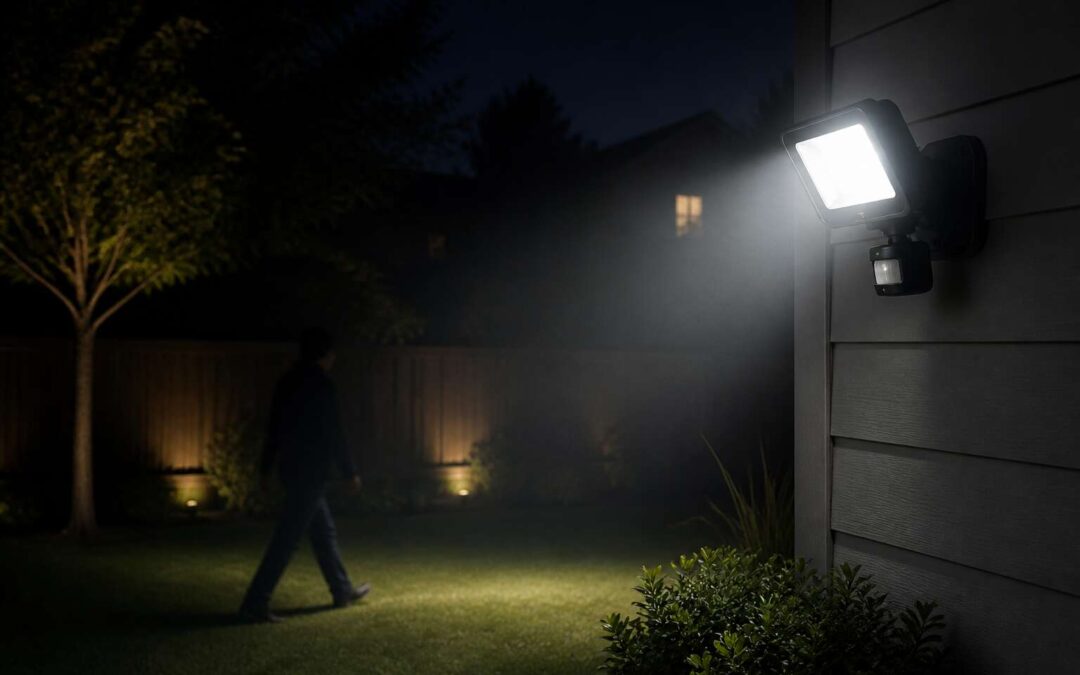
Uncovering the Root Causes
At dusk, flood lights turn on and off without warning. This flickering signals deeper electrical or environmental disturbances. In South Africa, load shedding often masks the true culprit, but the root causes are more insidious.
- Faulty photocell sensors that misread ambient light
- Loose wiring connections corroded by coastal humidity
- Overloaded circuits from neighbouring appliances
- Thermal cut-off switches tripping during heatwaves
Each cause leaves a distinct pattern. A dying capacitor produces a slow pulse. A short circuit creates a staccato rhythm. Voltage instability, resistance changes, and intermittent power supply all contribute to the erratic behaviour. Understanding these physical failures helps pinpoint whether the issue lies in the sensor, the wiring, or the municipal grid itself.
Diagnosing the Problem Step by Step
The night holds its breath when your flood lights turn on and off. I start with the simplest culprit, the photocell. These sensors grow weary after years of service, mistaking shadows for sunset.
Work through a few quiet checks:
- Kill the mains and inspect every wire for scorch marks or loose terminals.
- Bypass the photocell entirely to see if the lamp holds a steady glow.
- Listen for a clicking relay, which often betrays a dying transformer.
In South Africa, load shedding muddies the diagnosis. The erratic surge when power returns can turn a minor fault into a full haunting. Each test narrows the mystery, leaving fewer ghosts to chase.
The Role of Environmental Conditions
Nothing confuses a motion sensor quite like a South African summer. The Highveld’s afternoon thunderstorm drops temperatures rapidly, and the resulting condensation on the sensor mimics movement. Consequently, your flood lights turn on and off with the urgency of a startled meerkat. Heat shimmer from a baking driveway creates the same illusion, while coastal fog adds a watery veil. In my experience, the culprits are rarely ghosts.
- Dust storms blur the passive infrared lens.
- Misting from an irrigation system triggers false positives.
- Tree branches swaying in a gust fool the detection zone.
Each condition alters the ambient infrared signature, forcing the unit to recalibrate. Patience helps, but a targeted sensor shield works better.
Effective Fixes and Long-Term Solutions
Somewhere in Johannesburg, a flood light is having a meltdown. The frustrating symptom? Flood lights turn on and off with no respect for your sanity! Often, the issue is a tired photocell or loose wiring. A simple test involves covering the sensor to check for light leakage. Alternatively, check your voltage stabiliser. Subsequently, you need long-term fixes. Here is what works:
- Replace the photocell with a dusk-to-dawn unit
- Tighten all terminal connections
- Install a surge protector for surge-prone areas
These steps address the root cause. Resolving this quirk saves you from nightly strobe effects. South African weather and power fluctuations demand robust solutions. A flickering fixture signals bigger electrical trouble, so treat it with respect.
Safety Considerations and Expert Assistance
Your security lights should glow steadily after dusk. When flood lights turn on and off without rhythm, the cause is often a worn photocell or faulty wiring. In South Africa, load shedding makes this flicker more common.
Safety considerations start with your hands. Switch off the main breaker first! Look for exposed cables or water near the fittings. A loose connection can start a fire. I advise testing sensors at dusk, not midday, because ambient light confuses the photocell.
For persistent issues, call a certified electrician. They will check:
- the sensor’s sensitivity range
- the timer settings
- neutral wire connections
Expert assistance prevents guesswork. A professional can recalibrate the light, so you avoid false alarms from passing animals.