
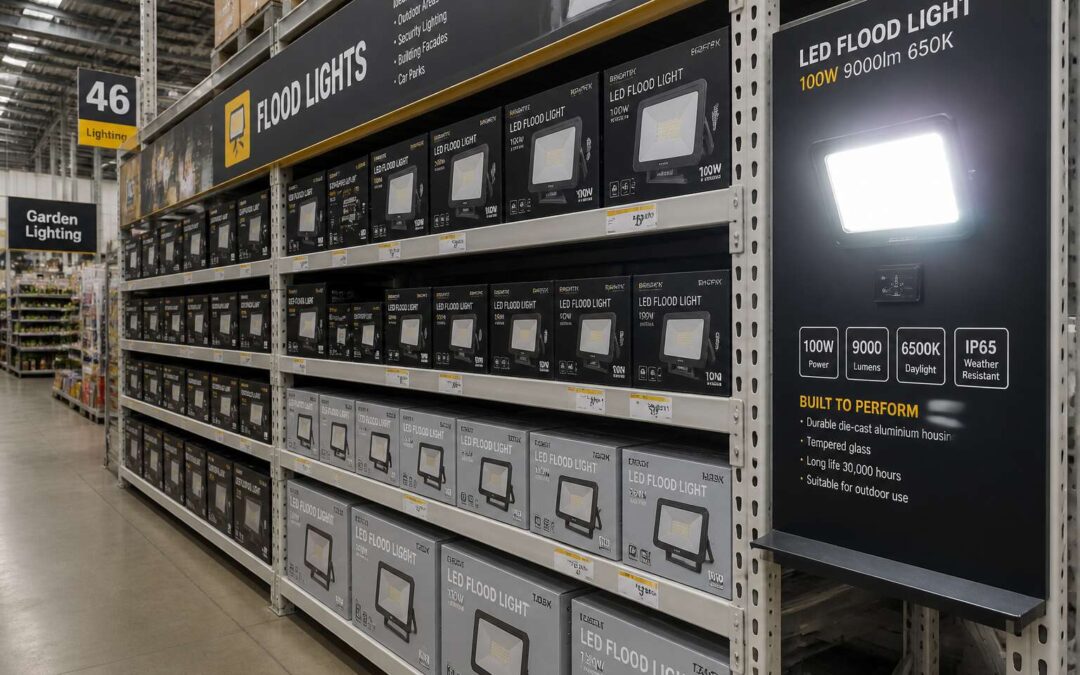
Understanding LED Flood Lights: Key Features and Benefits
Energy Efficiency and Longevity Compared to Traditional Lighting
Energy efficiency is the defining advantage of modern LED flood lights, and the figures are genuinely impressive. A typical LED unit converts over 80% of its electricity into light, whereas older halogen fittings waste most of their power generating heat. For a homeowner installing security lighting, this translates directly into a lower monthly bill. When you compare a 50-watt LED to a 300-watt halogen equivalent, the annual savings become substantial. This is why you will find a wide selection of led flood lights builders warehouse offers, catering to those who want to cut operational costs without sacrificing brightness.
Longevity is another area where LEDs leave traditional options far behind. A standard halogen bulb might last 2,000 hours, while a quality LED can operate for 25,000 hours or more. That means a fixture installed today could still be running over a decade later, depending on usage. Fewer replacements also mean less maintenance, a real benefit for hard-to-reach fittings on high gable walls. The robust construction of these units, often with aluminium housings and sealed lenses, ensures they withstand the harsh South African sun and heavy summer storms.
The comparison is stark when you consider the total cost of ownership. Traditional lighting demands frequent bulb changes and consumes excessive power, especially in commercial settings like loading docks or farmyards. To illustrate the practical differences:
- Heat emission is drastically lower, reducing the load on air conditioning systems in enclosed spaces.
- Instant start-up means full brightness is achieved immediately, unlike some older technology that flickers or takes time to warm up.
- Better light distribution provides a clearer, whiter beam that improves visibility and security around the property.
Ultimately, the switch to LED is a straightforward decision for anyone looking at long-term performance. The initial purchase price is higher than older bulbs, but the return on investment is quick. Given the durability and the low running costs, these fixtures become a permanent fixture rather than a recurring expense. Checking the specifications for lumens and colour temperature will help you pick the right unit from the available stock at your local hardware store.
Brightness, Lumens, and Color Temperature Explained
Brightness speaks in numbers, and those numbers are unforgiving. The lumen count dictates how far the beam will cut into the night, while the colour temperature decides whether that beam feels like a warm welcome or a cold warning. When you examine the led flood lights builders warehouse has on display, these two specifications matter more than the wattage ever did.
Lumens measure the total visible light output. A 10,000 lumen unit will carve through a large yard, while 3,000 lumens suits a modest driveway. Colour temperature, measured in Kelvin, shifts the beam from a soft amber glow to a stark, clinical white.
- 2700K to 3000K: warm, almost nostalgic light
- 4000K to 4500K: neutral, crisp daylight
- 5000K to 6500K: cold, piercing brightness
For security, the higher Kelvin range reveals details that warm light would swallow whole. I always check the Kelvin rating before I buy, because the wrong tone can turn a welcoming yard into a harsh interrogation space. The led flood lights builders warehouse supplies are built for these choices, so the decision rests entirely on your eyes.
Durability and Weather Resistance for Outdoor Use
Durability separates a smart purchase from a recurring expense. A flood light that cannot cope with rain, dust, and the South African sun is a maintenance problem. The led flood lights builders warehouse stocks are rated for outdoor use, but you still have to verify the IP rating yourself. IP65 means complete protection against dust and low pressure water jets. That is the minimum I would trust for a permanent installation.
Housing material matters too. Cast aluminium draws heat away from the diodes, while polycarbonate lenses resist impact. Powder coated finishes handle the corrosive salt air found along the coast.
Here is what separates a lasting fitting from a disposable one:
- Sealed gaskets that block moisture
- Tempered glass or polycarbonate protection
- Corrosion resistant casing
These details become the difference between a light that works for a decade and one that fails after a single Highveld thunderstorm. The led flood lights builders warehouse offers this rugged range!
Smart Features and Motion Sensor Capabilities
Your flood light need not shine all night to be useful. Motion sensors keep the fitting dormant, activating only when someone enters its zone. This saves electricity and spares your neighbours from a bright glare at 2am. The led flood lights builders warehouse range offers multiple detection angles for different garden layouts.
Smart features extend the concept. Photocells prevent daytime blinking. Timers set active periods. Some units accept remote control for manual overrides.
Typical specifications include:
- Detection range in metres
- Field of view angle
- Sensor response time
The led flood lights builders warehouse lists these details on the box. A motion sensing light stays quiet until needed, unlike a fitting that burns power all night.
Common Applications for Residential and Commercial Spaces
In South Africa, load shedding has made homeowners acutely aware of their security vulnerabilities, with over 60% of urban households reporting a break-in attempt in the past decade. The led flood lights builders warehouse range offers a pragmatic response to this reality, combining robust construction with illumination that serves a clear purpose. These aren’t decorative fixtures; they are functional tools designed for visibility and deterrence.
The primary benefit of a modern LED unit is its ability to render a space instantly identifiable. Whether you are securing a perimeter or simply finding your keys at the front door, the clarity is immediate. Builders Warehouse stocks units that cater to different scales of operation, from a compact 20W fitting for a townhouse courtyard to a 200W behemoth for a loading dock. The key is matching the light output to the area you need to cover, without over lighting or leaving dark spots.
Common applications fall into two categories:
– Residential use for driveways, backyards, and braai areas, where the light needs to be broad and even
– Commercial use for warehouses, parking lots, and signage, where durability and consistent output are the priority
A critical factor for commercial buyers is the ease of replacement. A unit that is difficult to access or maintain is a liability. The led flood lights builders warehouse selection includes models with replaceable drivers and standard mounting brackets, which reduces downtime. For residential users, the benefit is often simpler: the ability to switch on a single light and see the entire garden, rather than stumbling in the dark.
The choice between a fixed beam and an adjustable head also matters. Fixed beams are straightforward and mount easily, while adjustable heads offer flexibility for angled walls or specific focal points. Consider the physical layout of your property. A narrow passage needs a different spread than an open yard. The range at Builders Warehouse provides a straightforward way to compare these specifications side by side, ensuring you leave with a product that actually addresses your specific lighting requirement.
How to Choose the Right LED Flood Light for Your Project
Determining the Correct Wattage and Beam Angle
Everything changes once you understand beam angle. A 200W flood light on a low veranda will fail because its spread is too narrow, blinding anyone who walks past. Wattage tells you power, but the beam angle tells you where that power lands.
For a typical stand in Pretoria, a 100W LED flood light with a 90 degree beam covers a single parking bay. If you need to illuminate a long driveway, choose a narrow 30 degree optic. Wide 120 degree spreads suit open braai areas.
- Measure the mounting height before buying.
- Decide whether you want focused reach or broad coverage.
- Compare lumen output, not just watt specs.
I always browse led flood lights builders warehouse shelves with a tape measure in hand. That habit saves me from returning units. Take a look at the beam angle diagrams on the packaging. They tell the true story.
IP Ratings and What They Mean for Outdoor Fixtures
An IP rating tells you exactly how tough your outdoor light is. When I scan the shelves of led flood lights builders warehouse, the two digits after ‘IP’ reveal how much water and dust the housing can repel. The first digit deals with solids. The second deals with liquids.
Consider the weather on your site before committing. A Pretoria winter brings fine dust. A Durban beachfront brings corrosive salt spray. An exposed Johannesburg roof gets horizontal rain.
Here is the practical breakdown:
- First digit: 5 means dust protected, 6 means dust tight.
- Second digit: 4 resists splashes, 5 resists water jets, 6 resists heavy seas, 7 survives temporary submersion.
Choose the rating that matches your worst weather, not the average day. I always prioritise that number before anything else!
Mounting Options: Wall, Ground, and Pole Installation
Mounting a floodlight is a decision about shadow and reach, not just hardware. The angle of your fixture changes what it reveals and what it hides. For a home entrance, wall mounting offers a direct sightline and a compact footprint. Ground mounting works well for accenting architectural details or a stand of aloes. Pole installation suits driveways, farmyards, or any space where height gives you an even spread of light over a wide area.
When I look at led flood lights builders warehouse displays, I always ask about the mounting base before anything else. A wall bracket needs a sturdy box. A ground spike needs solid soil. A pole mount requires a concrete foundation. Each option changes the beam direction and the wiring path, so choose based on the surface you already have, not the one you wish for.
Comparing Plug-in, Hardwired, and Solar-Powered Models
Plug-in, hardwired, and solar models each answer a different question. Plug-in floodlights tap into an existing outdoor socket, which suits carports, sheds, and rental homes where rewiring is off limits. Hardwired units connect through a junction box and run into your circuit. They stay fixed, deliver steady output, and hide all cabling inside wall cavities. Solar fixtures accumulate energy through the day and release it after dusk. Their output depends on panel angle, battery age, and winter shade.
When I evaluate led flood lights builders warehouse stock, I always sort by power source first. The led flood lights builders warehouse catalogue groups these three options clearly.
- Plug-in: quick installation, needs a weatherproof socket
- Hardwired: permanent, requires a certified electrician
- Solar: independent of the grid, depends on sun exposure
A wired fixture only works during load-shedding if your inverter carries it. A solar fixture keeps working through outages, though overcast days shorten its runtime.
What to Expect When Shopping at Builders Warehouse for LED Flood Lights
In-Store vs. Online Availability and Stock Variety
Once you step into a Builders Warehouse, the sheer scale of the lighting aisle can feel overwhelming. The experience is tactile, you can physically handle the fixtures and gauge the build quality. However, the online channel offers a different kind of utility, showing real-time stock levels across various branches. You might find the in-store range is curated by the specific store manager, meaning smaller branches carry only the fast-moving basics.
For a proper selection, the flagship locations tend to dominate. Here is a practical comparison of what to expect:
| Channel | Key Benefit | Major Drawback |
|---|---|---|
| In-Store | Immediate purchase and physical inspection. | Stock varies by location and demand. |
| Online | Access to the full regional catalogue. | Possible delivery delays for bulky items. |
When you shop for led flood lights builders warehouse, the online portal often reveals a deeper inventory. You will see heavy-duty commercial units alongside residential-grade options. The physical store, in contrast, might have the popular 50-watt units on the shelf, but the higher-end 200-watt models may only be available via a special order. This distinction is crucial for planning a large project.
The stock variety is the real differentiator, particularly when you need specific colour temperatures or beam angles. Remote branches often stock a limited selection of the most common brands. Conversely, the online marketplace provides a comprehensive list of what is available nationwide, allowing you to reserve stock for collection. It is a system that rewards a bit of homework before you leave the house.
Here is a few of the typical SKUs you will encounter:
- Integrated LED units with polycarbonate housings.
- Separate lamp holders that require specific bulbs.
- PIR sensor models for security-focused installations.
Ultimately, the best strategy involves checking the website before driving to the store. The stock checkers on the site are reliable, but they cannot tell you if the box has been damaged. If you need a specific aesthetic match for your exterior, the physical aisle is your friend. If you need volume and variety, the online catalogue for led flood lights builders warehouse is your definitive guide.
Navigating Product Labels and Technical Specifications
Walking into the lighting aisle is half the battle, but the real war is waged on the packaging. When you finally locate the section for led flood lights builders warehouse has curated, you are met with a barrage of technical jargon that would intimidate even a seasoned electrician. The label is a battlefield, and you need to know which numbers actually matter for your driveway versus which ones are purely for the marketing department.
The first figure to pin down is the beam angle, often listed as a degree value like 45° or 120°. A narrow beam throws a tight, intense spotlight that is perfect for highlighting architectural features or security perimeters. A wider beam floods a general area with softer light, which is why those 120-degree models are the default choice for most backyards. Ignore the pretty pictures on the box and look for that degree symbol; it tells you more about the light spread than any photo ever will.
Beyond the beam, you will encounter the colour rendering index, or CRI. This is a metric that explains how true to life objects appear under the light. A high CRI value, usually 80 or above, is vital if you are illuminating a braai area or a workspace where you need to see actual colours, not murky approximations. The packaging might also list the LED chip type or driver brand. A reputable driver ensures consistent power flow, reducing flicker and extending the life of the unit, so it is worth the extra few rand.
When you parse the small print on these boxes, you will notice several patterns repeated across different brands:
– Lumens per Watt: This is the efficiency ratio, the true measure of value.
– The warranty period: A longer warranty usually signals a manufacturer’s confidence in their heat dissipation design.
– The input voltage range: A wide variance is crucial for South African grid fluctuations.
The lumens per watt ratio is the hidden gem of the specification list. This number tells you how much light you get for every unit of electricity consumed. A higher ratio means you are paying for photons, not heat. In a country with volatile energy costs, that specific ratio can make the difference between a fixture that pays for itself and one that drains your budget. You must not rush this decision, as the correct reading of these labels transforms a simple purchase into an investment.
Warranty and Return Policies for Electrical Fixtures
Warranty and return policies for electrical fixtures rarely inspire confidence, yet they reveal more about a product’s integrity than any marketing claim. When you purchase led flood lights builders warehouse stocks, the boxed promise matters as much as the lumen output. Their standard returns window allows for exchanges on faulty units, but the finer details live in the fine print. Some brands offer three year warranties, others stretch to five, and the distinction often hinges on the driver quality inside the housing.
A few practical observations before you commit:
– Confirm whether the warranty covers labour or only the replacement unit.
– Ask if the in-store returns desk handles warranty claims directly or if you must deal with the manufacturer.
– Retain the original packaging, as many returns stall without it.
– Check the receipt for the exact return window, as electrical items often have shorter periods.
The staff at Builders Warehouse generally process returns without friction, provided you have proof of purchase. However, outdoor floodlights that have been exposed to lightning surges or water ingress frequently fall outside coverage. Read the exclusion clauses carefully, especially those mentioning “abuse” or “improper installation.” Your responsibility ends the moment you understand what the policy protects, and what it quietly leaves unprotected.
Helpful Staff and Expert Advice for DIY Enthusiasts
The electrical aisle at Builders Warehouse rewards a slow walk. Staff members know their stock, and they will explain the difference between a polycarbonate housing and a die cast aluminium one without rushing you. For DIY enthusiasts, this is a practical advantage.
A quick conversation often reveals which led flood lights builders warehouse stocks match your existing wiring setup. The team can point out practical details. Ask about beam angles, mounting height, or how to avoid glare from a neighbour’s window!
Before you ask, gather a few details.
- Bring a photo of your current fixture.
- Know your wall or ceiling material.
- Mention any existing timer or motion sensor.
That information helps them narrow the options quickly.
Step-by-Step Installation and Maintenance Tips
Essential Tools and Safety Precations Before Starting
Switch off the circuit breaker before touching anything. Outdoor moisture makes electrical work unforgiving, particularly after a Gauteng downpour. I always inspect the mounting surface first, because loose plaster or rusted steel changes how you anchor the bracket.
Keep these tools within reach: a voltage tester, insulated screwdrivers, silicone sealant, and a masonry bit with rawl plugs. The led flood lights builders warehouse stocks usually include basic mounting hardware, but never trust those screws for a fence installation. They bend under pressure.
- Voltage tester
- Insulated screwdrivers
- Silicone sealant
- Masonry bit and rawl plugs
Check the IP rating before mounting. A unit rated IP65 handles Cape Town’s winter rain without issue. Angle the housing downward so water runs off the lens, and keep all wiring inside the junction box. Tighten bolts evenly, then test the beam at dusk. Maintenance takes minutes: wipe the lens quarterly, inspect screws for corrosion, and re-torque every six months to prevent flicker. When buying led flood lights builders warehouse staff can point out which units tolerate coastal salt air best.
Wiring and Mounting Guidelines for Different Surfaces
Mounting on face brick differs from timber cladding or a steel gate. I prefer to drill brick with a masonry bit, insert rawl plugs, and seat the bracket flush. For wood, pilot holes prevent splitting; stainless screws resist moisture in untreated grain. For steel, self-tapping screws with a rubber gasket stop vibration.
The led flood lights builders warehouse range includes pre-wired tails, but match cable gauge to run length. When you inspect led flood lights builders warehouse stock, check whether the bracket is aluminium or stamped steel; aluminium resists corrosion better. Keep connections in a weatherproof junction box. Use silicone sealant at the cable entry and leave a drip loop.
- Secure the bracket first, then connect wires.
- Test the circuit before sealing.
- Re-check alignment at dusk.
Maintenance is a twice-yearly routine: wipe the lens, inspect gaskets, tighten rusty screws. Coastal salt air degrades fixtures faster; check quarterly near the ocean.
Adjusting Angle and Sensitivity for Optimal Coverage
Correct positioning matters as much as the hardware. A floodlight aimed too high wastes output into the sky, while one aimed too low creates harsh shadows that defeat the purpose of security lighting. After securing the unit, switch it on at dusk and observe the spill pattern. Walk the perimeter to identify dark zones. Most fittings from the led flood lights builders warehouse range allow vertical and horizontal adjustment, so fine-tuning takes minutes, not hours. You want the beam to overlap entry points and pathways, not neighbouring properties.
1. Loosen the adjusting screws slightly, just enough to move the head by hand.
2. Aim the centre of the beam at the far edge of your target area.
3. Tighten the screws and test with a motion sensor walk test if fitted.
If your unit includes a motion sensor, sensitivity and timer settings are typically tucked behind a small rubber plug. Start with sensitivity at medium and the timer at three minutes. High sensitivity triggers false alarms from passing cars or stray cats. Low sensitivity misses movement at the edges of the detection zone. After adjusting, walk across the area from different angles to confirm consistent triggering. Remember to re-check the settings after winter, as temperature shifts can affect sensor performance.
Maintenance follows a simple rhythm. Every quarter, wipe the lens with a damp cloth to remove dust and insect residue. Check the rubber gaskets for cracks. Tighten any screws that have worked loose from thermal expansion. Coastal properties need a monthly inspection because salt spray corrodes terminals faster than inland air. When replacing spent units, compare the build quality of the current led flood lights builders warehouse stock against older fittings; modern lenses resist UV yellowing far better than early polycarbonate versions. A clean, correctly angled light delivers consistent performance for years without fuss.
Cleaning and Inspection Routines to Extend Lifespan
Before any fitting leaves its box, isolate the circuit. A voltage tester confirms zero current, which is non-negotiable. Align the mounting bracket against the wall, mark the drill points, and use masonry bits for brick or plaster. The led flood lights builders warehouse range includes stainless steel hardware, so rust is less of a concern, but you still need to bed the screws with a silicone sealant to stop moisture creeping behind the plate.
Once wired and sealed, the real work shifts to preservation. I recommend a simple inspection rhythm that takes ten minutes every few months:
- Check the rubber gaskets for compression marks or brittleness.
- Inspect terminal screws for green verdigris, a sign of copper corrosion.
- Confirm the head still locks firmly after wind or thermal movement.
- Verify the mounting plate hasn’t shifted from the wall.
Coastal homes need this routine monthly, because salt air accelerates every failure mode. The led flood lights builders warehouse fittings respond well to this care, preventing failures that come from neglected seals and loose connections.
Troubleshooting Common Issues with LED Flood Lights
Even with a solid maintenance routine, issues can surface. A flickering flood light after a storm usually points to a loose neutral wire, not a failing bulb. I have seen this with the led flood lights builders warehouse range. Isolate the circuit, reseat the wire, and torque the terminal screw properly.
If the unit stays dark, check the photocell. A dirty sensor lens keeps the light dormant all night. Coastal homes develop micro-cracks in the gasket, letting moisture reach the driver. That causes slow dimming instead of sudden failure.
Troubleshooting in sequence:
- Confirm power at the switch.
- Test the photocell by covering it.
- Inspect the driver for swelling.
- Check the LED array for dark spots.
Work through these steps. Many led flood lights builders warehouse models have replaceable drivers, so you can skip buying a whole new unit.
Comparing LED Flood Lights to Other Lighting Alternatives
LED vs. Halogen vs. High-Pressure Sodium
The tungsten in a halogen lamp is pushed hard, and the glass envelope blackens over time. High-pressure sodium works on an arc, which is efficient but produces a flat orange light and needs minutes to restrike after a power interruption.
LED flood lights builders warehouse stock solve both of these problems. The diode runs cool, far cooler than a halogen housing after an hour of work. It also produces a balanced white beam that shows true colours, which helps when matching paint or checking masonry workmanship.
- Halogen: fragile filament, high heat, dimming as it ages.
- High-pressure sodium: durable arc, orange tint, slow restart.
- LED: solid state, low heat, consistent colour, instant light.
I have watched security guards wait minutes for sodium lamps to flicker back on after loadshedding. With LED, the response is instant!
Initial Investment vs. Long-Term Savings Analysis
Spend R800 today or R4,000 over three years. That is the question for anyone comparing floodlight price tags. Led flood lights builders warehouse stock sits higher on the shelf than halogen units. The price sticker only shows part of the cost. I have watched buyers walk past them because of that initial number.
Electricity consumption changes the math. A 50W LED replaces a 150W halogen running identical hours. The energy saving closes the price gap within months. South African electricity tariffs climb annually, so every watt saved compounds over the fixture’s life. Then there is the replacement cycle. Halogen units burn out. LED units carry on.
The comparison runs like this:
- Halogen: low purchase price, high running cost, repeated replacements
- LED: higher upfront spend, lower draw, longer service life
Running costs decide the real expense. Led flood lights builders warehouse buyers see that gap close over the first year.
Environmental Impact and Disposal Considerations
The environmental comparison starts before installation. High-pressure sodium lamps contain mercury and require careful disposal. Halogen units burn out quickly, adding glass and metal to landfill streams. LED flood lights builders warehouse shelves hold fixtures that avoid these problems entirely. No mercury, no fragile filaments, no routine replacement cycle.
Consider the disposal chain:
- Halogen: frequent burnout, regular landfill contribution
- High-pressure sodium: hazardous components, special handling
- LED: extended service life, fewer units discarded
The manufacturing footprint of one LED unit is larger, but that cost amortises across a decade of operation. When the end arrives, the aluminium housing and polycarbonate lens are simpler to recycle than the mixed materials in older technologies. For LED flood lights builders warehouse customers, the full lifecycle matters. I have seen buyers ignore this connection, but it decides the real environmental cost.
Light Quality and Color Rendering Differences
When you compare the light itself, the difference is obvious. Halogen lamps render skin tones and brickwork with a warm, continuous spectrum, but they fade quickly and shift colour as they age. High-pressure sodium emits a golden haze that flattens depth and turns green foliage grey. LED flood lights builders warehouse stock produce a crisp, consistent beam that holds its colour for years.
For LED flood lights builders warehouse, the colour rendering index, or CRI, measures this fidelity. Most LEDs score above 80, many above 90. Halogen reaches 100, but only briefly. Sodium scores around 25.
Security and Aesthetic Benefits of Modern LED Options
Outdoor lighting changes how a property feels after dark. Many South African homes still rely on high-pressure sodium or old halogen units. A modern LED flood light turns on instantly, with no amber haze and no slow warm-up. That immediate response matters for security. It also reveals brickwork and garden plants in true colour.
LED flood lights builders warehouse shelves hold several options that make this switch straightforward. The beam patterns are tighter, so light goes where you aim it. Dark corners disappear. Neighbours see a clean, white glow instead of a flat orange cast.
Modern units bring these benefits:
- Instant brightness, which startles intruders
- Steady colour output, free of halogen’s ageing shifts
- Less heat, so the casing stays cooler
Security and aesthetics work together here. A bright, consistent beam deters trouble and makes the property look sharper at night.
Frequently Asked Questions About LED Flood Lights from Builders Warehouse
Do I Need an Electrician for Installation?
Whether you need an electrician for your led flood lights builders warehouse purchase depends entirely on which model you select. Plug-in versions simply require a nearby socket. Hardwired fixtures are another matter entirely.
South African regulations require a certified electrician for any fixed wiring. That includes flood lights connected directly to your mains. Attempting this yourself might save a few rand, but the risks include electrocution, fires, and voiding your warranty.
Consider these points before you reach the counter:
- Check whether the unit includes a plug or bare connection wires
- Verify if the manufacturer supplies a compliance certificate
- Include electrician fees in your overall budget
Builders Warehouse staff can clarify whether the led flood lights builders warehouse product you have chosen needs a certified electrician. Ask before you pay, not after you have torn open the box at home.
Can LED Flood Lights Be Used with Dimmers?
Can you pair your led flood lights builders warehouse purchase with a dimmer switch? The answer is not straightforward. Most standard LED flood lights are not designed for dimming. Using a trailing-edge dimmer on a non-dimmable fixture causes flicker or buzzing.
Check the packaging for a dimmable symbol. If the led flood lights builders warehouse listing does not mention dimming, assume it is incompatible. Some models support dimming, but they require a compatible dimmer rated for LED loads.
Consider these points before installation:
– Confirm the dimmer is designed for LED drivers
– Match the wattage range to the fixture
– Test the combination before final mounting
Dimmers reduce energy consumption, yet security lighting often thrives on full brightness. A motion sensor model may lose detection reliability when dimmed. Most homeowners skip dimmers for outdoor flood lights and use timers instead.
What Is the Average Lifespan of an LED Flood Light?
Most people replace halogen flood lights every two years or so. led flood lights builders warehouse options can run for 25,000 to 50,000 hours. That translates to 5 to 10 years of nightly use, depending on your settings.
Heat causes the most wear. Fixtures with good heat sinks and aluminium housings last longer. The driver component often fails before the LEDs themselves. Look for units with replaceable drivers or longer warranties. Many Builders Warehouse models offer 3 to 5 year guarantees. For security lights that run all night, choose a version rated for continuous operation.
How Do I Dispose of Old or Damaged Fixtures?
Disposing of an old unit demands more thought than dropping it in the bin. LED flood lights builders warehouse customers often ask where to take fixtures that have stopped working or suffered damage. The driver and diodes contain materials that should not end up in landfill. South African municipalities and private e-waste recyclers handle these items, but schedules vary.
A few straightforward options exist:
- Take the fixture to a certified e-waste collection point.
- Check if the manufacturer or retailer offers a take-back programme.
- Contact your local municipality for hazardous waste drop-off days.
Some Builders Warehouse branches also point customers toward approved recyclers. Call ahead to confirm what they accept. Do not attempt to salvage damaged glass or exposed wiring yourself. Handling broken panels carries unnecessary risk. Wrap the unit safely for transport and keep it separate from general household rubbish.
Are There Any Rebates or Incentives for Upgrading?
Rebates for LED upgrades in South Africa remain a patchwork, not a given. Builders Warehouse may run store level discounts, but don’t expect a national government subsidy for residential flood lights. Eskom’s initiatives focus on commercial consumers, and municipal schemes appear sporadically.
What actually works in your favour:
- Seasonal clearance sales on led flood lights builders warehouse shelves.
- Bundle deals when you buy multiple units for security coverage.
- Old fixture trade-in days at participating branches.
Ask ahead. Staff know which promotions apply to led flood lights builders warehouse inventory, and they’ll point you to any active energy efficiency program in your area.