
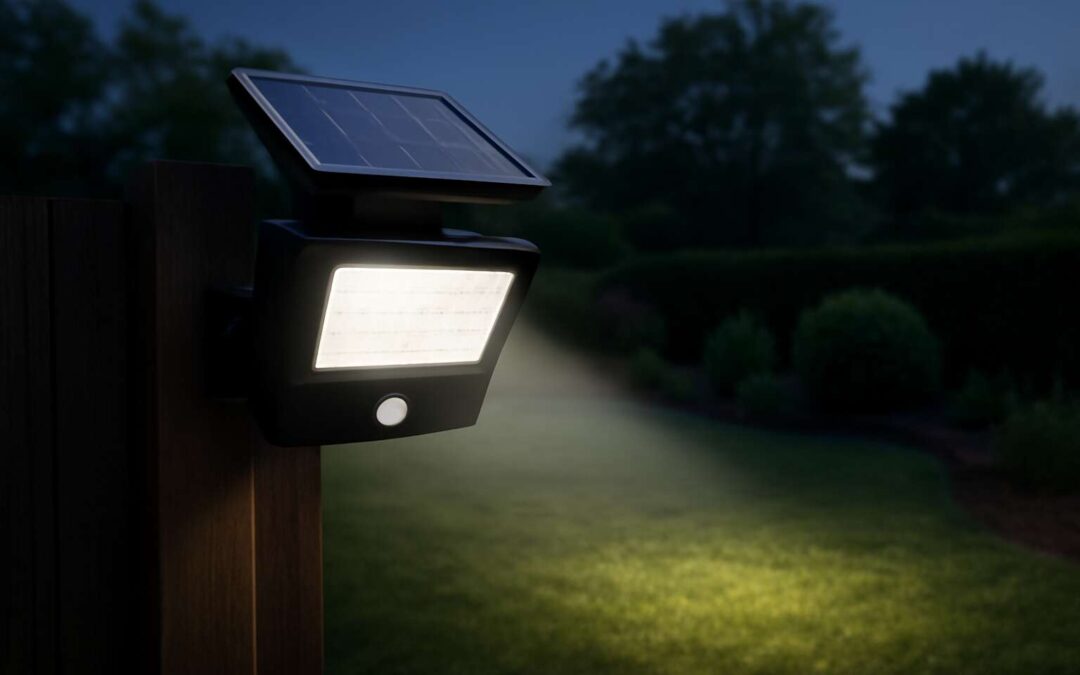
Overview of Solar-Powered Flood Lights with Motion Detection
What They Are and How They Work
Lighting that doesn’t sleep—yet never asks for a salary. These solar flood lights with motion sensors are the green guardians of perimeter security, charging by day and bursting to life after dusk.
What they are and how they work: a self-contained unit with a solar panel, a rechargeable battery, a motion sensor, and efficient LEDs. The panel collects sun, charges the battery, and the sensor triggers light when movement is detected.
- Photovoltaic panel captures sunlight
- Battery stores energy for evenings
- Motion sensor triggers illumination
- LEDs provide bright, efficient light
For South Africa, these lights cut energy costs and offer dependable coverage through heat and dust with minimal fuss.
Key Benefits of Solar Lighting with Motion Activation
Light is the quiet shield that wakes with dusk, and in South Africa it’s a key ally for property security. “Light is a quiet deterrent,” a security consultant once said, and solar flood lights with motion sensors bring that defense to life.
These devices are self-contained and low-profile, designed to sit along fences, gates, or driveways without wiring. They drink daylight by day, and I watch them glow when activity is detected, offering bright, reliable illumination that doesn’t depend on the grid.
- Energy savings by cutting grid reliance
- Deterrence through sudden, well-lit exposure
- Minimal maintenance with durable, weather-ready design
For South Africa, heat and dust are constant companions; these lights hold up under tough conditions, and I’ve seen them provide dependable coverage from sprawling estates to compact complexes.
In the quiet hours, a perimeter that glows with purpose quiets fear and invites safety to linger—an intimate, practical form of protection.
Common Use Cases and Environments
In South Africa, roughly 70% of property incidents unfold after sunset, turning lighting from a luxury into a necessity. Solar flood lights with motion sensors are the quiet watchdogs that spring to life the moment anyone approaches and tuck back into daylight-saving mode when the coast is clear.
These units sit along fences, gates, or driveways with a discreet profile, delivering bright, reliable illumination without a single wire. Their self-contained power means you’re not chasing grid reliability, just good judgment and a longer memory.
Common use cases and environments:
- Gated estates and driveways
- Perimeter fencing around properties
- Parking bays and loading zones
- Rural farms and remote sheds
From urban complexes to quiet rural plots, these solar flood lights with motion sensors adapt to South Africa’s rhythms, keeping shadows honest and pathways visible.
Differences Between Motion-Activated and Non-Motion Solar Lights
South African nights are long and full of surprises—roughly 70% of property incidents unfold after sunset—so lighting isn’t just a luxury, it’s a frontline defender. Solar flood lights with motion sensors act as quiet watchdogs, waking with a bolt of brightness the moment someone approaches and slipping back into daylight-saving mode when the coast is clear.
Motion-activated units rely on PIR sensors. They deliver a bright burst on detection and then dim or switch off to conserve energy, extending battery life in remote settings. Non-motion solar lights, by contrast, follow a schedule or dusk-to-dawn rule, providing steady illumination regardless of activity, which can be handy in low-traffic zones but costs more energy.
To compare at a glance, consider these factors:
- Detection range and sensitivity
- Battery capacity and charge rate
- Lighting duration and brightness levels
In practice, the choice hinges on site traffic and security needs; in busy entrances, motion sensors shine, while isolated perimeters can benefit from consistent coverage. The right setup keeps shadows honest and paths clearly visible.
Choosing the Right Solar Flood Lights for Motion Activation
Evaluating Brightness and Coverage Designations
Across South Africa, evenings demand more than just light—they demand discernment: solar flood lights with motion sensors offer a practical balance of security and energy efficiency, waking only when activity is detected and dimming back to rest otherwise. This measured responsiveness keeps maintenance humane and costs predictable!
- Brightness vs. coverage balance
- Sensor range and detection angles
- Durability for local weather and IP rating
- Battery capacity and solar panel efficiency
Evaluating brightness and coverage designations helps align lighting with your spaces, from gate to garden, without overkill or underlight. In South Africa’s varied climates, seek outdoor-rated units built to endure heat, dust, and sudden storms, and read the coverage map as a trust pledge between product and property.
Battery Technology and Durability
Motion should arrive when needed and vanish when it’s done. In South Africa, motion-activated lighting can cut outdoor energy use by up to 70% when paired with solid solar tech. Choosing the right solar flood lights with motion sensors hinges on battery technology and durability. Look for units with Li-ion or NiMH packs and smart controllers that balance charge, load, and night length.
Durability matters as much as capacity. For our climate—hot days, dust, and sudden storms—outdoor units should wear weather-rated housings and reliable seals. Prefer IP65 or higher, UV-stable plastics, and corrosion-resistant fittings. A rugged design keeps the solar flood lights with motion sensors steady from summer heat to winter showers.
- Battery type and capacity
- IP rating and enclosure integrity
- Weather resistance and UV stability
Weather Resistance and IP Ratings
Powerful, practical, and surprisingly poetic, solar flood lights with motion sensors reshape South Africa’s nights—and they can shrink outdoor energy use by as much as 70% when paired with reliable solar tech. Choosing right hinges on weather-ready design and sturdy enclosures that endure heat, dust, and sudden storms. In this climate, aim for IP65 or higher and materials that resist UV fade and corrosion.
- IP rating and enclosure integrity
- Weather resistance and UV stability
Beyond raw protection, look for smart controllers that balance charge, load, and night length, so the motion response feels natural rather than abrupt, a quiet partner to the landscape’s rhythms.
Mounting Options and Placement Tips
Nightfall in South Africa’s cities is a canvas, not a threat. solar flood lights with motion sensors extend security and soften energy demand when paired with reliable solar tech, turning dark corners into guardians and giving homes a glow that feels almost ceremonial.
Mounting options shape the light’s personality and reach. Consider these choices:
- Wall or eave mounting for entryways
- Pole or column mounting for driveways
- Ground stake or planter mounting for gardens and pathways
Position heights and angles to illuminate approach routes, entrances, and perimeters without overloading nearby windows; avoid shading from trees; let the motion feel natural within the landscape’s rhythms.
Charging Type and Efficiency
Night markets and quiet Johannesburg cul-de-sacs reveal a truth: security is less about brute glare than deliberate light. Choosing the right solar flood lights with motion sensors hinges on charging type and efficiency, the quiet engines behind every guardianship after dark.
A smart choice balances battery chemistry and panel prowess. Li-ion and LiFePO4 offer longevity; NiMH is forgiving but less robust. The efficiency of the solar panel, the controller’s responsiveness, and how quickly energy is stored translates into consistent motion-triggered illumination. I watch the panel drink the day’s light and return it with quiet patience!
Consider these factors:
- Battery chemistry and cycle life
- Solar panel efficiency aligned with South Africa’s sunlight patterns
- Controller logic and motion sensitivity
In the end, light is a quiet ethics: it prolongs safety without intrusion, brightening doorways and gardens with a measured, almost ceremonial grace.
Installation and Setup Guide for Motion-Sensing Solar Flood Lights
Step-by-Step Installation Checklist
Evenings in South Africa feel more secure when a single beam comes alive at movement. In my experience, these solar flood lights with motion sensors embody that quiet power, turning shadow into clarity and hesitation into relief.
- Choose a sunlit, unobstructed site with a broad sensor view and minimal shade.
- Mount at a height that places the sensor along likely approach paths while ensuring full area coverage.
- Affix securely using the included hardware; aim the light and sensor to avoid glare at windows.
- Program the sensitivity and duration to suit your environment; test at twilight to calibrate.
- Run a quick multi-angle motion test and fine-tune the angle if needed.
With a simple twilight check, the setup becomes a dependable feature of the landscape—quiet, effective, and ready to respond when the night awakens!
Optimal Sensor Placement and Sensitivity Settings
Evenings in South Africa carry a hush, until a single beam awakens at movement. The solar flood lights with motion sensors act as quiet sentinels, turning shadow into clarity and hesitation into relief. When selecting a place for installation, imagine the field of view as a living compass, tracing likely approach paths and leaving shade behind. The balance between coverage and subtlety helps the light feel protective without arrogance.
Design principles guide placement and sensitivity:
- Optimal sensor field of view that follows doorways, paths, and transitions
- Alignment that minimizes glare on windows while maximizing coverage
- Context-aware sensitivity settings tuned to typical evening activity and environmental motion
In twilight testing, calibrate the angle and response of your solar flood lights with motion sensors until movement prompts a calm, responsive glow. When done well, the night becomes safer, more predictable, and inviting rather than hostile!
Programming Modes and Timers
Nightfall becomes a collaborator when solar flood lights with motion sensors are thoughtfully set up. In South Africa, a well-placed glow reduces hesitation at thresholds, turning uncertainty into welcome. This Installation and Setup Guide for programming modes and timers helps you tailor the light’s rhythm to your property, and with these lights you gain a considerate, autonomous guardian.
Programming modes and timers offer flexible control without constant tinkering. Options include Auto mode, dusk-to-dawn with motion boost, and timed activation to suit your rhythms.
Twilight testing, gentle calibration of the angle and sensitivity delivers a calm, responsive glow. Harmonize the sensor field of view with doorways and walkways; respect sightlines into living spaces. The result is a safe, inviting nightscape rather than a sterile beacon.
Troubleshooting Common Setup Issues
South Africa’s twilight precincts deserve a steady, courteous glow. The installation and setup guide for solar flood lights with motion sensors is your quiet ally, turning simple panels into discerning night guardians. Keep the beam steady and the mood welcoming rather than clinical.
Common setup issues tend to present as small misalignments rather than a plot twist, and they’re easy enough to spot with a keen eye:
- Motion zones blocked by shrubs, furniture, or curious cats.
- Lights failing to illuminate at dusk or during early night.
- Frequent false triggers from reflections, glare, or passing shadows.
- Solar panel shading or unfavorable sun angles limiting charge.
A gentle calibration of angle and sensor responsiveness can restore balance, producing a calm, inviting nightscape rather than a gleam that startles you awake. When the system behaves, it feels almost courteous—the kind of technology you greet at the gate with a nod and a smile.
Maintenance and Post-Install Checks
“Light is the first language of trust,” a South African security veteran whispered as dusk settled over the city. The installation and upkeep of solar flood lights with motion sensors aren’t busywork; they’re a vow to clarity—a calm, steady beam that greets the night with purpose rather than anxiety.
Post-install checks unfold as a ritual of care. The gaze goes to the panel for unobstructed sun, the sensor for balanced responsiveness, and the seals for weather resilience.
- Panel exposure and shading considerations
- Sensor alignment and responsiveness balance
- Seal integrity and weatherproofing checks
Maintenance here is a practice of patience; when it pays off, the property feels watched rather than spooked—the night becomes a quiet ally rather than an intruder. The glow remains courteous, a steady presence that invites without overwhelming!
Energy Efficiency, Battery Life, and Seasonal Performance
Understanding Solar Charging Conditions by Season
Energy efficiency is the heartbeat of solar flood lights with motion sensors. In SA’s sun-drenched climate, smart LEDs, efficient optics, and sensors that wake only on movement keep the night bright without burning through your budget.
Battery life hinges on chemistry and climate. Lithium and NiMH packs handle many cycles, but heat or cold trims capacity. Seasonal swings and occasional cloud cover test endurance, yet proper sizing cushions the impact.
Seasonal performance and Understanding Solar Charging Conditions by Season are crucial for solar flood lights with motion sensors. SA enjoys long summers and cooler nights that influence recharge. Shorter winter days temper output, while temperature extremes shape battery efficiency.
- Summer: longer days boost charging potential
- Winter: shorter daylight reduces recharge opportunities
- Temperature: extreme heat or cold affects efficiency
Impact of Temperature on Battery Performance
Bright, budget-conscious, and a touch rebellious: solar flood lights with motion sensors can outshine a streetlamp without rattling your wallet. Energy efficiency isn’t a slogan—it’s the quiet engine behind long nights and confident perimeters in South Africa. Smart LEDs and efficient optics wake only when needed, preserving battery life.
Battery life hinges on chemistry and climate. Lithium and NiMH packs handle many cycles, but heat or cold trims capacity. Seasonal swings and occasional cloud cover test endurance, yet proper sizing cushions the impact.
- Heat speeds self-discharge and reduces usable capacity
- Cold slows chemistry, trimming available power
- Cloudy spells test charging windows and prompt sizing adjustments
Seasonal performance and understanding solar charging conditions are crucial for these lights. SA enjoys long summers and cooler nights that influence recharge. Shorter winter days temper output, while temperature extremes shape battery efficiency.
Expected Run Time and Battery Degradation
Sunlight is South Africa’s free ally, and solar flood lights with motion sensors prove that every watt matters. Energy efficiency isn’t marketing—it’s how we extend a night shift. I’ve watched smart LEDs, tight optics, and motion-activated modes light only when needed, preserving battery and boosting uptime.
Battery life hinges on chemistry and climate. Lithium and NiMH packs handle many cycles, but heat or cold trims capacity and speeds aging. High daytime temperatures accelerate self-discharge, while chilly nights slow chemistry, tightening available power when you least expect it.
Seasonal performance in SA follows the sun. Long summers recharge more quickly; cooler nights help hold charge. Shorter winter days reduce charging windows and shorten run time, while harsh temperature extremes push battery degradation higher. This dynamic shapes how these lights behave across the year.
Tips to Extend Battery Life and Efficiency
Energy efficiency isn’t marketing—it’s the difference between a quiet midnight yard and a flicker that reveals the night’s secrets. For solar flood lights with motion sensors, smart dimming, precise optics, and tuned thresholds squeeze every watt and keep the lights ready when the SA night demands vigilance. Every lumen matters!
Battery life is a chemistry and climate duet. Lithium and NiMH packs endure many cycles, yet heat accelerates self-discharge and cold tightens available power when you need it most. In SA, summer heat shortens cycles while cool nights slow aging.
Seasonal performance follows the sun’s arc across our skies. Longer summers recharge faster; shorter winter days shrink charging windows and run time. I’ve watched SA nights bend to heat and chill, and the best setups ride that rhythm.
Seasonal Maintenance Routines
Here’s a striking stat: about 60% of nighttime outdoor lighting energy is wasted when lights switch on needlessly. Solar flood lights with motion sensors rewrite the script, delivering illumination only when movement demands it and leaving the rest in shadow until it’s truly necessary.
Energy efficiency in these solar flood lights with motion sensors hinges on smart dimming, precise optics, and tuned thresholds—every lumen matters. Battery chemistry matters too: Lithium and NiMH packs endure many cycles, but heat speeds self-discharge and cold tightens available power when it’s needed most. In SA, heat curtails cycles while cool nights slow aging.
Seasonal performance follows the sun’s arc across our skies. Longer summers recharge faster; shorter winter days shrink charging windows and run times. Seasonal maintenance routines help the lights stay vigilant through SA’s heat waves and chilly spells.
- Seasonal calibration of brightness and motion thresholds
- Optics cleanliness and beam alignment
Applications, Compliance, and Value for Home and Business
Outdoor Security and Landscape Lighting Ideas
Around South Africa, motion-activated outdoor lighting cuts unwanted visits by up to 50%. They offer a plug-free, glare-free way to illuminate after dusk, turning shadowy corners into visible deterrents without trenching cables or inflating your power bill. They shine best in driveways, gates, perimeters, and landscaped approaches, including solar flood lights with motion sensors.
Compliance matters, but solar fixtures keep red tape to a minimum. Choose units with solid IP ratings, verify warranties, and align placement with local by-laws. Consider these checks at a glance:
- Durability and IP rating
- Local by-laws or permits
- Battery disposal
Value-wise, the ROI stacks up quickly: no trenching, no outages, and instant curb appeal for homes and businesses. solar flood lights with motion sensors deter dusk-to-dawn mischief, illuminate entryways, and heighten security without hefty installation costs.
Smart Home Integration and Controls
Smart homes thrive when lighting answers the doorbell, not the other way around! Solar flood lights with motion sensors slot neatly into routines that protect driveways, gates, and perimeters while greeting guests as they approach. In South Africa’s climate, they integrate with existing security cameras, alarms, and voice assistants for seamless control.
- Driveways and gates
- Perimeters and fences
- Landscaped approaches
Compliance matters, even in smart-home ecosystems. Choose units with solid IP ratings, check warranties, and confirm that outdoor lighting aligns with local by-laws and community guidelines. Ensure the unit supports standard protocols (Zigbee, Bluetooth, or Wi-Fi) for easy integration with control hubs.
The value is immediate: no trenching, low maintenance, and instant curb appeal for homes and businesses. When tied to smart controls, they offer energy savings and stronger deterrence, making solar flood lights with motion sensors a practical, stylish security upgrade.
Safety, Regulations, and Local Compliance
Across South Africa, solar flood lights with motion sensors redefine after-dark safety. They illuminate driveways, gates, and property perimeters, guiding guests with a welcoming glow while deterring would-be intruders. For landscaped approaches, their beams trace paths with just-in-time brightness.
Compliance matters in smart-property ecosystems. Choose units with solid IP ratings, check warranties, and confirm outdoor lighting aligns with local by-laws and community guidelines. Ensure the unit supports standard protocols (Zigbee, Bluetooth, or Wi-Fi) for easy integration with control hubs.
- IP rating and water ingress protection
- Warranty coverage and service options
- Local by-laws and HOA guidelines compliance
- Interoperability with Zigbee, Bluetooth, or Wi-Fi hubs
Value is immediate: installation avoids trenching, maintenance is minimal, and curb appeal is enhanced for homes and businesses. When tied to smart controls, these lights deliver energy savings and stronger deterrence, weaving security into daily life.
Cost of Ownership and Return on Investment
From driveways to gatehouses, solar flood lights with motion sensors illuminate after-dark approach with a warm, welcoming glow while keeping a watchful eye on perimeters. Homes and businesses alike benefit from versatile beam patterns that guide guests, flag potential intruders, and make landscaped paths feel safe after sunset.
Compliance matters in smart-property ecosystems, especially in South Africa. Choose units with solid IP ratings, verify warranties, and ensure outdoor lighting aligns with local by-laws and HOA guidelines. Look for compatibility with Zigbee, Bluetooth, or Wi-Fi hubs to simplify integration into existing control systems.
Value is tangible: no trenching, minimal maintenance, and enhanced curb appeal. When tied to smart controls, these lights shrink running costs and improve deterrence, delivering a solid return on investment for both homes and businesses.
- No trenching or wiring costs
- Low maintenance and long service life
- Energy savings and reduced security expenses
Warranty and After-Sales Support
Applications span quiet driveways, gateways, and perimeters, where solar flood lights with motion sensors turn after-dark spaces into confident, welcoming zones. Beams guide guests, deter intruders, and light steps without cords. In SA’s varied climates, rugged housings and long-life batteries deliver steady performance.
Compliance matters: IP ratings for coastal spray and dusty inland sites; warranties aligned with South Africa’s realities; and harmony with local by-laws and HOA expectations. Choose models with clear coverage and ensure installers are authorized for post-installation support.
Value comes from robust warranty and dependable after-sales service. For homes and businesses, a strong support network reduces downtime and protects the investment. With ongoing protection for the solar flood lights with motion sensors, maintenance stays predictable.