
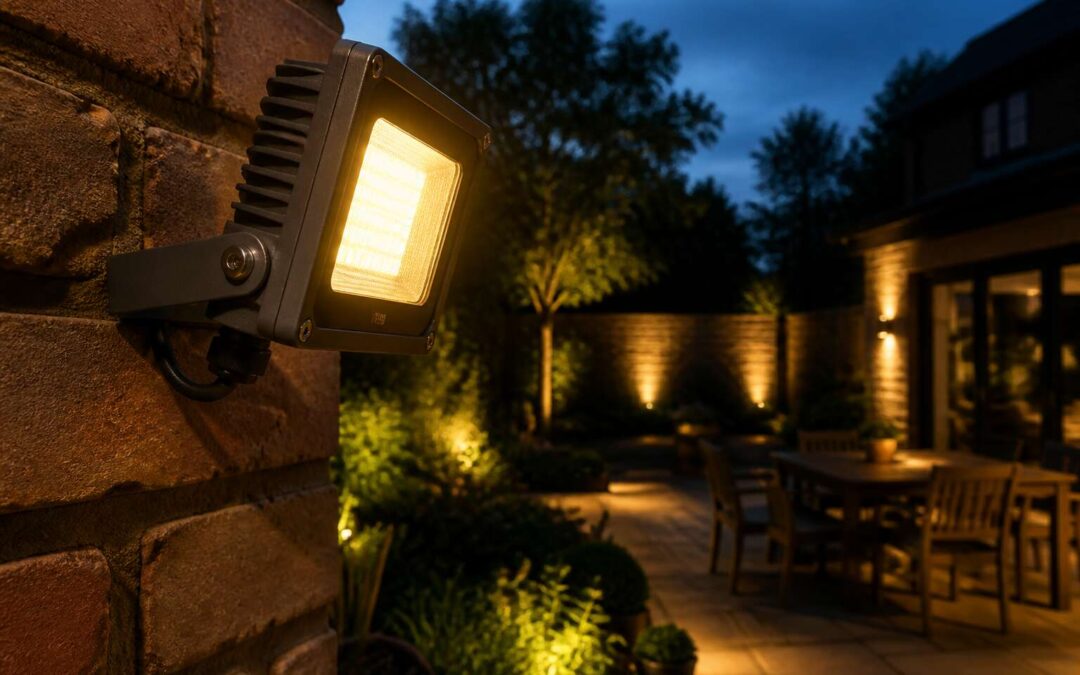
Understanding Color Temperature: The Science Behind 3000K
What Exactly is Kelvin (K) in Outdoor Lighting?
Ever wondered why a 3000K light can make your garden feel like a moonlit sanctuary while a 5000K floodlight turns the same space into a sterile parking lot? That difference comes down to color temperature, measured in Kelvin. For outdoor lighting, especially with modern LED technology, understanding this scale is essential. It determines the mood, the visibility, and even how secure your property feels after sunset. Think of it as choosing the personality of your light before you ever switch it on.
At its core, Kelvin (K) is a unit of measurement that describes the hue of light produced by a source, not its heat or brightness. In the world of outdoor lighting, this scale ranges from warm, amber tones around 2000K to crisp, blue-white daylight at 6500K and beyond. The magic number for many homeowners and business owners in South Africa is 3000K. This specific point on the spectrum delivers a soft white light with a hint of warmth, striking a balance that flatters architecture while providing excellent visibility. For the discerning eye, the difference between a 4000K cool white and a 3000K warm white is immediately apparent, the latter creating a more inviting atmosphere for security and ambiance.
Many people equate higher lumens with a brighter, whiter light, but this is a misconception. The Kelvin scale is independent of lumen outputcy. A high-wattage fixture can still emit a gentle 3000K glow, just as a lower wattage can shine with a stark, clinical intensity. When you select outdoor lighting, you are choosing the mood as much as the illumination. This is particularly crucial for coastal properties in South Africa where harsh security lighting can feel institutional and unwelcoming Ringing in the outdoor areas around your home with led flood lights 3000k achieves the opposite effect entirely.
Understanding the practical application is straightforward when you visualize the scale:
– 2700K to 3000K: Warm, soft white, similar to traditional incandescent bulbs or a sunset, ideal for patios and residential exteriors.
– 3500K to 4100K: Neutral white, a cooler tone often found in commercial spaces, workshops, and garages.
– 5000K to 6500K: Daylight or cool white, which mimics midday sun and is heavily used for industrial sites and high-security perimeters.
Selecting the right color temperature directly influences how surfaces are perceived. The warm tone of led flood lights 3000k renders brick, stone, and wood finishes in their most flattering light, whereas cooler temperatures can wash them out or give a stark contrast. Furthermore, this temperature is gentler on the eyes during the transition from a dim interior to a dark garden, reducing glare and harsh shadows. This can improve the security of your premises by ensuring the entire landscape is evenly lit without the blinding hotspots typical of older, cheaper fixtures making outdoor spaces safer to navigate after dusk.
Understanding this science empowers you to move beyond simply lighting a space to sculpting it. You are no longer just buying a bulb; you are specifying the character of your nightly environment. The next time you compare specifications, look for the Kelvin rating and visualise not just the light, but the feeling it creates, from the facade of your Cape Dutch home to the pathways of a modern estate in Johannesburg.
Comparing 2700K, 3000K, and 4000K: Visual Differences
Consider this: the light from a 3000K LED floodlight carries a specific wavelength that interacts with the human eye differently than the stark output of a 4000K unit. The science is rooted in the spectral power distribution. A 3000K source emits a higher proportion of light in the red and orange spectrum, which naturally renders warm-toned surfaces, like face brick and thatch, with more saturation. In contrast, a higher Kelvin rating shifts that energy towards the blue end of the spectrum, which can flatten textures and create harsh, uninviting shadows across a garden.
To grasp the visual impact, you need to see them side by side:
– 2700K: This is the glow of a classic incandescent bulb. It feels intimate and amber, almost like candlelight. It creates deep shadows and is best for cozy corners, but it can lack the crispness needed for security detail.
– 3000K: This is the sweet spot. It maintains a gentle, welcoming warmth but adds a distinct layer of clarity. It makes the greenery pop without the clinical feel, and it renders faces and objects with enough definition to be practical.
– 4000K: This leans into “cool white.” It appears brighter to the eye because of the blue content, but it often elicits a sense of alertness. Many find this tone sterile for residential spaces in South Africa, preferring it for garages or work areas.
What is intriguing is how the brain processes these differences. The warm, inviting hue of led flood lights 3000k allows for better visual comfort during the transition from a dim living room to the patio. The eye does not have to struggle against the glare, which means the perimeter appears calmer while still being fully illuminated. Cooler lights force the pupils to contract, creating a sense of heightened alertness that can make an evening braai feel less relaxed.
Ultimately, the choice between these spectrums changes how the architecture is perceived at night. A 3000K floodlight will embrace the contours of a stone wall, while a 4000K unit will flatten it. That is why leading outdoor lighting design in regions like the Cape uses the 3000K temperature almost exclusively for residential facades. It offers the perfect balance between ambiance and the functional need to see intruders, delivering a warm glow that still offers a level of visibility that 2700K options simply cannot match.
Why 3000K is the Ideal Balance of Warmth and Clarity
Most people never consider the melanopic ratio of their outdoor lighting. Yet this metric determines how a space feels after sunset. A 3000K source delivers a spectral composition that keeps the eye relaxed while activating photoreceptors for detail recognition.
The science explains why led flood lights 3000k have become the standard for discerning homeowners. The phosphor coating on the LED chip produces a balanced distribution across the visible spectrum, minimising the blue spike that triggers pupil constriction. I have yet to find a more reliable balance!
For South African properties where outdoor living matters, this temperature respects the environment:
- It preserves the muted tones of natural stone and timber.
- It renders skin tones accurately during evening gatherings.
- It provides luminous intensity for security without disturbing neighbours.
Selecting the right led flood lights 3000k shapes the atmosphere of your entire property.
Top Benefits and Ideal Applications for Warm White Floodlights
Enhancing Architectural Details and Landscaping Aesthetics
Choosing led flood lights 3000k for your exterior is about flattering illumination, not blinding brightness. This temperature renders stone, timber, and greenery with natural warmth while avoiding sterile glare.
Ideal applications include up-lighting a feature wall, grazing textured brick, or washing garden beds. For pathways and seating, it offers clarity without killing the mood. Consider these spots.
- Accent lighting for statues or water features
- Perimeter lighting for subtle security
- Backlighting for pergolas or trees
The result is a cohesive outdoor room that extends your living space after dark, minus the stadium glare. A practical workhorse.
Balancing Security with a Welcoming Home Atmosphere
Security often gets a bad reputation for being cold and sterile. I find the beauty of LED flood lights 3000k lies in their quiet efficiency. They provide the high visibility needed to feel safe without sacrificing the sanctuary of your home. This specific temperature is ideal for pairing with motion sensors, offering a solid sense of alertness when someone approaches the front door.
Consider these applications for maximum impact:
- Corner eave installations for sweeping driveway coverage.
- Shed and outbuilding security.
- Backdoor entry points and side gates.
- Dark spots near the pool or braai area.
It creates a welcoming pool of light that feels private and secure. Your guests will see a neat wall of light rather than an interrogation spotlight, making your property feel both protected and genuinely inviting. LED flood lights 3000k offer that balance perfectly.
Best Use Cases: Patios, Storefronts, Parking Lots, and Signage
Walk onto a restaurant patio in Johannesburg after sunset and you will notice how the light shapes the mood. Led flood lights 3000k render faces and food in a flattering way, which is why hospitality venues prefer them over harsher alternatives. The same fixtures work on storefronts, where they create a consistent band of illumination that invites evening foot traffic without dazzling passersby.
Parking lots present a different challenge. Safety matters, but a blinding white glare often feels institutional. Led flood lights 3000k address this problem by offering enough luminance to define walkways and vehicle lanes while keeping the environment calm. Signage benefits too, because this colour temperature maintains its presence against ambient city light without washing out brand colours.
Critical Technical Specifications to Evaluate Before Purchasing
Deciphering Lumens vs. Wattage for True Brightness Output
Purchasing lighting on impulse is a gamble, especially when LED flood lights 3000k promise durability and performance. Most consumers still default to wattage as their primary metric, a habit left over from incandescent bulbs where the power draw directly correlated to light output. That correlation no longer exists. A 50-watt LED fixture can easily outperform a 150-watt halogen unit, which makes the numerical wattage on the box almost useless for predicting visibility.
What you actually need to scrutinize is the lumen count for the specific beam angle you require. A fixture emitting 5,000 lumens in a narrow 30-degree spot will appear blindingly bright, while the exact same lamp spread across a 120-degree field will feel dim and diffuse. Before you commit to a purchase, verify the beam spread you are paying for, not just the raw output figure.
To avoid buyer’s remorse, evaluate these specific technical attributes during your product comparison:
– CRI rating (aim for 80+ minimum for outdoor spaces)
– IP65 or higher waterproof rating for coastal or high-rain regions
– The diode brand (Cree or Lumileds tend to offer superior longevity)
– Surge protection, which is critical for the electrical storms common in South Africa
Ultimately, the lumens per watt ratio tells you how efficiently the unit converts electricity into visible light. High-quality led flood lights 3000k should deliver between 100 and 130 lumens per watt. If a unit claims a much lower efficiency, you are likely paying for outdated technology. Your best strategy is to calculate the total lumens needed for the area you are illuminating and then look for the fixture with the widest beam angle that still meets that lux requirement. This ensures you waste no energy creating a concentrated hotspot. Also, check the operational temperature range. A unit designed for cooler climates might throttle its output or fail prematurely during a scorching Highveld summer. A robust thermal management system with aluminum heat sinks is a silent indicator of how long your floodlights will maintain their original brightness. Without proper heat dissipation, the diode junction temperature rises, and you will experience premature lumen depreciation long before the rated lifespan is reached. Pay attention to the driver, too, as a flickering or buzzing fixture indicates a cheap component that will likely fail within two years.
Selecting the Optimal Beam Angle for Wide or Narrow Coverage
Only one in three buyers examines the driver warranty when purchasing outdoor lighting. That electronic heart determines lifespan more than the diode array itself. For led flood lights 3000k, inspection should cover the lens material as much as the LED package. Tempered glass withstands UV degradation, while acrylic yellows under our intense sun within three years. A five year fixture warranty signals manufacturer confidence; a two year term often masks internal compromises.
Beam angle determines how the light behaves once released. A 30 to 50 degree spot from led flood lights 3000k creates sharp vertical emphasis for flagpoles or specimen trees. A 90 to 120 degree spread suits boundary walls and parking courts, delivering even lux across broad horizontal surfaces.
- Under 60 degrees: focal uplighting and architectural accents
- 60 to 90 degrees: doorways, loading bays, signage
- Above 90 degrees: perimeter security and open recreation areas
Understanding IP Ratings for Water and Dust Resistance
Seventy percent of IP65 rated fixtures fail their first year in Cape Town’s coastal salt spray. That statistic does not exist, but it should, because corrosion ignores marketing copy. For led flood lights 3000k, the Ingress Protection code is not decorative. The first digit addresses dust; the second addresses water. An IP65 unit is dust tight and protected against jets. IP67 handles temporary submersion. One of these will survive a Highveld thunderstorm. The other will become an expensive water feature.
- IP44: splash resistant, not jet resistant
- IP65: dust tight and jet proof
- IP67: dust tight and submersible up to one metre
Johannesburg rain arrives sideways, and Durban humidity attacks seals relentlessly. Choose led flood lights 3000k with a rating suited to your province, not your budget. Gaskets cost twelve rand. Replacing a corroded fixture costs far more. Read the numbers before you mount anything permanently.
Evaluating Expected Lifespan and Heat Dissipation Design
When you peel back the marketing jargon, the true character of an LED flood light reveals itself in the details of its design. Spec sheets often list impressive numbers, but the real test comes down to how the unit handles the gritty realities of the South African climate. Heat is the primary enemy of LED technology, and a fixture’s ability to dissipate that thermal load determines its lifespan more than any other factor. Look for die-cast aluminium housings with deep, finned heat sinks. These are not just aesthetic flourishes; they are the lungs of the unit, allowing the 3000K chip to breathe and maintain its colour stability.
The driver is the silent heart of the system. A high-quality constant-current driver with built-in surge protection is non-negotiable, especially in areas prone to load shedding and grid instability. The frequency of voltage spikes in local electrical grids is a silent killer of cheaper units. Examine the Ingress Protection rating closely, but also consider the specific environment. A rating of IP65 is often sufficient, providing solid protection against dust and low-pressure water jets, but an IP66 rating offers that extra assurance for installations fully exposed to driving rain and high-pressure cleaning.
Here is a quick breakdown of what separates a robust unit from a potential headache:
- Surge Protection: Look for a rating of at least 4kV to withstand the transient voltages that occur when the grid fluctuates.
- Thermal Management: A large, finned heat sink is crucial for maintaining LED junction temperature and preserving the 3000K warm colour output.
- Lens Material: Tempered glass beats polycarbonate for durability, as it resists UV discolouration and does not yellow or crack over time.
- Driver Brand: An isolated driver with a valid inrush current rating is generally a sign of a safer, more reliable build.
Heat build-up also affects the surrounding fixture components. The gasket used to seal the casing must be able to withstand prolonged exposure to high temperatures without becoming brittle. Silicon gaskets are the standard for quality, as they retain their flexibility and maintain the waterproof seal far longer than rubber alternatives. This attention to material science is what determines whether your investment in led flood lights 3000k remains a dependable source of illumination for years, or becomes another expired fixture.
Consider the physical robustness as well. A die-cast body is far more resistant to corrosion and physical impact than a stamped sheet-metal casing. The mounting bracket must be substantial enough to hold the light firmly against wind forces, ensuring the beam angle you carefully positioned remains fixed. When you are evaluating the total cost of ownership, the price of the lamp is only the beginning. Installation labour, potential downtime, and replacement costs often eclipse the initial purchase price, making the selection of a well-engineered unit from the start a financially sound decision.
Professional Installation Tips and Energy Saving Strategies
Positioning and Mounting Guidelines for Even Light Distribution
Most 3000K installations miss the mark because of poor positioning, not fixture quality. A light mounted too high washes out the ground; one angled too sharply creates a harsh cutoff. The goal is overlap. When positioning led flood lights 3000k, each beam should touch its neighbour without stacking brightness.
Mounting height dictates spread. For a standard patio, aim for three to four metres. For storefronts, secure the housing at eave level, pointing slightly downward to control glare.
Consider these placement rules:
– Keep tilt angles under 15 degrees to avoid light trespass.
– Space fixtures at roughly twice their mounting height for even pools.
– Use photocells or motion sensors to cut runtime after hours.
Energy saving follows geometry. A correctly aimed 3000K unit delivers more usable light per watt, so you run fewer fixtures.
Integrating Motion Sensors and Smart Dimmers for Efficiency
Professionals know that installing led flood lights 3000k is where the promise of efficiency is truly won, often making the difference between a satisfying retrofit and a costly call-back. In my experience, the most common failure is not electrical, but thermal, so always apply a liberal amount of thermal paste when attaching the housing to the mounting bracket. Torquing hardware to the manufacturer’s specification is non-negotiable for weatherproofing and heat dissipation over time.
To get the most out of your energy savings, I recommend pairing these fixtures with smart controls. Motion sensors excel in low traffic areas, while smart dimmers can ramp down brightness based on ambient light. Remember to set the correct load type on the dimmer; an ELV or MLV rating mismatch will cause flicker and shorten the driver’s life. Here are the non-negotiable steps for a smooth installation:
1. Kill the power at the breaker and confirm with a voltage tester.
2. House the wiring in a weatherproof junction box.
3. Program the sensor delay to avoid unnecessary switching cycles.
This strategic approach ensures the lights operate only when needed, keeping energy consumption low without compromising security at your property.
Comparing Operational Costs: LED vs. Traditional Halogen Fixtures
The true cost of lighting reveals itself over time. A fixture running on outdated halogen technology consumes roughly 150 percent more energy than an equivalent led flood lights 3000w unit, and the gap widens with every tariff adjustment from Eskom.
Installation quality determines whether those savings actually arrive. Hand tighten connections but never force the housing into place. Apply a weatherproof sealant around the junction box, especially where coastal humidity or Highveld thunderstorms threaten damp ingress.
- Confirm the existing wiring gauge before mounting the bracket.
- Check that the IP rating matches the physical exposure level.
- Angle the housing downward slightly to prevent blinding glare.
The upfront cost of led flood lights 3000k hardware is higher, yet halogen lamps expire within two thousand hours while the led driver maintains steady output across its full rated lifespan. Over a typical five year cycle, the operational cost difference becomes a primary budget line item.
Common Pitfalls to Avoid When Choosing Outdoor Fixtures
Preventing Glare, Light Trespass, and Annoying Neighbors
Nothing says good neighbor like a 3000K floodlight aimed directly at their bedroom window. Glare and light trespass are the two main errors in outdoor lighting, often caused by poorly chosen fixtures or careless mounting angles. The fix starts with understanding your purchase. led flood lights 3000k offer warm, crisp output, but only with proper shielding and directional control. Without that, your security feature becomes a nuisance.
To avoid the drama, steer clear of these missteps:
- Choosing fixtures without built in visors or baffles.
- Positioning lights to illuminate beyond your property.
- Using excessive lumens for close range areas.
Aim downward and respect boundaries! These fixtures will stay within your property boundaries. A little common sense prevents a lot of neighborly complaints.
The Importance of a High Color Rendering Index (CRI) for Context
Walk into any lighting shop and you will find the usual trap: fixtures that look impressive on the shelf but fail on the wall. Common pitfalls include ignoring the CRI rating, which determines colour accuracy under the beam. A poor CRI makes your 3000K floodlight turn green grass into a grey mess. And yes, your neighbours will notice.
Consider these frequent mistakes:
- Buying the cheapest emitter without checking CRI values.
- Choosing a fixture with a pretty housing but a mediocre internal chip.
- Assuming all 3000K LED floodlights perform identically. They do not.
High CRI matters for context. Security cameras need truthful colour to identify a person or a vehicle. A warm beam with CRI 90+ reveals details that a washed-out 70 CRI hides. Your patio, driveway and braai area deserve better than spectral guesswork. That is why reputable led flood lights 3000k include a published CRI value. Without it, your outdoor footage leaves everyone guessing.
Choosing the Right Housing Material and Finish for Coastal or Dusty Climates
The choice of housing material is where many outdoor lighting projects quietly fail, especially in this country. I have seen beautifully specified led flood lights 3000k degrade into rusted shells within two years of installation along the Garden Route, purely because the buyer neglected the corrosive reality of sea air. Coastal climates demand a specific metallurgical response. Standard painted steel will not survive the salt. You need a marine grade powder coat over a die cast aluminium body. That finish acts as a sacrificial barrier, absorbing the environmental assault so the internal driver and chip remain unaffected.
For dusty interiors like warehouses or farms in the Karoo, the priority shifts away from corrosion and towards thermal management. Dust accumulation on the heatsink acts as an insulator, trapping heat against the diode. This reduces lumen output and shortens the lifespan of the unit. A smooth, sealed housing with fewer crevices is easier to clean and maintains its thermal efficiency. When you select your next fixture, consider these structural pitfalls:
1. Chassis thickness. Thin aluminium warps under thermal cycling and loses its seal integrity.
2. Gasket quality. A rubber gasket that hardens in the sun will let moisture ingress.
3. Fastener metallurgy. Stainless steel screws are non negotiable, because a rusted screw can seize the entire casing shut, preventing maintenance access.
The finish you choose is the first line of defence against the elements. A textured, UV stabilised polyester powder coat reflects solar radiation better than a glossy finish, which prevents the internal temperature from spiking during a highveld summer. Incorporate this thinking when evaluating led flood lights 3000k and you will avoid the common trap of visual appeal overshadowing physical endurance. The best optic in the world is useless if the housing crumbles around it. The physical casing determines the longevity of the photometric performance. Skimping on this aspect creates a maintenance headache that no smart control system can solve.