
Understanding Truck Flood Lighting
Defining Flood Lights in the Automotive Context
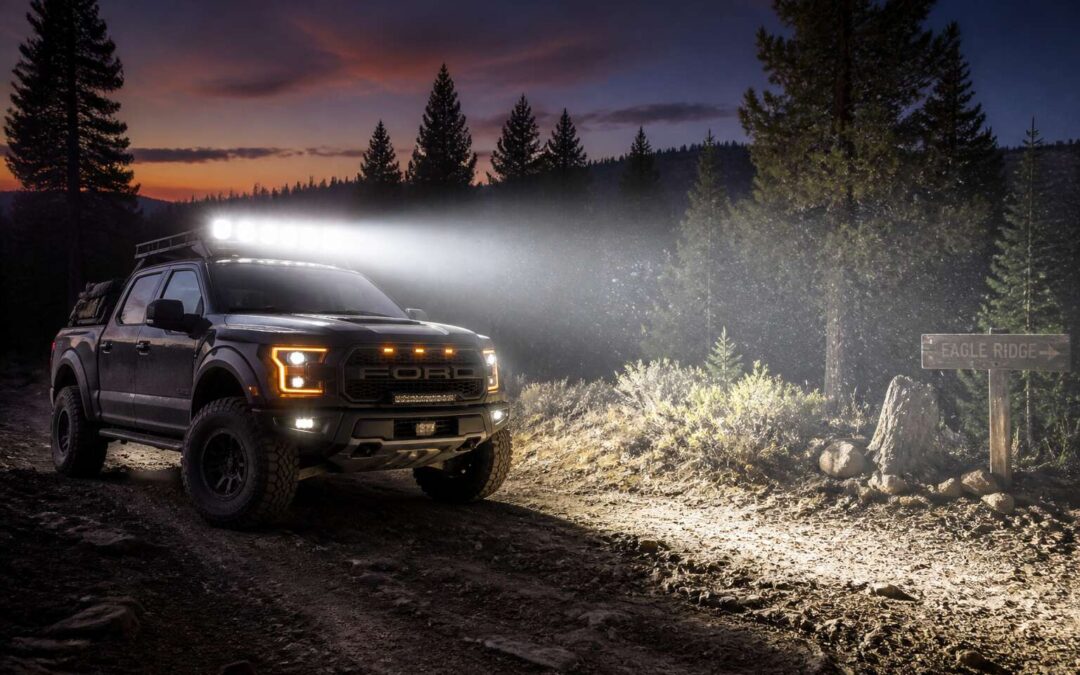
A spotlight finds a target. A flood light fills the space. That distinction answers the question of what are flood lights on a truck. They are auxiliary lamps designed to cast a broad, even pool of illumination directly in front of and beside the vehicle. Whereas a pencil beam reaches far down a gravel road, a flood light washes over a loading bay, a broken-down trailer, or a dark section of veld. The beam spread is typically wide, often exceeding thirty degrees, and we use them when a driver needs to see everything at once.
Common applications include:
– Setting up a portable generator at night
– Inspecting livestock in a dark kraal
– Hooking up a tow bar or trailer coupling
The mounting angle matters as much as the lens. If you aim these lights too flat, they create glare off dust and moisture. A slight downward tilt keeps the pattern on the ground where you need it. On South African farms and mine sites, this light turns a passive vehicle into a proper work station. It is not a decorative accessory; it is a functional tool that defines the immediate work area. That utility is the entire point of what are flood lights on a truck, and it is why serious off-road users install them with care.
Core Differences Between Flood and Spot Beam Patterns
Nobody buys a flood light by accident. They buy a spot beam expecting flood performance, then spend the night wondering why the entire veld stays black except for one bright patch. That mistake comes from ignoring reflector geometry.
Spot and flood patterns differ in the reflector. A spot uses a smooth parabolic surface that gathers light into a narrow cone. A flood uses a textured surface that breaks the beam and throws it sideways.
Practical consequences:
- Spot beams push light over distance, measured in lux at 10 metres.
- Flood beams push light over width, measured in coverage at close range.
- Flood lights on a truck trade central punch for broad area visibility.
What are flood lights on a truck solving? Darkness around the vehicle. A spot beam shows you the tree ahead. A flood beam shows you the ground between the wheels and the tree.
Primary Applications for Truck-Mounted Flood Lights
Ask a recovery operator what are flood lights on a truck for, and they will not mention the horizon. They will point at the ground around the vehicle. I have watched drivers work through the night with nothing but a pair of floods mounted low on the sides. Truck-mounted flood lights handle the work within three metres of the bumper. Hitching a trailer after sunset. Checking a tyre in the dark.
The most common applications are straightforward:
- Loading and offloading cargo in unlit farmyards
- Winching operations where the cable path must stay visible
- Security sweeps around the vehicle at remote lay-bys
Every one of these tasks fails with a spot beam. The spot light reaches far but does nothing for the space next to the wheels. Flood lights on a truck solve that exact problem. They throw a wide, short-range wash over the work area. For anybody operating alone at night, that is the difference between a quick job and a dangerous one!
Key Features and Technical Specifications
Beam Angle and Light Spread Explained
The real measure of a flood light is not wattage alone. Beam angle determines what are flood lights on a truck in practical terms. A wide 120 degree spread throws soft light across a campsite or loading bay, while a narrower 60 degree pattern reaches further without becoming a spotlight.
Common beam angles serve different purposes:
- 30 degrees produces a tight wash with serious reach, useful for scouting ahead on dirt roads.
- 60 degrees balances distance and width for everyday work.
- 120 degrees covers everything close by, ideal for setting up camp after dark.
Lumens tell you total output, but lux describes light actually landing on the ground. That distinction matters when you are reversing a trailer at night in the Karoo. High output means nothing if the optics scatter the beam uselessly.
Brightness Measurements: Lumens, Lux, and Candela
The sales sheet says 20,000 lumens, and the neighbour’s Bakkie has a bar that turns night into day. But what are flood lights on a truck when you strip away the marketing bluster? They are tools of illumination, measured by more than just total output. Brightness is a trifecta: lumens, lux, and candela. Lumens represent the total light emitted, the entire volume of photons spilling from the housing. Candela, on the other hand, is the intensity, the concentration of that light in a specific direction. Lux is the real-world result, the amount of light that actually lands on the surface you are trying to see.
This distinction is critical for practical use. Reversing into a dark loading dock requires high lux values directly behind the vehicle, a focused intensity that reveals obstacles clearly. Setting up a braai area benefits more from a generous lumen count spread over a wide area, even if the lux per square metre is lower. For the South African driver, this means ignoring the flashy total lumen figure on the box and examining the candela rating to understand if the beam will hold together or dissolve into haze.
– Lumens: Total light output.
– Candela: Intensity or beam concentration.
– Lux: Illumination received on a surface at a specific distance.
Choosing a light based on lumens alone is like judging a rugby player by their shoe size. The candela and lux figures dictate how that raw power is used, whether it is a wide wash for close work or a tight, piercing beam for distance. Understanding this relationship is the essence of what are flood lights on a truck. It is the difference between a glowing spectacle and a genuinely useful tool for the dark roads and open landscapes we traverse.
Durability Ratings: IP Codes and Impact Resistance
The Karoo dust and Highveld thunderstorms do not negotiate. Neither should your light bar. When asking what are flood lights on a truck, the housing matters as much as the beam. An IP67 rating means total protection against dust and temporary immersion. IP69K goes further, surviving pressurised steam cleaning after a muddy trail.
Impact resistance is equally brutal. Look for IK10 ratings, signifying a housing that withstands 5 joules of force, roughly a 2kg object dropped from 300mm. Polycarbonate lenses offer flexibility, while aluminium heatsinks prevent LED degradation.
– IK10: 5 joule impact protection
– IP67: Dust tight and water resistant to 1m
– IP69K: High pressure washdown rated
These ratings separate weekend rigs from workhorses. They define what are flood lights on a truck when the road disappears and the environment turns hostile.
Color Temperature and Its Effect on Visibility
Most drivers never consider colour temperature until they’re blinded by their own lights! The Kelvin scale measures light hue, which determines how well you read terrain at 2am. For truck-mounted flood lights, 5000K to 6000K is the sweet spot. It matches afternoon sunlight without blue tint highlighting dust in the beam.
Lower temperatures, around 3000K, scatter less in dust and mist. Higher temperatures, 6500K and above, create harsh glare on wet tar despite appearing brighter.
This matters when asking what are flood lights on a truck for South African conditions:
- 3000K to 4500K: superior in dust and fog
- 5000K to 6000K: general all-round use
- 6500K plus: maximum perceived brightness
Cheap LED chips shift their Kelvin rating when warm. I’ve watched a 6000K bar drift yellow-green after twenty minutes. That reduces contrast and depth perception. Understanding what are flood lights on a truck means accepting colour temperature’s role in visibility.
Popular Types and Light Source Technologies
LED Flood Lights: Efficiency and Longevity
LED flood lights have fundamentally shifted what are flood lights on a truck and how they perform on South African roads. Heat management determines longevity. Cheap units degrade noticeably within months, while properly designed LED arrays maintain full brightness for 50,000 hours of continuous use.
The main types differ by housing and lens construction:
- Composite housings resist corrosion from salt spray
- Cast aluminium housings dissipate heat efficiently
- Polycarbonate lenses withstand stone impacts
Efficiency comes from low current draw. A 120-watt LED flood light delivers similar output to a 300-watt halogen bulb, reducing strain on alternators and batteries. Solid-state construction adds reliability. Without filaments to burn out, vibration failures disappear from the equation, giving drivers consistent performance over long overnight hauls.
Halogen Flood Lights: Traditional and Budget-Friendly
The halogen flood lamp holds a peculiar place in the South African landscape. It is the workhorse that refuses to die, even as newer technologies beckon from the shelves. For a driver, the appeal is brutally simple: affordability and availability. You can find a halogen unit at nearly any roadside spaza shop or parts dealer between Johannesburg and the Cape. This convenience is a lifeline when the night closes in and your load must still reach the harbor.
What are flood lights on a truck if not a compromise? The halogen light source produces a warm, yellowish beam that battles dust and mist with surprising tenacity. The technology itself is dated, operating by heating a tungsten filament until it glows. It draws considerable current, pushing a 55 watt bulb to its limits while generating more heat than visible light. The filament is a frail, glowing thread, one that shudders with every pothole and corrugation.
Yet, this fragility has its own logic. When a filament breaks, the replacement is swift and cheap. You do not cry over a R150 bulb. The practical realities of this technology are straightforward:
– High power consumption drains batteries during extended idling.
– A shorter operational life, often under 1,000 hours.
– The glass lens cracks easily from stones kicked up by oncoming rigs.
Still, for the farmer patrolling a dark Karoo plot or the contractor parked at a remote site, the halogen flood remains a valid choice. It answers a specific demand that asks what are flood lights on a truck in the most traditional sense, without luxury and without complaint. No, it does not offer the sharp, white clarity of modern alternatives, but it offers a dependable, if dim, certainty.
HID Flood Lights: High Output and Considerations
Ask any fleet manager about HID flood lights and you will hear a tale of raw power. These lamps create an arc inside a quartz envelope filled with xenon gas and metal salts. The beam is blinding white and provides daylight-like visibility. For those asking what are flood lights on a truck in high output terms, HID is the answer.
But this intensity carries costs. A ballast regulates current, and the lamp takes seconds to reach full brightness. Restriking after a power interruption is slow. Bulbs degrade, shifting from crisp white to dull blue.
- Ballast failures are common.
- Cold weather slows warm-up.
- Bulbs cost more than halogen.
For a security team or recovery operator, HID offers output per rand. Carry a spare ballast.
Combination Flood and Spot Light Bars
Most drivers only discover what are flood lights on a truck after they try to illuminate an entire site with a single spot beam. I have watched this happen on site after site. Combination flood and spot light bars solve that problem directly. One housing contains both optical systems, so you can flood a loading area and also reach a distant gate.
The secret is in the reflector geometry. Flood sections use a pebbled reflector to diffuse light across a wide angle. Spot sections use a smooth, parabolic reflector to keep the beam tight and intense. Some bars let you switch each section independently, which is essential for mixed work.
– Check whether the spot and flood sections have separate power leads.
– Confirm the flood beam angle, 60 degrees or wider works best.
– Look for a bar with a dedicated spot focus down the centre.
This layout reduces mounting points and simplifies wiring. For fleet operators, it covers both scenarios without extra hardware. That is a genuine advantage on a dark mine road!
Portable and Magnetic Flood Light Options
When you ask what are flood lights on a truck, the answer often moves beyond permanent fixtures. Portable and magnetic flood light options serve operators who need flexibility. These units typically use LED chips because they tolerate vibration and deliver instant light.
Magnetic housings attach to any steel panel in seconds, so you can move them from bonnet to tailgate as the job changes. Portable versions include rechargeable batteries, freeing you from the vehicle’s electrical system. That independence matters on a remote farm road.
- Magnetic mounts suit flat steel surfaces only.
- Portable battery packs avoid cable constraints.
- Swivel bases let you aim the beam precisely.
The trade-off is power. A portable unit rarely matches a hardwired bar in output, so you trade raw brightness for adaptability. That is a fair exchange when you need to inspect a trailer one minute and a gate the next.
Mounting Locations and Installation Best Practices
Common Mounting Points: Bumpers, Grilles, and Roof Racks
A fifty inch light bar bolted to a flimsy bumper will bounce more than it illuminates. Mounting a flood light on a truck comes down to location and proper securing. Bumpers remain the most popular point because they sit low, which suits wide illumination across immediate terrain. Grilles offer a tidy middle ground, letting you aim light without hacking into bodywork. Roof racks win for height, casting a broader footprint, but they introduce wind noise and a higher centre of gravity.
- Bumper mounts: easiest wiring access, lowest glare.
- Grille mounts: discreet, but check airflow for cooling.
- Roof rack mounts: best spread, worst vibration.
Keep your harness away from heat sources and moving parts. That rubber grommet exists for a reason. Use it. Asking what are flood lights on a truck is one thing; the mounting position determines how useful they are. A poorly aimed unit on a shaky bracket turns into an expensive paperweight, and no amount of lumens fixes sloppy installation. If you are still wondering what are flood lights on a truck, remember that a solid mount makes all the difference.
Wiring, Relays, and Switch Integration
The wiring phase is where most flood light installations fail. The harness that ships with budget kits uses thin wire and a flimsy switch. Replace it. Run a dedicated circuit from the battery with an inline fuse sized for the amp draw.
A relay is non negotiable. It lets a small switch signal control the high current without melting anything. Use a 12V automotive relay rated at 30 amps for most LED bars. The trigger wire can tap into your high beam circuit to keep the flood lights off until you need them.
Switch integration comes down to ergonomics. Your main options:
- Backlit rocker switch in a dash slot.
- Factory style button with a separate relay.
- Wireless remote module to avoid cutting the dash.
Keep the ground short and clean. Corrosion ruins more installations than vibration ever does. Understanding what are flood lights on a truck includes knowing that the switch and relay decide whether they actually work when you need them.
Proper Angling and Aiming Techniques
You can spend a fortune on LED pods and still see nothing if the beam points skyward. Mounting location and aiming determine real-world performance. Roof mounts spread light wide but create bonnet glare. Bumper mounts keep the beam low and reduce backscatter in dust.
For installation, use stainless bolts, nylon washers, and dielectric grease on every terminal. Torque brackets to spec! Aiming is a simple routine. Park on flat ground facing a wall. Measure from the ground to the headlight centre. Adjust each flood light so the beam cutoff sits 50 millimetres below that line. Follow this order:
- Loosen the adjustment bolts a quarter turn.
- Shine the lights and mark the cutoff edge.
- Tighten bolts, drive a block, then recheck.
That routine produces a controlled beam pattern. What are flood lights on a truck? They are tools, and tools reward careful setup.
Legal Regulations and Road-Use Restrictions
Mounting location determines both performance and legal standing. In South Africa, the National Road Traffic Act restricts auxiliary lighting on public roads. Flood lights are generally intended for off-road use, and switching them on while driving on tar can attract fines.
Installation best practices start with secure mounting. Brackets must endure vibration and impact. Wiring requires proper relays, fuses, and weatherproof connectors.
- Mount flood lights low to minimise windscreen glare
- Use stainless hardware to resist corrosion
- Route wiring away from exhaust heat and moving parts
Legal regulations vary by province. Some regions permit flood lights if they remain covered on public roads. Others prohibit them entirely. Understanding what are flood lights on a truck means respecting these boundaries.
DIY Installation vs. Professional Wiring
Choosing between DIY and professional installation comes down to your comfort with electrical work and the complexity of your truck. A basic harness with relays and a fuse can be fitted in an afternoon. You need patience and a multimeter, along with a willingness to trace faults later.
– Do the work yourself if your truck has simple wiring and you can test each circuit safely.
– Call in an auto electrician for modern bakkies with CAN-bus systems or factory warranties at risk.
Professional wiring protects the vehicle’s electronics. An expert knows which circuits to tap, how to size the fuse, and where to mount the switch for clean access. They will also ensure the installation stays within the National Road Traffic Act.
The real concern when asking what are flood lights on a truck is not hardware alone. It is how the installation affects your safety and reliability. A loose mount vibrates apart on gravel, and bad wiring can start a fire. Good work prevents both outcomes, regardless of who does it.
Vibration and Corrosion Prevention Tips
The mounting location determines performance and survival. Bumper mounts keep the beam low and avoid dust thrown by the wheels. Grille mounts raise the beam but invite stone chips. Roof racks give the highest vantage point yet add wind noise and vibration. Each choice reshapes what are flood lights on a truck.
Vibration is the silent killer of these installations. A bracket that flexes on gravel roads will fatigue housing seams and crack lens seals. Use heavy gauge brackets with rubber isolators. Apply thread locker to every bolt and retorque after the first 500 kilometres.
Corrosion prevention matters most near the coast where salt air accelerates metal fatigue. A few habits extend wiring life:
- Use dielectric grease on all connectors
- Heat shrink every splice with adhesive lining
- Route cables away from heat sources
- Spray terminals with a wax based rust inhibitor
A lamp that fails on a dark farm road defeats the purpose of what are flood lights on a truck.
Choosing the Right Flood Lights for Your Truck
Assessing Your Lighting Needs and Driving Environment
Before you spend a cent on auxiliary lighting, ask yourself what are flood lights on a truck actually meant to solve for your specific driving environment. The answer changes depending on where you live and drive. A farmer hauling feed on Free State backroads needs a wide, even wash of light to catch stray cattle. A tour operator crossing the Kruger at dusk needs the same spread but with more attention to colour rendering.
Your lighting needs are not universal. They are tied to terrain, weather, and typical speeds. Here are a few questions I use to help owners narrow their choice:
- Do you drive mostly on open highways or twisting mountain passes?
- Are you dealing with dust, fog, or heavy rain?
- Do you need to spot animals or pedestrians at the roadside?
Once you answer those, the beam angle and mounting position become obvious. The real trick is matching the flood pattern to the environment rather than picking the brightest bar on the shelf. That is a mistake that leaves drivers with a wall of glare and zero depth perception.
Matching Size and Housing Style to Your Vehicle
Once you settle on a flood beam pattern, physical size and housing style become the next consideration. A compact LED flood pod suits a Suzuki Jimny’s bull bar. A 42 inch light bar looks impressive on a Hilux, but on a smaller bakkie it creates mounting stress and wind drag at speed.
Housing material matters more than most buyers realise. Die cast aluminium dissipates heat better than plastic, which keeps LEDs cool during long gravel stretches. Polycarbonate lenses shrug off stone chips. Understanding what are flood lights on a truck means looking past the beam pattern to the housing, which protects the emitter from the same environment you drive through.
- Brackets that hang below the bumper reduce approach angle, so mounting height matters.
- Bumpers and roof racks carry weight ratings that many owners ignore.
South African conditions demand corrosion resistant fittings, especially near the coast. What are flood lights on a truck worth if the housing corrodes after one rainy season? Match width to your vehicle’s stance.
Evaluating Power Draw and Electrical Load
A truck’s electrical system is the quiet heartbeat that gives flood lights their voice. Many owners choose a light bar with spectacular lumen figures without understanding the amperage required to feed it. The alternator and battery work as a team, but this team has limits. A 240 watt LED bar can draw around 20 amps at full brightness. Add a winch, a fridge, and a sound system, and your alternator begins to sweat. Understanding what are flood lights on a truck involves respecting the balance between light output and the capacity of your charging system.
Calculating the load before installation prevents voltage drop, which manifests as dimming lights and a slow cranking starter. Check the fuse rating on your auxiliary harness. Most come with a 15 or 30 amp fuse, but a single harness cannot handle every scenario. The rule is straightforward: add the wattage of every lamp you plan to run simultaneously, then divide by 12 volts. This gives you the current draw for the entire circuit. Consider these typical draws:
– 20 watt LED pods: approximately 3.3 amps per pair
– 120 watt light bar: 10 amps at full power
– 240 watt light bar: 20 amps at full power
– Driving lamps with a relay: 5 to 8 amps each
A relay is mandatory to protect the factory switch. The relay allows the high current to flow directly from the battery while a small signal from the cabin controls it. This is not optional if you value your truck’s electrical integrity. A direct connection to the battery via a fuse and relay gives the lights a clean source of power and isolates them from the sensitive computer modules in modern vehicles. The practical effect is a system that responds instantly when you hit the switch, without the risk of melting wires behind the dashboard. When you finally understand what are flood lights on a truck, you realise they are only as reliable as the juice you give them. Ground straps, battery terminal torque, and alternator health all play their part in that equation.
Budgeting: Entry-Level vs. Premium Options
When you start comparing prices for flood lights on a bakkie, the gap between entry-level and premium units can be startling. A R300 set from a local spares shop will throw light, but the housing, lens, and driver circuitry are where corners get cut. Premium options from brands like Hella or Rigid use thicker aluminium heatsinks, sealed connectors, and optics that hold their beam pattern over years of gravel road vibration.
Ask yourself what the lights will actually endure. A weekend trail rig parked under a carport might do fine with budget lights. A working farm vehicle running before dawn in the Karoo needs components that survive dust, water crossings, and constant bouncing.
- Entry-level: lenses that yellow and crack under UV exposure
- Mid-range: decent output but questionable waterproofing after a year
- Premium: potted electronics, replaceable lenses, longer warranties
Understanding what are flood lights on a truck means recognising that you pay for longevity before raw output.
Reviewing Reputable Brands and Warranty Coverage
The brand name on your flood light says more about your safety than the lumen count ever will. When you understand what are flood lights on a truck, you realise the housing and the warranty are the real indicators of quality. I have seen budget lights fail within months, but a reputable brand like Hella, Rigid, or Stofpad Lighting stands behind its products with clear warranty terms.
Here is what separates a solid warranty from a useless one:
– Coverage for LED driver failure, not just the diode
– Water ingress protection for at least three years
– A local South African agent who honours claims without shipping delays
Ask the supplier how warranty claims are handled. A light that costs R2 000 but takes six weeks to replace is no bargain. The right brand will have a straightforward process and a physical address.
Maintenance, Upgrades, and Long-Term Care
Routine Cleaning and Lens Care
After two years of Karoo testing, I found a dirty lens cuts usable light by nearly a third. Long term care matters more than the initial purchase.
Cleaning should be weekly on gravel roads. Use a soft microfiber cloth with a plastic safe cleaner. Harsh solvents strip the anti glare coating. For caked mud, soften it first. Do not scrape.
Upgrades are part of ownership. Polycarbonate replacement lenses add impact resistance without altering the beam pattern. Check gaskets every six months. Replace brittle ones.
A simple schedule keeps things honest:
– Inspect lenses for cracks after every off road trip.
– Clean housing vents to prevent moisture buildup.
– Reapply dielectric grease to connectors, not lenses.
Knowing what are flood lights on a truck includes understanding maintenance. A well kept unit outlasts two neglected ones. A lens you cannot see through defeats the purpose.
Inspecting Wiring and Connectors
Understanding what are flood lights on a truck goes beyond beam patterns. The wiring and connectors decide whether that light survives a Karoo gravel road. I have watched a light bar fail because a terminal corroded quietly behind the bumper.
Inspect connectors every few months. Look for green crust, loose pins, or heat discolouration around sockets. Heat marks mean resistance, and resistance drops voltage.
- Check the relay socket for scoring or melting.
- Flex the harness to expose cracked insulation.
- Confirm the earth wire meets bare metal.
Corrosion hides under shrink wrap. A multimeter tells the truth. Compare voltage at the battery and at the light plug. A difference beyond half a volt means the circuit needs work. That gap turns a bright flood into a dull glow.
Troubleshooting Common Performance Issues
Understanding what are flood lights on a truck includes knowing they degrade with dignity, not drama. A flood light that slowly dims usually points to a failing LED driver, not the bulb. Drivers are replaceable, so swap one before replacing the entire housing.
Moisture inside the lens is a different beast. That fog is not atmospheric poetry; it is a failed seal. Whip off the housing, dry the gasket, and reapply dielectric grease. If water has pooled, the reflector has corroded beyond rescue.
- Flickering after warm-up indicates thermal stress in the circuit board.
- One section dying while the rest glows suggests a damaged LED array.
- Rapid failure after installation means voltage spikes, so verify alternator output.
For upgrades, match the new light’s current draw to the harness rating. Overdriving a stock loom will melt it. Long-term care means replacing rubber boots and grommets before they crack, because a flapping wire is tomorrow’s short circuit.
When to Upgrade or Replace Existing Units
A cracked housing cannot be sealed back to factory spec. A lens yellowed into a diffuser will never throw a clean beam again. I have seen flood lights with 100,000 hours still glowing, but their output had dropped by half. Understanding what are flood lights on a truck includes knowing when to stop repairing and start replacing!
Upgrading makes sense when your current units cannot handle the thermal demands of your LED driver or when the beam pattern no longer matches your off-road routes. Replacing the entire unit is cheaper than repeated gasket repairs once the reflector has corroded.
Long-term care means:
- Torquing mounting bolts to spec every season
- Coating terminals with dielectric grease annually
- Inspecting the harness for abrasion near the firewall
If your flood lights flicker after warm-up or one segment dies, that is the signal to replace rather than patch.