
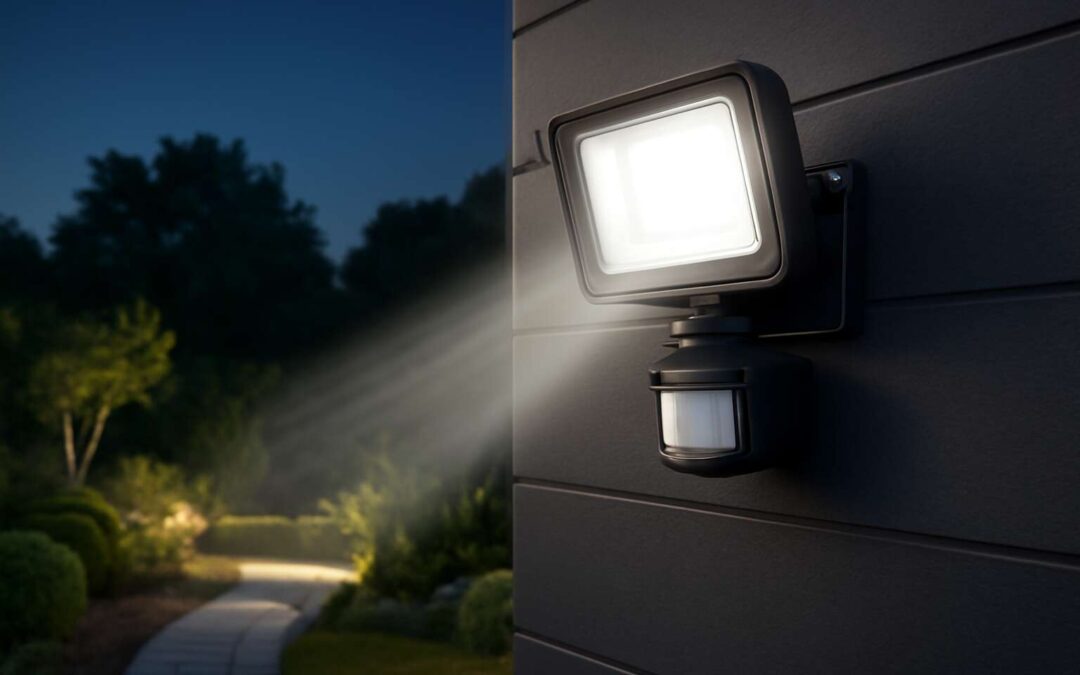
Understanding flood light sensor basics
What defines a flood lighting sensor
Lighting that responds to the night is more than illumination—it’s an intelligent guardian. Recent studies suggest motion-activated lighting can cut energy bills by up to 50% when sensors are tuned for your space. A flood lights sensor detects both light levels and movement, switching on only when needed.
At its core, understand that there are several senses behind these devices. Passive infrared (PIR) sensors feel body heat and nearby motion; photoelectric cells read ambient light so the lights stay off during daylight. Some models combine ultrasonic or radar tech for larger outdoor areas, while rugged housings resist rain and dust in SA conditions.
Choosing the right unit means matching sensitivity to your space—more light for big driveways, less for shaded corners. A good flood lights sensor blends form and function. It’s less about gimmicks and more about reading your property’s tempo and weathering South Africa’s storms with quiet reliability.
How sensing triggers lighting
In South Africa, a well-tuned flood lights sensor can cut nightly energy costs by 50%, turning darkness into a guarded perimeter. These devices align their glow with the property’s tempo, brightening only when footsteps or shadows cross a threshold and fading back to stillness when the area is calm. The result is not glare but a quiet, intelligent presence that respects budgets and the landscape.
Understanding how sensing triggers lighting reveals the craft behind the glow.
- Motion and heat cues trigger illumination at entrances, driveways, and paths
- Ambient daylight levels keep lamps quiet when the sun shines
- For larger zones, extended sensing creates a gentle envelope of light
Designed to endure South Africa’s weather, these systems blend rugged housing with dependable sensors, marrying durability with discreet, practical light.
Key components inside a sensor-equipped flood light
Light that respects a property’s mood, a flood lights sensor quietly coordinates glow with patient precision. In a landscape where shadows conceal risk and beauty alike, the right device becomes the unseen guardian, turning darkness into a guarded perimeter with grace.
Key components inside a sensor-equipped flood light include:
- Photocell or ambient-light sensor
- PIR or other motion detector
- LED driver and power supply
- Microcontroller or sensor module
- Rugged, weatherproof housing (IP65+)
- Lens assembly for targeted illumination
Built to endure South Africa’s sun-drenched and storm-prone afternoons, these assemblies marry durability with discreet, practical light—an artful balance that whispers elegance while safeguarding budgets.
Benefits of using sensor-based outdoor lights
From Cape Town’s night markets to inland estates, darkness carries more than quiet; it invites risk! In South Africa, where weather can flip in an instant, a flood lights sensor stands as a discreet guardian—bright where it matters and almost invisible otherwise. I’ve watched it watch the shadows, not with insistence, but with precision, turning unwelcome movement into a controlled welcome and keeping the exterior calm after hours.
Understanding its core idea reveals why it feels so natural: light follows need, not tradition. That means less glare, trimmer energy bills, and longer-lasting LEDs, while the property gains a sense of measured security that respects both budget and climate.
- Energy efficiency with targeted illumination
- Enhanced security through timely lighting
- Lower maintenance and longer LED life
Each dusk becomes a calculated moment, where science and atmosphere meet to safeguard spaces with quiet, responsible glow.
Sensor types for outdoor flood lighting
Motion detection vs ambient light sensing
In South Africa, a well-chosen flood lights sensor can slash night-time electricity bills by up to 50%. Two main sensor types shape performance: motion detection and ambient light sensing. Each serves a distinct purpose and risk profile, so picking the right one matters for security, safety, and efficiency.
- Motion detection: lights turn on with movement and stay on just long enough to deter intruders or guide footsteps.
- Ambient light sensing: lights stay off in daylight and switch on when natural light dips below a threshold.
For many settings, a hybrid approach offers balance: motion-triggered illumination plus daylight control ensures visibility when it matters most while avoiding glare and wasted run-time. The flood lights sensor should align with site layout, typical movement patterns, and local regulations to minimize false triggers and maximize coverage across driveways, gates, and perimeters.
Infrared and microwave sensing technologies
In South Africa, a well-chosen flood lights sensor can cut night-time electricity bills by up to 50%.
Infrared sensors detect heat differences, responding to body heat and warm objects, while microwave sensors emit radio pulses to detect motion beyond line of sight.
- Infrared: precise in open spaces, sensitive to temperature changes.
- Microwave: works through rain, fog, and brush, with longer range.
Both bring different strengths to lighting systems.
A hybrid approach blends motion-triggered visibility with daylight diplomacy, ideal for driveways and gates.
Aligned with site layout and local weather, a sensor-equipped flood light guards perimeters with quiet grace.
Smart and IoT-enabled sensor options
South Africa’s nights are long, and energy bills don’t sleep. A well-chosen flood lights sensor can cut night-time electricity bills by up to 50%—proof that smart sensing trumps stubborn darkness.
Smart, IoT-enabled options range from occupancy sensors to daylight detectors and hybrid blends. The sensor pairs motion awareness with sun-level data to keep spaces lit only when needed, saving energy and bulb life.
Common types you’ll encounter include:
- Occupancy/presence sensors (PIR, ultrasonic)
- Daylight sensors with photocells
- Hybrid models that blend motion and ambient-light sensing
In South Africa, these systems sync with apps and weather feeds, delivering quiet, reliable illumination that respects both security and budgets.
Thresholds, delays, and sensitivity settings
South African nights stretch long, and tariffs linger—yet a well-tuned flood lights sensor can trim night-time bills by as much as 50%, proving smart sensing makes light work of darkness.
Thresholds, delays, and sensitivity settings shape when and how bright the glow becomes. Here’s how these tuning knobs influence practical outcomes:
- Thresholds: set the ambient-light level (lux) that triggers illumination, so lights stay off in daylight and wake at the right moment.
- Delays: control how long the lamp stays on after motion stops, reducing flicker and unnecessary runs.
- Sensitivity: adjusts motion-detection reach and accuracy to accommodate site layout and wind-driven sways.
With these levers, a flood lights sensor delivers consistent security lighting that respects budgets while adapting to changing weather and occupancy patterns across South Africa.
Choosing the right sensor for your space
Assessing area coverage and mounting height
Modern sensors can cut outdoor lighting energy use by up to 35%, so a smart choice pays for itself quickly. When selecting a flood lights sensor for your space, focus on area coverage and mounting height to avoid blind spots and wasted lumens. South Africa’s climate and architecture demand placement that suits wind, glare, and shadows, ensuring the glow arrives exactly where it’s needed, not everywhere at once. Done well, your lighting tells a quiet, efficient story each night—guided, like a moonbeam, by thoughtful placement.
To fine-tune precision, consider a few anchors:
- Coverage alignment with the property perimeter
- Mounting height in harmony with manufacturer guidelines
- Weather exposure considerations for SA climates
I’ve witnessed spaces transform when height, coverage, and timing align.
Weather resilience and IP ratings
Choosing the right flood lights sensor isn’t just about brightness; it’s about staying lit when the storms roll in. In South Africa, weather resilience matters. Modern sensors can cut outdoor lighting energy use by up to 35%, and that efficiency becomes a quiet companion through long, windy nights.
Weather resilience hinges on IP ratings and rugged design:
- IP65 or higher ratings
- UV and corrosion resistance
- Dust-tight housing for SA conditions
That simple checklist helps ensure the glow remains consistent after South Africa’s winds and dust.
A well-chosen solution becomes more than light; it’s a quiet safeguard that respects budget and the night.
Energy efficiency, dimming, and control options
Across South Africa, modern flood lights sensor systems can cut outdoor lighting energy use by up to 35%, a quiet win that shines through long, wind-swept nights. It becomes more than a bulb; it’s a partner for homesteads, farms, and city blocks where every watt matters. Smarter sensing means paths stay lit when needed, while the rest of the yard savours the stillness after a storm season!
When choosing, think about energy efficiency, dimming, and control options.
- Dimming profiles that adapt to sunset and full night brightness
- Occupancy or ambient-light based activation to reduce waste
- Remote control and smart scheduling for on-demand visibility
The right sensor design balances reliability with budget, turning ordinary evenings into mindful illumination that lasts through many a windy SA night.
Compatibility with existing fixtures and wiring
Choosing the right sensor for your space starts with one truth: it must talk to what you already have. A flood lights sensor that slots into your current wiring avoids costly rewiring and late-night surprises!
Compatibility checks to consider:
- Voltage and current compatibility with existing fixtures
- Mounting pattern and sensor head clearance
- Communication protocol alignment with your control system
When the fit is right, your spaces feel held by a quiet, mindful light that suits South African nights, from the coast to the veld, with ease.
Installation and maintenance best practices
Mounting considerations: height and orientation
Mounting a flood lights sensor is more than choosing a spot; it’s choreographing light and shadow. A well-placed unit becomes a sentinel, waking with dusk and fading at dawn. “Light is safety in motion,” a veteran installer says, and the idea suits every South African yard. Height and tilt are the main acts, guiding beams to doors while softening glare on neighbours.
Consider these mounting benchmarks to keep performance steady through SA’s shifting weather and lighting needs:
- Height: balance coverage with ground reach; typical residential zones use moderate heights to illuminate paths and entryways.
- Orientation: tilt downward to minimize glare and keep the flood lights sensor focused on activity.
- Durability: choose corrosion-resistant fittings and weatherproof cabling that meet an IP rating suitable for SA climates.
Maintenance means a clear lens and intact seals—quiet, confident upkeep that preserves reliable sensing in changing conditions.
Wiring, power sources, and safety checks
Wiring a flood lights sensor is more than strapping cables to a bracket; it’s a design choice that prioritises reliability and weather resilience. A dedicated outdoor circuit with proper protection keeps the night watch honest, while a SA-rated driver handles surges. The flood lights sensor thrives when the feed is steady and clean, cutting false triggers and energy waste. The flood lights sensor rewards a stable feed.
- Code-compliant wiring with oversight
- Weatherproof connectors and IP-rated glands
- Accessible junctions with proper strain reliefs for inspections
Optimal installation and maintenance hinge on robust, outdoor-rated fittings and tidy cabling.
Maintenance cycles stay quiet and vigilant: lenses remain clear, seals hold, and IP ratings stay intact. After storms or heavy winds, inspections help preserve reliable sensing and lighting.
Calibration, testing, and regular maintenance
Calibration, testing, and regular maintenance keep a flood lights sensor honest, thriving where reliability matters most. In South Africa’s climate—heat, sudden downpours, and dusty nights—the right calibration aligns sensitivity with the real world, preventing false triggers and wasted energy while preserving the fixture’s longevity and the neighborhood’s quiet hours!
- Sensitivity tuning to match the intended detection zone
- Ambient conditions and weather drift checks to prevent gradual misreads
- Lens cleanliness and seal integrity to sustain IP ratings
Regular testing and straightforward maintenance routines—clean lenses, verify seals, and confirm actuation thresholds—keep the system responsive through changing seasons. Align this cadence with local weather patterns and community expectations, so lighting comes on when needed and settles back to rest with the dusk.
Optimizing performance and safety with sensor-enabled flood lights
Automation scenarios for security and convenience
One well-timed flood lights sensor can deter would-be intruders in seconds and cut electricity bills at the same time—industrial tests show energy savings approach 50% when outdoor lighting behaves intelligently. In South Africa, reliable dusk-to-dawn lighting is a cornerstone of property safety.
To optimize performance and safety, calibrate sensitivity and delay settings, and carve the area into zones so light only hits what matters. Smart controls let the system ignore false triggers from passing cars or branches, reducing nuisance activation.
- Deterrence at entry points: auto-illumination when doors or gates are approached
- Convenience lighting along pathways or driveways for safe navigation
- Safety assurance with ambient-light-aware dusk-to-dawn operation
Beyond security, these systems boost convenience—lighting guides guests to safe paths, while energy-efficient dimming keeps costs predictable.
Energy storage options: solar and battery backups
Across South Africa, a properly tuned flood lights sensor can turn dusk into a guardian—bright enough to deter intruders, soft enough to preserve the night. Industrial tests show energy savings approaching 50% when outdoor lighting behaves intelligently, proving that performance and elegance can share the same space.
Energy storage options ensure reliability when skies darken or the grid falters. Solar charging keeps the system autonomous, while battery backups bridge nighttime hours and cloudy days.
- Solar charging with smart regulation
- Deep-cycle batteries for steady power
Together, these elements elevate safety and convenience, letting pathways glow with purpose long after sunset. This harmony between light, battery health, and the South African climate ensures dependable illumination when it matters most.
Security, privacy, and data considerations
Evening settles over a Pretoria street and a flood lights sensor quietly recalibrates. The result isn’t just brightness; it’s stewardship—bright when needed, gentle otherwise. Studies show that intelligent outdoor lighting can trim energy use by nearly 50%, proving performance and elegance can share space.
Optimizing performance means considering thresholds, dwell times, and the balance between motion and ambient light, all while guarding privacy through edge processing that keeps sensitive data local.
- Edge processing minimizes cloud data and preserves privacy
- Encrypted channels and secure pairing prevent eavesdropping
- Clear data retention policies and access controls
In the South African climate, reliability and care fuse safety with comfort, turning dusk into a deliberate vigil.
Brand selection, warranties, and after-sales support
On a Pretoria dusk, a flood lights sensor awakens with measured poise, sipping brightness only when needed and conserving energy for the hours ahead. In this delicate balance, performance and safety become a quiet promise, turning dusk into a deliberate guardian rather than a mere glow.
Brand selection, warranties, and after-sales support are the trinity that keeps this promise alive. Seek brands with a robust local footprint, transparent warranty terms, and proactive service commitments. Ensure parts availability and nearby technicians who understand South Africa’s climate and wiring realities.
- Strong local service network
- Clear, transferable warranties
- Accessible spare parts and fast turnaround
With the right partner, the beam remains true long after first install—reliable, protective, and quietly elegant. In South Africa’s changing evenings, choose a flood lights sensor that anticipates rather than merely responds, and let the street breathe safely under steady light.