
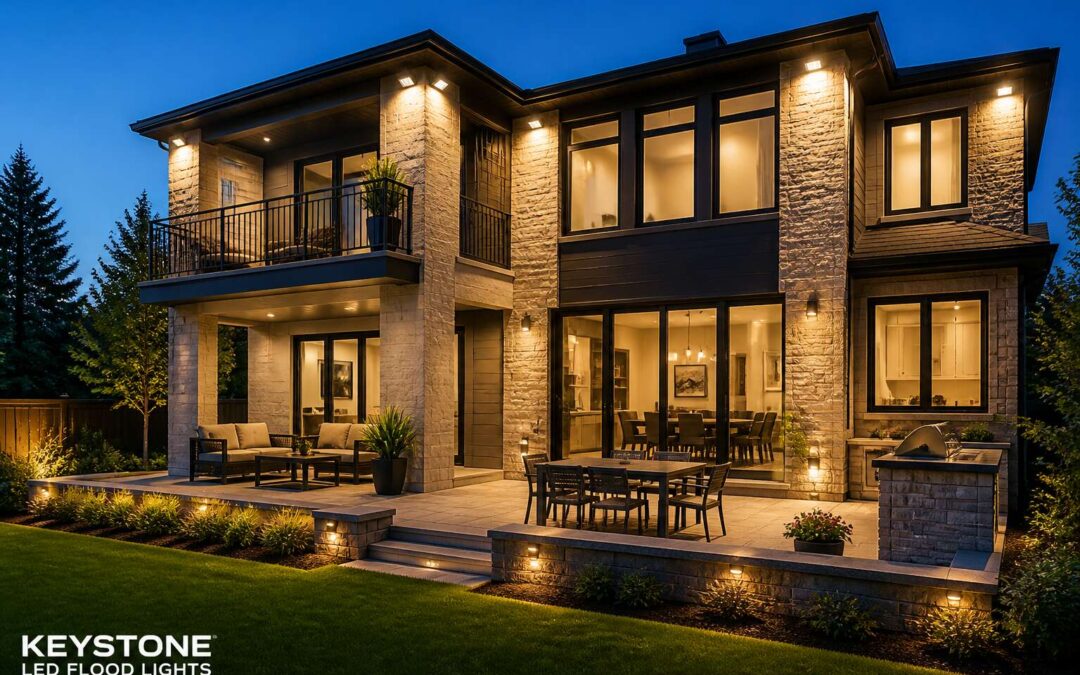
Why Choose LED Flood Lights for Outdoor Illumination
Energy Efficiency Compared to Traditional Lighting
In South Africa, outdoor lighting can account for up to 15% of a household’s monthly electricity bill. Choosing the right technology for your exterior spaces is not just about visibility, it is a direct lever on your operating costs. This is where the conversation shifts to the true efficiency of modern illumination.
Keystone led flood lights offer a compelling solution for those seeking to reduce consumption without compromising on light output. They deliver a higher lumen-per-watt ratio than conventional halogen or high-pressure sodium fixtures. This means you receive more usable brightness for every unit of electricity drawn, a critical factor in an era of rising energy tariffs and load-shedding schedules.
The operational cost difference is profound. Traditional lighting converts a significant portion of energy into heat rather than visible light, wasting resources. In contrast, the advanced design of these LED units ensures that power is directed towards illumination. The direct benefit is a noticeably lower monthly statement from your municipality, alongside a reduced carbon footprint for your property.
– Lower wattage requirements for the same light output.
– Reduced heat emission, which lessens the strain on surrounding materials.
– Longer lifespan, which decreases the frequency of replacements.
– Instant start-up with no warm-up period, unlike older technologies.
These attributes transform the simple act of switching on a light into a strategic financial decision. For a homeowner or business in South Africa, the shift to this technology is an immediate step toward sustainable practice and fiscal prudence.
Longevity and Durability in Extreme Weather
In South Africa, outdoor lighting leads a rugged existence. The sun tries to bake it, the rain attempts to drown it, and the curious hadeda uses it as a perch. Keystone led flood lights laugh at this abuse. Their sealed housings repel moisture, while the reinforced lenses shrug off flying debris.
Consider what these units endure:
– Temperature swings from frosty Karoo nights to sweltering Lowveld afternoons
– Dust storms that would choke lesser fixtures
– Persistent UV radiation that yellows cheaper plastics
The anodised aluminium bodies manage heat without cracking. Their solid-state construction means no filaments to snap, no glass to shatter. You mount them once and forget them, which is a rare luxury in a country where load-shedding already provides enough surprises.
Superior Light Output and Beam Angles
The real measure of a flood light is what it does after the switch flips. Keystone led flood lights deliver controlled illumination where older technologies scattered light in every direction. The optics shape each beam with purpose. A narrow 60 degree spread picks out a single tree or a driveway gate. A wider 120 degree wash covers a whole courtyard without harsh spots or dead zones. Beam edges stay clean, so you can light a pathway without spilling glare into a neighbours bedroom window.
Common beam options include:
- Narrow beams for accent lighting and signage
- Wide beams for security and general area illumination
- Asymmetric optics for corridors and pathways
What impresses me is the character of the light itself. Crisp white light renders colours honestly. Red bricks stay red. Green leaves stay green. In industrial yards around Johannesburg, I have seen Keystone led flood lights produce uniform brightness right to the edge of the beam. No fading. No flicker!
Key Features to Look for in High-Quality Flood Lights
Lumens, Wattage, and Color Temperature
One lumen equals the light a single candle casts across one square foot. Wattage, by contrast, measures power consumed. This difference matters greatly when selecting keystone led flood lights for a South African property, since electricity costs continue to rise.
Color temperature, measured in Kelvin, determines whether your outdoor space feels welcoming or formidable. Lower Kelvin values emit a warm amber tone, while higher values produce the cool, clinical brightness suited to parking areas and perimeters.
- Assess lumen output per watt to gauge real efficiency.
- Choose a Kelvin rating aligned with your lighting purpose.
- Verify the beam angle fits your installation height.
The right keystone led flood lights balance these specifications without compromise.
IP Ratings and Waterproofing Standards
In South Africa, summer storms arrive without warning, and coastal air carries salt that corrodes unprotected metal. The Ingress Protection rating, or IP code, tells you exactly how well a fixture resists dust and water. The first digit measures solid particle protection. The second digit measures moisture resistance. For any outdoor installation, an IP65 minimum is non negotiable.
Keystone led flood lights typically carry IP66 or IP67 ratings. IP66 means the housing endures powerful water jets. IP67 means it survives temporary immersion. That distinction matters when you mount fixtures low on a garden wall or high on a security gate. I always check the stamped rating on the housing itself, because the box can promise what the metal cannot deliver.
- IP65: dust tight, protected against water jets.
- IP66: dust tight, protected against powerful water jets.
- IP67: dust tight, protected against temporary immersion.
Smart Controls and Motion Sensor Compatibility
Load shedding schedules change weekly in South Africa, and security concerns shape how we light our boundaries. Smart controls on keystone led flood lights become the difference between a fixture that serves you and one that merely exists.
Motion sensor compatibility matters most at the threshold. A good sensor detects a person, not a passing cat. High quality options offer adjustable sensitivity and a timer that decides how long the light lingers after triggering.
- Dusk to dawn photocells that react to ambient light
- PIR sensors with a range suited to your property
- Manual override for permanent illumination when needed
Without these layers, a flood light is just bright metal on a wall. With them, it anticipates darkness and movement without demanding your attention.
Heat Dissipation and Housing Materials
Heat management separates a flood light that lasts a decade from one that dims in two years. Keystone led flood lights use die-cast aluminium housings with finned heat sinks that pull thermal energy away from the LEDs. This matters in South Africa’s climate, where summer ambient temperatures push components to their limits.
The housing material also determines survival. Powder coated aluminium resists the salt-laden air of coastal provinces like the Western Cape. Stainless steel screws and tempered glass lenses prevent the slow decay that cheaper fixtures suffer.
Consider these housing features:
– Finned aluminium heat sinks for passive cooling
– Powder coated surfaces for corrosion resistance
– Tempered glass lenses that handle thermal shock
When heat has nowhere to go, lumen output drops and longevity shrinks. Good thermal design keeps keystone led flood lights performing at their rated output, season after season.
Installation and Placement Best Practices
Determining Optimal Mounting Heights
The low hum of a transformer is a familiar comfort in South African neighbourhoods, but more telling is the precise spread of light across a driveway. One has only to look at a municipal park in Cape Town’s northern suburbs to see the difference a correct installation makes. The perceived brightness of a unit is not solely about wattage. It is about the angle of incidence and the height at which the housing sits.
We often see Keystone LED flood lights installed too low, creating a harsh, blinding glare that defeats their purpose. When mounted at the correct elevation, these fixtures can cover a surprising expanse of ground without the dark spots that plague poorly planned layouts. The relationship between the mounting height and the horizontal throw is critical; too high, and you lose detail on the surface, too low, and you create a tunnel vision effect that restricts peripheral awareness.
For security perimeters, a standard rule of thumb involves a specific calculation based on the beam’s vertical spread. Consider the typical layout for a residential complex:
– For walkways and garden paths: mount at 2.5 to 3 metres to illuminate the terrain texture.
– For driveways and loading zones: mount at 4.5 to 6 metres to cover the width of a vehicle.
– For perimeter walls and fences: mount at a 45 degree downward angle from a height of 6 metres to eliminate climbing shadows.
It is not enough to simply point the fixture where you look. The specific optical lens design in Keystone LED flood lights assists in spreading the lumens evenly, but the physical placement dictates whether that spread is effective. Testing with a temporary mount before concrete work is a wise move. It allows you to adjust for the actual reflectivity of your specific grounds, whether you are dealing with pale sand or dark asphalt.
Wiring and Electrical Safety Considerations
We see more outdoor light failures from loose neutrals than from any other fault. Most installations fail behind the fitting, not on the roof. Thermal cycling loosens fasteners, so tighten the locking bolt after the first week. Overlap each beam edge with the neighbouring unit for continuous coverage.
Wiring deserves discipline. SANS 10142 governs South African installations. Use a dedicated circuit with an earth leakage unit for every keystone led flood lights installation. Voltage spikes during load shedding transitions justify a surge protector at the distribution board.
When terminating cables:
- Verify the breaker is off with a voltage tester.
- Use IP68 junction boxes outdoors.
- Fit cable glands to prevent moisture ingress.
- Torque terminal screws to spec.
Keep neutral and earth conductors separate throughout the run. Bond them only at the board. Keystone led flood lights tolerate brownouts, but long cable runs cause voltage drop. Check the datasheet for minimum voltage before finalising cable size.
Adjusting Beam Spread for Maximum Coverage
Keystone led flood lights rarely cover a yard evenly. The difference between a washed-out patch and a crisp, uniform pool of light comes down to how you aim the housing and where you place the bracket. Walk the perimeter at night to spot dark zones before tightening anything.
Adjusting the beam spread takes patience. Most keystone led flood lights feature a rotatable visor or a locking swivel. For a driveway, aim for a long, narrow oval. For a braai area, a wide, short spread works better. Overlap each beam edge with the neighbouring unit for continuous coverage, but too much overlap creates hot spots.
Recheck the aim after a week because thermal cycling shifts the mounting bracket slightly. A quick twist of the adjustment screw brings the coverage back into line.
Avoiding Light Pollution and Glare
Light pollution steals the clarity of the night sky. For South African homeowners, the glow escaping a poorly aimed floodlight does more than annoy the neighbours. It disrupts nocturnal wildlife and dims the stars above the Karoo. The placement of keystone led flood lights demands deliberate thought. Angle the housing downward and use the visor to shield the source from direct view. This simple act converts glare into usable illumination on the ground.
The bracket position matters equally. Let the beam fall inside your property line, with the fixture turned toward the space actually in use. A modest checklist keeps the design honest:
- Position each unit so the bulb stays invisible from the street.
- Direct the beam away from windows and boundary walls.
- Keep the spread narrow where the neighbour’s yard begins.
Keystone led flood lights, aimed with restraint, allow the garden to recede into darkness and the night to keep its character.
Maintenance and Troubleshooting Tips
Cleaning and Caring for Your Fixtures
In South Africa’s dusty winters, the performance of your keystone led flood lights can dim behind a layer of grime. I have seen fixtures lose half their brightness simply because nobody wiped them down. A quick clean restores that punch of light, but you need the right method.
Use a soft cloth with mild soapy water. Avoid harsh chemicals that damage the lens seal. Inspect the housing for cracks after storms, and always turn off power first. That simple habit prevents many headaches.
- Remove cobwebs and debris from the vents
- Wipe the lens in circular motions
- Check the mounting bolts for tightness
When trouble appears, start with the power source. Loose connections often mimic dead bulbs. For keystone led flood lights, a multimeter test saves hours. If flickering occurs, tighten terminal screws gently. This care keeps your fixtures glowing through every season.
Identifying Common Issues Like Flickering or Dimming
A security light that flickers at 2 a.m. is more than an annoyance. It is a clue. Dimming keystone led flood lights frequently point to voltage fluctuations, a reality many South Africans know well. Loose terminal screws create intermittent contact, while a failing driver mimics a dying bulb.
Grab a multimeter and measure at the fixture, not the switch. That single reading separates wiring faults from internal failures! I have traced stubborn flicker to a corroded connector hidden behind a wall plate. Check the neutral wire too. An unbalanced load causes strange behavior.
- Voltage drops at the fixture during peak hours
- Swollen driver housings with burn marks
- Terminal screws that feel loose to the touch
Persistent dimming across multiple units suggests supply issues, not product defects. Keystone led flood lights tolerate minor swings, but repeated surges wear down internal components.
When to Replace vs. Repair
The decision to repair or replace a fixture often feels like a gamble against the clock. Yet, a cold, hard look at the numbers behind the unit’s age reveals the true victor. For keystone led flood lights, the semiconductor itself often outlives the peripheral components by years. A driver failure at year three is a direct ticket to the recycling bin, while a fresh capacitor on a five year old unit is a wasted effort.
If the lens is intact and the housing is free of corrosion, surgery might be viable. When water has breached the seal, internal corrosion is a certainty; no amount of cleaning will restore the hermetic integrity. Consider the cost of a replacement driver against the price of a whole new unit. Repair attracts you only if the cost is less than half the price of a new fitting and you possess the skill to execute it.
- Check the warranty period on your specific model. Coverage often makes repair the financially intelligent path.
- Inspect the optical lens for micro-cracks. These allow moisture ingress that kills the board.
- Assess the thermal path by running the unit at full power for 20 minutes. A unit that is too hot to touch is over its lifespan.
Otherwise, replace. A failing power supply that has begun to whine or has a bulging electrolytic capacitor will take the LED array down with it when it finally dies. The connective tissue of the fixture, the wiring, often decays faster than the diodes themselves. In coastal regions, the saline air attacks the aluminium heat sinks, leaving a chalky residue that insulates rather than conducts heat.
I have repaired units only to see them fail catastrophically a month later due to an unseen stress fracture. The empirical data says most rebuilds on keystone led flood lights fail within six months due to secondary damage. Newer models boast higher efficacy, so a replacement draws lower wattage for the same light output, reducing the load on your home’s circuits and saving you money. The comfort of a fresh five year warranty is a compelling argument that repair simply cannot match. The tally of down-time and labour costs during a re-installation often dwarfs the price difference between a repair kit and a new purchase.
Cost Analysis and Return on Investment
Initial Purchase vs. Long-Term Savings
The sticker price tells half the story. Many buyers fixate on upfront cost, yet the true expense of illumination reveals itself over years of operation. Keystone LED flood lights demand a higher initial investment than conventional fittings, but the arithmetic shifts quickly. A 100W unit drawing a fraction of the power of an equivalent halogen can slash monthly electricity bills by up to 80% in South African households, where tariffs climb relentlessly.
Consider what you avoid paying:
- Replacement lamps every few months
- Excess demand charges on commercial accounts
- Frequent electrician callouts for failed ballasts
The payback period typically lands between 12 and 18 months. After that, every month of operation becomes pure saving. Factor in the longer lifespan, and total cost of ownership falls well below legacy technology. From what I have seen, customers who run the numbers on keystone led flood lights seldom switch back.
Comparing Different Brands and Price Points
South Africa’s escalating electricity tariffs have turned the lighting conversation toward total cost of ownership, not just shelf price. The market presents a wide spectrum, from cheap imports to premium local units, and the gap in performance is startling.
A budget fixture might save R300 upfront, but it often delivers 60% of its rated lumens from day one. The thermal management is frequently inadequate, which accelerates LED degradation and leads to premature failure.
When comparing keystone led flood lights to alternatives, consider what a higher price point actually covers:
– Superior Cree or Lumileds chips with consistent colour rendering
– Drivers that tolerate Eskom’s voltage fluctuations without flickering
– Aluminium housings with proper fin geometry for heat dissipation
– IP65 or IP66 gaskets that prevent moisture ingress
The return on investment for a quality unit becomes clear when you track the performance over three years. The cheaper fitting will likely have been replaced once, maybe twice, while the keystone led flood lights continue operating at near full output.
Commercial users need to factor in labour costs for each replacement. A maintenance crew climbing a ladder or operating a cherry picker costs money, and every callout eats into the perceived savings of a cheaper unit. For residential users, the convenience of a ten year lifespan outweighs the modest price difference.
Rebates and Incentives for Energy-Efficient Upgrades
The maths hits harder when you track the numbers month by month. South Africa’s tariff hikes have turned every watt into a liability. Keystone led flood lights deliver measurable relief, and the return on investment becomes visible on the next municipal statement.
I’ve watched a small warehouse operation replace sixteen halogen fittings with keystone led flood lights. Their monthly lighting bill dropped by nearly R1,800! The payback period landed at nineteen months, and that was before factoring in the reduced maintenance callouts.
Rebates and incentives exist, but you have to hunt for them. Municipalities like Cape Town and Johannesburg occasionally run LED upgrade programmes. Eskom’s demand side management initiatives have also funded retrofits in the past.
– Speak to your electrical contractor about current incentive schemes
– Check your municipality’s website for energy efficiency funding
– Ask your accountant about capital allowances on energy-saving equipment
These financial mechanisms lower the initial barrier, but the real wealth sits in the ongoing savings.
Calculating Payback Period for Your Property
A R19,000 investment might seem steep until you calculate what your current lighting actually costs to run each month. The payback period for keystone led flood lights isn’t a vague marketing figure; it’s a simple division problem. Take the total installed cost, including the electrician’s labour and any necessary mounting hardware, and divide it by your verified monthly energy savings.
For example, a retail forecourt replaced twelve 400W metal halide fittings with 150W keystone led flood lights. The monthly saving of R2,340, measured against the R28,000 project cost, produced a payback period of just under twelve months. That calculation ignores the tangible benefit of not replacing lamps every six months, a cost that shortens the true return window further.
The calculation depends on three variables:
– Your current tariff rate per kilowatt hour
– The exact wattage reduction between old and new fittings
– Your nightly operating hours
Once the breakeven point passes, every subsequent month represents pure margin. That is the financial position most property owners miss when they focus solely on the upfront quote. The fixture pays for itself, then continues delivering savings for years. The real question is not whether you can afford keystone led flood lights, but whether you can afford the wait.
Hidden Costs to Consider in Total Ownership
Total ownership cost for keystone led flood lights includes elements that never appear on the quote. Mounting brackets, surge protectors, and compatible photocells add up. Electrician callouts for warranty claims, though rare, still carry a fee. The old fittings require disposal, and some municipalities charge for hazardous waste.
- Replacement lenses after hail damage
- Adjustable brackets for angled mounting
- Remote control modules for smart dimming
These extras are modest. They rarely exceed five percent of the initial price. Factor them in anyway. The real surprise is the absence of lamp replacement costs. Metal halide owners budget for new bulbs and labour every six months. With keystone led flood lights, that line item simply disappears. Your maintenance ledger becomes quiet, and the true cost of ownership drops far below the sticker price.