
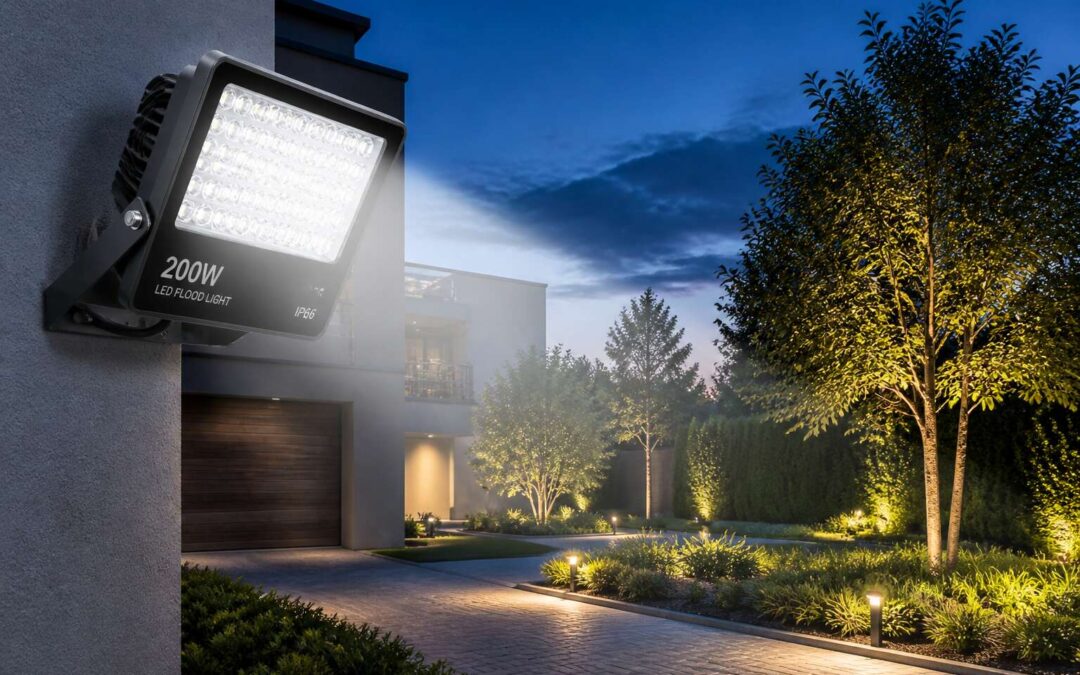
Decoding LED Flood Light Technology
How LED Flood Lights Differ from Traditional Lighting
Traditional lighting scatters its energy in every direction, generating heat and lost lumens. The led flood lights 200w represent a fundamental shift in how we produce and direct illumination. Instead of heating a filament until it glows, these fixtures use semiconductors to create light through electroluminescence. That difference reshapes energy consumption and maintenance.
Beam control offers another layer of distinction. Older bulbs spill light into the sky and into the eyes, creating glare without purpose. Modern LED optics shape each ray with precision, allowing a 200 watt unit to cover a parking lot or a loading bay with even, usable brightness.
- Instant response to switching
- No infrared or ultraviolet radiation
- Extended operational lifespan
This technology changes how we think about outdoor illumination, and I find that genuinely exciting!
The Importance of Lumens, Watts, and Efficacy
Consider this: a 200 watt fixture can emit 20,000 lumens, but the number that truly matters is efficacy. Lumens measure visible output, watts measure electrical input, and efficacy is the ratio between them. South African buyers often fixate on wattage, yet a higher efficacy rating delivers more brightness for every rand spent on electricity.
- Lumens tell you how much usable light you receive.
- Watts tell you how much power you consume.
- Efficacy tells you how efficiently the fixture converts one into the other.
For led flood lights 200w, an efficacy above 100 lumens per watt separates a sensible investment from an inefficient one. The most reliable specification sheets disclose all three figures. Without them, you are comparing guesses!
Understanding Beam Angles and Light Distribution
Beam angle determines the shape and reach of light from led flood lights 200w. A narrow beam of around 30 degrees concentrates light into a tight spot, ideal for highlighting facades or security perimeters. A wider beam, like 120 degrees, spreads illumination across parking areas or sports courts. The choice changes how the same wattage performs in practice.
Light distribution also depends on the reflector and lens design. Asymmetrical optics can push light forward while reducing spill. This matters when aiming at a wall from a close distance. Check the photometric data, not just the angle!
- 30 degrees for accent lighting
- 60 degrees for pathways
- 120 degrees for open areas
I prefer matching the beam to the mounting height and target distance. For led flood lights 200w, a wrong angle means dark zones or wasted energy.
Core Specifications of High-Power Fixtures
Color Temperature Options and Their Applications
One 200W LED flood light can cover a parking bay with enough light to make a security guard squint! That is the premise. Now, the specifications.
The core of any high power fixture is its thermal management. Die cast aluminum, finned heat sinks, and a driver that does not give up. Without these, the led flood lights 200w will fade quickly.
Color temperature is the selection criterion. Common options include:
- 3000K: warm, for entrances
- 4000K: neutral, for work areas
- 6000K: cool, for security perimeters
IP Ratings and Durability for Outdoor Use
The driver is the heart of the fixture, and it fails first when heat goes unmanaged. Die cast aluminum bodies and finned heat sinks pull thermal energy away from the chips. A reliable driver keeps the led flood lights 200w steady even when ambient temperatures spike, which matters under the African sun.
IP ratings tell you exactly how long the unit survives the elements. For South African outdoor conditions, look for at least IP65. That means dust-tight and protected against low pressure water jets. Coastal regions demand more, because salt air corrodes cheap hardware quickly. The gasket between the lens and housing is often the weak point.
Thermal management components to inspect:
– Finned aluminum heat sinks
– Isolated driver compartments
– Tempered glass lenses with rubber gaskets
Each part determines whether the fixture lasts one rainy season or ten years.
Lifespan Expectations and Lumen Depreciation
Beyond surviving the elements, the true measure of a led flood lights 200w fixture lies in its core specifications. Driver efficiency, typically 90% or higher, determines how much energy becomes visible light instead of waste heat. I find that optical design and chip binning influence output consistency more than raw wattage ever does.
Lifespan expectations center on the L70 rating. A quality unit maintains 70% of its initial brightness for at least 50,000 hours. Lumen depreciation, the gradual fading of light output, accelerates when internal temperatures exceed design limits. The components governing this decay are:
– High-grade LM80 tested LEDs
– Thermal interface materials between chips and heat sink
– Constant current drivers with low ripple
A well-built 200W flood light stays bright for a decade of normal South African use.
Heat Sink Design and Thermal Management
A LED flood light 200w generates more heat than most buyers expect. The chips convert only a portion of electricity into visible light; the rest becomes thermal energy. If that heat lingers near the junction, the light output drops and the colour shifts. I have seen sleek fixtures fail because their heat sink design focused on looks over physics.
Thermal management begins with surface area. Fins should be deep and spaced so air can pass through. The housing should be die cast aluminium, and the contact between the LED module and the sink needs a quality thermal paste. The driver also produces heat, so it should sit in a separate chamber.
- Extruded aluminium fins for maximum air flow
- Thermal interface material with low thermal resistance
- Driver placement away from the LED junction
An effective led flood lights 200w runs cool enough to touch after hours of operation. That tells you the thermal path is working for South African summers.
Practical Applications for Powerful Flood Lighting
Securing Commercial and Industrial Premises
In South Africa, over 70% of businesses report security incidents annually. Our led flood lights 200w transform dark corners into controlled zones. These fixtures illuminate perimeters, parking lots, and warehouse facades with consistent brightness. Proper lighting reduces hiding spots and assists camera systems.
I find these units most effective when aimed at critical access points. Consider these placements:
- Loading bays where goods transfer at night
- Fence lines that need continuous visibility
- Entry doors with keypad or biometric access
The led flood lights 200w cut through typical urban haze, giving security personnel clear sightlines. For industrial estates, mounting them on poles creates overlapping pools of light that eliminate shadow gaps. This approach works because darkness enables criminal activity. Removing it changes the entire risk equation.
Illuminating Sports Fields and Large Venues
Flood lighting transforms a pitch after sunset. At local rugby clubs in Gauteng, a single set of led flood lights 200w can turn a dusty field into a venue for evening matches. I have watched weekend games where spectators gather at the boundary ropes, the light spilling evenly across the grass. The effect is practical, not decorative.
Consider the requirements of a large venue:
- Uniform brightness across the playing surface to avoid dark patches where the ball can be lost.
- High mounting positions to reduce glare for players and spectators.
- Durable housings that withstand coastal winds and Highveld storms.
The led flood lights 200w deliver this without the staggering electricity bills of older metal halide units. For schools hosting inter-house athletics or churches running night markets, these fixtures offer reliable illumination that keeps events safe and visible.
Enhancing Residential Outdoor Spaces
Rugby fields and industrial yards get all the glory, but the humble driveway is where a `led flood lights 200w` fixture truly earns its keep. I am talking about transforming a dark, hazard-filled entrance into a welcoming stretch of concrete. Security is the obvious benefit, but the real charm is reclaiming your evenings. You can finally see the keys, the gate lock, and the mysterious object the dog refuses to approach.
Of course, with great wattage comes great responsibility. Here is a quick guide on what not to do:
1. Mounting the light at ground level to blind every passing motorist.
2. Aiming the beam directly into a neighbour’s bedroom window, declaring war without a formal declaration.
3. Using a 200w unit to illuminate a shoebox-sized courtyard, turning it into a police interrogation room.
Strike a balance. Use a motion sensor to keep the power in reserve, and angle the housing down to define walkways and architectural details. The intense, focused beam cuts through the darkness of a Highveld evening, ensuring the boma area or the pathway to the gate stays visibly clear of obstacles. It makes your property look intentional rather than merely lit.
Architectural and Facade Lighting Effects
The eye travels to light before it registers architecture. A well-placed led flood lights 200w unit transforms a blank facade into a composition of facets and shadows. The trick is aiming, not wattage. Graze the brickwork to reveal texture. Uplight columns to create rhythm. Downlight from eaves to define entry points.
Consider the geometry of darkness. Shadows are the design element most people overlook. A focused beam draws the eye to one tree or sculptural wall. It lends depth to a gable wall without flooding the street.
- Angle floodlights upward across stone or cladding to expose depth.
- Place units behind planters to hide the source.
- Use separate circuits for facade and security lighting.
That separation matters. Security lighting forces the eye toward the ground plane. Facade lighting invites the gaze upward. In South Africa, most properties mount security lights and ignore the facade entirely. A missed opportunity.
Agriculture and Horticulture Lighting Needs
Night falls on the farm with a particular weight. For the grower, darkness is not rest; it is lost yield. A led flood lights 200w unit cuts through the lowveld mist, extending the working day past sunset. Plants respond to light as a signal, and the right spectrum drives photosynthesis even when the sun has abandoned the field.
Greenhouses benefit from supplemental illumination during the short winter months. The led flood lights 200w fixture delivers intensity where it is needed. Poultry houses, too, rely on these beams. The light keeps laying cycles consistent. On a South African smallholding, this single fixture replaces old, failing halogen units that drew power and gave little back.
Installation and Setup Guidelines
Mounting Heights and Optimal Spacing
A misaligned fixture can waste up to 30 percent of its output. For a typical South African home, the recommended height for led flood lights 200w is 3 to 4 meters. Warehouse walls typically require 6 to 8 meters for wider coverage. Spacing depends on beam angle. A 120 degree lens allows 10 meter gaps, while a 30 degree spot needs 3 to 5 meters.
Here is a quick reference for common setups:
- Driveway entrances: 4 meter mounting height, 6 meter spacing.
- Backyard flood zones: 5 meter mounting height, 8 meter spacing.
- Perimeter walls: 3 meter mounting height, 12 meter spacing.
The right spacing also reduces dark patches and hot spots.
Wiring Considerations and Electrical Safety
Proper installation of led flood lights 200w begins with verifying the bracket’s load rating. A flimsy mount invites a costly tumble. Angle the housing before tightening, then test the beam pattern at night.
Wiring demands respect. Use a dedicated circuit, and match the cable thickness to the current draw. Waterproof glands are non-negotiable for outdoor junctions.
Electrical safety is where most DIY dreams die. Always switch off the mains at the breaker. Confirm the earth connection, and check for residual current devices. Here is a quick safety checklist:
- Isolate power before touching any terminal.
- Use rubber gloves and insulated tools.
- Inspect cables for rodent damage.
If this feels tedious, remember that a single spark could turn your garden into a bonfire. Trust a qualified electrician for anything beyond swapping a bulb.
Adjustable Brackets and Positioning Techniques
Getting the bracket right is half the battle. A 200w LED flood light carries real heft, and the mounting plate needs anchoring into brick or reinforced steel, not timber cladding. South African homes face high wind conditions, especially along the coast, so the bracket’s articulation points must be torqued properly.
Here is a sequence that works well on site:
- Mark the fixing holes with a spirit level, checking both planes.
- Drill with a masonry bit sized to the rawl bolts.
- Secure the bracket and test its swivel action first.
- Tighten adjustment screws only after positioning the light.
From there, most led flood lights 200w units allow a 180 degree sweep. Aim slightly downward to reduce glare for passersby. A narrow beam suits security corridors; a wider spread works for parking areas. Recheck the angle after rain, since wet surfaces reflect light differently.
Comparative Analysis with Alternative Wattages
Choosing Between 100W, 200W, and 400W Units
Choosing between 100W, 400W, or something in between is rarely about raw power. It is about matching output to the actual surface area and viewing distance. The led flood lights 200w typically deliver enough intensity for a standard suburban plot or a warehouse loading bay without the blinding wash that 400W units often create.
A 100W fixture suits short walkways and signage, while 400W versions belong on open fields or tall facades. The middle option works well for most South African properties, especially where municipal power supply varies.
Here is a quick reference:
- 100W: narrow paths, bollard areas, small courtyards.
- 200W: driveways, security perimeters, retail storefronts.
- 400W: sports pitches, large parking lots, industrial yards.
In practice, the led flood lights 200w offer a sensible balance, giving you a steady beam at a distance that covers most practical installations.
Replacing Older Halogen and Metal Halide Fixtures
Halogen and metal halide fixtures waste most of their energy as heat. A 400W metal halide lamp can draw enormous current while delivering less usable light than a modern led flood lights 200w unit. When I test these on site, the comparison is stark at the meter. That old 400W halogen floodlight on a Johannesburg warehouse might pull 4.5 amps. The LED replacement pulls less than half!
Consider the replacement path:
1. Remove the old capacitor and ignitor circuit entirely.
2. Verify the existing cable gauge can handle the reduced load.
3. Mount the new bracket using the same bolt pattern where possible.
The led flood lights 200w output maintains a stable colour temperature across its lifespan, whereas metal halide shifts from crisp white to a sickly green as the arc tube ages. There is no warm-up period either. The old fixture takes minutes to reach full output, the LED is at full intensity instantly.
Performance Differences in Real-World Conditions
On a typical Highveld summer afternoon, ambient temperatures push past 30 degrees. That is when the difference between wattages becomes visible. A 150W unit struggles to maintain brightness, while a 250W runs hotter than needed. The led flood lights 200w sits in a practical middle. It delivers steady output without excessive heat sink strain. Consider how these units behave under real conditions:
- Voltage drops on long cable runs affect lower wattages more severely.
- Dust buildup reduces performance faster on underpowered units.
In my experience, the 200W handles these variables better than alternatives. Its thermal headroom keeps light stable, and the driver copes with load changes. That makes it a dependable choice for South African sites.
Energy Consumption and Utility Bill Impact
Electricity tariffs in South Africa have risen over 200% in a decade. A 400W floodlight costs around R12 per night. The led flood lights 200w cuts that bill in half while still lighting a typical yard.
- 100W: low cost, but often too dim, so you buy a second unit.
- 200W: draws 2.4 kWh, around R6, with steady brightness.
- 250W: only 20% brighter, yet costs 25% more to run.
Wattage alone does not decide your utility bill. The 200W runs efficiently because its driver and heat sink manage power cleanly. Over a month, the difference between a 200W and a 250W barely shows on your property, but it shows on your utility bill.
Selection Criteria and Value Assessment
Evaluating Build Quality and Component Reliability
When you pick up an led flood lights 200w unit on a supplier’s shelf, the weight tells you something. A flimsy housing hides cheap internals, while a solid die-cast body suggests someone bothered with thermal design. You are buying light, but you are also buying components that keep that light alive past the warranty period.
Look for these markers of reliable build quality:
- Corrosion-resistant screws and gaskets that actually seal
- A driver with a brand name you can trace
- Lens material that doesn’t yellow after a season of Highveld sun
That driver matters most. It converts mains power and regulates current. A cheap driver fails quietly, taking the LEDs with it. Ask for the driver’s brand and expected life. The led flood lights 200w that costs R100 more upfront usually saves you a ladder climb and a replacement cycle later.
Warranty, Certifications, and Compliance Standards
A warranty tells you what the manufacturer expects from their own product. When a supplier offers five years on an led flood lights 200w unit, they know the failure rates. Read the terms. Look for what is excluded: surge damage, water ingress from poor installation, or cosmetic corrosion. Exclusions reveal where failures actually happen.
Certifications matter differently in South Africa. The SABS mark remains the baseline for electrical safety. An led flood lights 200w unit with a valid SABS certificate has passed testing. SABS is not the only mark worth checking:
- CE marking for European safety and EMC directives
- IP rating certification confirms the ingress protection claim
- IK rating shows impact resistance for ground level units
Compliance standards cover electromagnetic compatibility. A poorly filtered driver can interfere with nearby radio equipment. The test report, not the sticker, reveals how seriously the manufacturer treats compliance.
Comparing Price Points: Budget vs. Premium Options
The gap between a budget and a premium led flood lights 200w unit is rarely about brightness. It is about what happens after the first thunderstorm, the first summer of load shedding, and the first year of coastal air. That is where the real money sits!
When comparing price points, check:
- Driver brand and efficiency rating
- Thermal interface material quality
- Surge protection rating
- Documented failure rates
A premium unit uses a constant current driver that stays cool under load. A budget unit relies on a cheaper capacitor that degrades within a year. In coastal regions like Durban, salt-laden air attacks cheap aluminium housings quickly. The electricity bill and the replacement cycle expose the true cost.
Smart Features: Dimmers, Sensors, and Remote Controls
A flood light that never adjusts is a flood light that wastes money. I have seen led flood lights 200w installations where the sensor caused recurring problems. Smart features adapt output to usage patterns. Dimmers cut light during quiet hours, sensors trigger on movement, and remote controls remove the need for ladders. Check the dimming range, usually 10 to 100 percent. Verify the sensor’s detection angle and false trigger immunity. IR remotes need line of sight, while RF works through walls.
Selection criteria include:
- Dimmer compatibility with existing wiring
- Sensor timeout adjustability from seconds to minutes
- Remote receiver protection against moisture and spikes
Every smart feature adds a failure point. A cheap sensor on a 200W flood light causes random switching all night! Invest in a reputable controller with a warranty covering electronics.
Calculating Return on Investment Over Time
Selection hinges on more than initial price. The driver, the internal power supply, determines how well led flood lights 200w tolerate voltage fluctuations common in South Africa. A robust driver with surge protection prevents premature failure. The fixture’s thermal path also matters, as sustained high temperatures shorten component life. LM-80 and TM-21 data from suppliers help calculate the payback period.
- Luminous efficacy in lm/W provides a direct performance comparison.
- Warranty length and electronics coverage reveal manufacturer confidence.
- Surge immunity and vibration test reports indicate reliability in the field.
Value assessment starts with the led flood lights 200w purchase price, then projects lifespan and energy cost. At a commercial tariff of R2.50 per kWh, running one unit ten hours daily costs roughly R150 monthly. Replacing a 400W halogen halves consumption while delivering comparable light. Over a 50,000 hour lifespan, accumulated savings can exceed ten times the purchase price.
Reading Specifications Like a Pro: A Quick Checklist
Specifications disclose performance. Before you commit to any led flood lights 200w, read the datasheet carefully. It reveals longevity and output.
Start with thermal resistance values. They predict survival in Durban’s humidity or Johannesburg’s dry heat. Then examine the driver’s operating temperature range. A wide range signals resilience.
Check these essentials:
- Luminous intensity distribution curves
- Photometric reports from independent labs
- Expected lumen maintenance at 25°C ambient
Each figure matters. The led flood lights 200w that look identical on the outside often diverge wildly in these numbers. A cheap fixture may quote a high initial output, but its degradation curve slopes quickly. Meanwhile, a better unit holds steady. Pay attention to the small print, because that is where the value hides.