
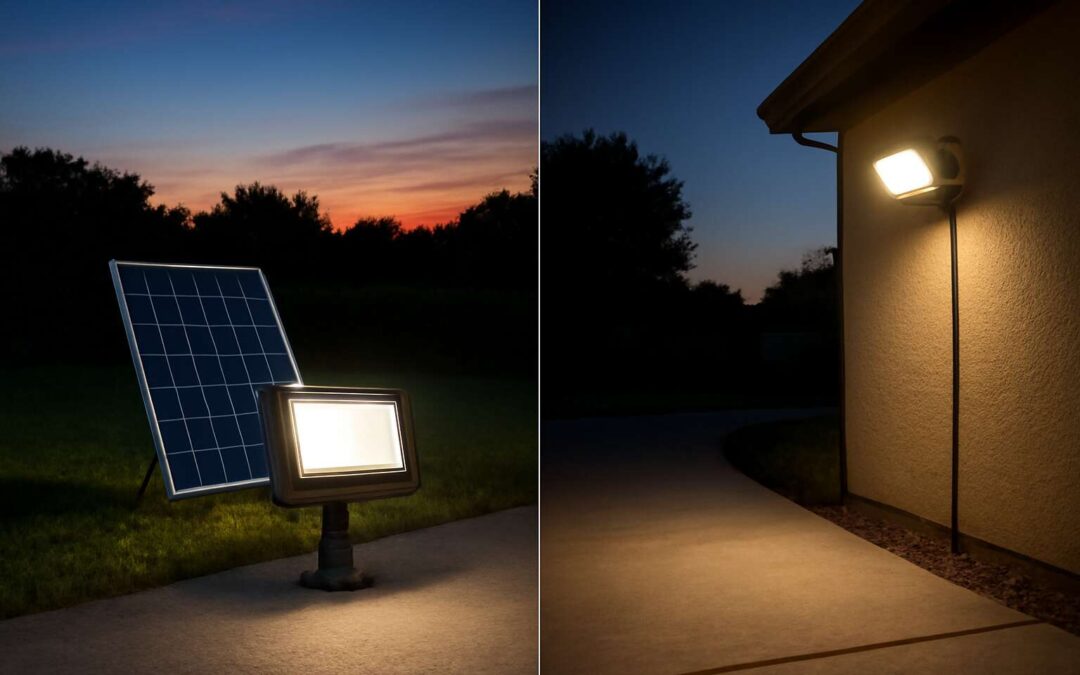
Comparing Solar and Electric Flood Lights: A Practical Guide
Section 1: Energy Sources and System Design
Power cuts shape every garden’s glow in South Africa; regional surveys peg daily outages at roughly four hours in many towns. I’ve watched homeowners weigh solar flood lights vs electric not as a gimmick but as a design choice that frames safety, ambience, and resilience. As one installer puts it, “Light is safety when the grid falters.”
Section 1: Energy sources and system design shows solar relies on sun exposure, battery capacity, and smart control, while electric setups depend on a steady mains supply and robust wiring. The best option reflects the site’s sun—east or west-facing angles, scattering shade, and the cadence of evening activity.
Consider these factors:
- PV panel orientation and shading
- Battery size and charging cycles
- Control logic for dusk-to-dawn illumination
Section 2: Performance, Coverage, and Reliability
In South Africa, a four-hour outage isn’t rare—it’s a test in real time. “When the grid falters, brightness becomes resilience,” an installer notes, and that mindset filters into every yard’s lighting plan.
Comparing solar flood lights vs electric, performance, coverage, and reliability hinge on how the system behaves across a night that might or might not be sunny. Solar relies on battery health and smart control to sustain even coverage, while electric depends on a continuous mains feed to stay bright. The true test happens when shade shifts, winds rise, or rain closes the sky.
- Coverage consistency across angles and zones
- Recovery speed after dusk and partial shade
- Maintenance needs under SA climate
Light is more than wattage here; it is a quiet covenant between space, power, and time.
Section 3: Costs, ROI, and Financial Considerations
In the ledger of outdoor lighting, the true cost isn’t the sticker; it’s the lifetime bill. When you compare solar flood lights vs electric, the question becomes: how soon does the savings appear? Solar systems demand a higher upfront investment but promise minimal running costs, while electric keeps paying with every dusk, outage, and gust.
- Upfront equipment and installation costs
- Operating expenses, energy tariffs, and grid dependency
- Maintenance demands, battery or lamp replacements, and warranty coverage
- Resilience value during outages and potential incentives
ROI is rarely boring; two to five years is a typical horizon, shaped by sun hours, battery health, and policy incentives. In SA, incentives can tilt the balance toward solar flood lights vs electric, turning quiet daylight into a financial ally after sunset.
Section 4: Installation, Sizing, and Compliance
Two minutes of sun can fuel hours of illumination, a startling truth that anchors Section 4: installation, sizing, and compliance. The dialogue of solar flood lights vs electric shifts from theory to form: light that follows the sun versus light that answers the switch. Begin with the site: where the sun strikes, how shadows fall, and what dawns when night curtains the landscape.
Sizing a system is a dialogue between need and resilience. Solar options lean into thoughtful battery capacity and efficient optics; electric setups prize predictable dusk-to-dawn performance and seamless grid access. In South Africa, compliance with local bylaws and electrical standards guides placement, wiring, and isolation so every beam serves with safety and grace.
- Sun exposure mapping for solar flood lights vs electric scenarios
- Appropriate mounting heights and wind-rated housings
- IP ratings, weather sealing, and water ingress precautions
- Wiring access, isolation, and warranty coverage considerations
Section 5: Use Cases, Pros, Cons, and Trends
Use-case realities drive the debate over solar flood lights vs electric. In South Africa, reliability, maintenance, and total cost of ownership shape choices for yards, campuses, and townships. When illumination meets practicality, the comparison becomes less abstract and more consequential.
Key use cases include:
- Perimeter security and access points
- Public spaces and pedestrian zones
- Remote sites and rural facilities
- Parking lots and industrial yards
Pros for solar favor low operating costs and off-grid resilience; cons include weather dependency and battery aging. Electric lighting offers predictable dusk-to-dawn performance and easier integration with existing grids, but with ongoing energy costs and infrastructure needs.
Trends continue to tilt the scales as technology tightens the gap. solar flood lights vs electric remains a lively choice, with better solar panels, smarter controls, and hybrid solutions expanding where off-grid setups win on a promise of reliability and sustainability.