
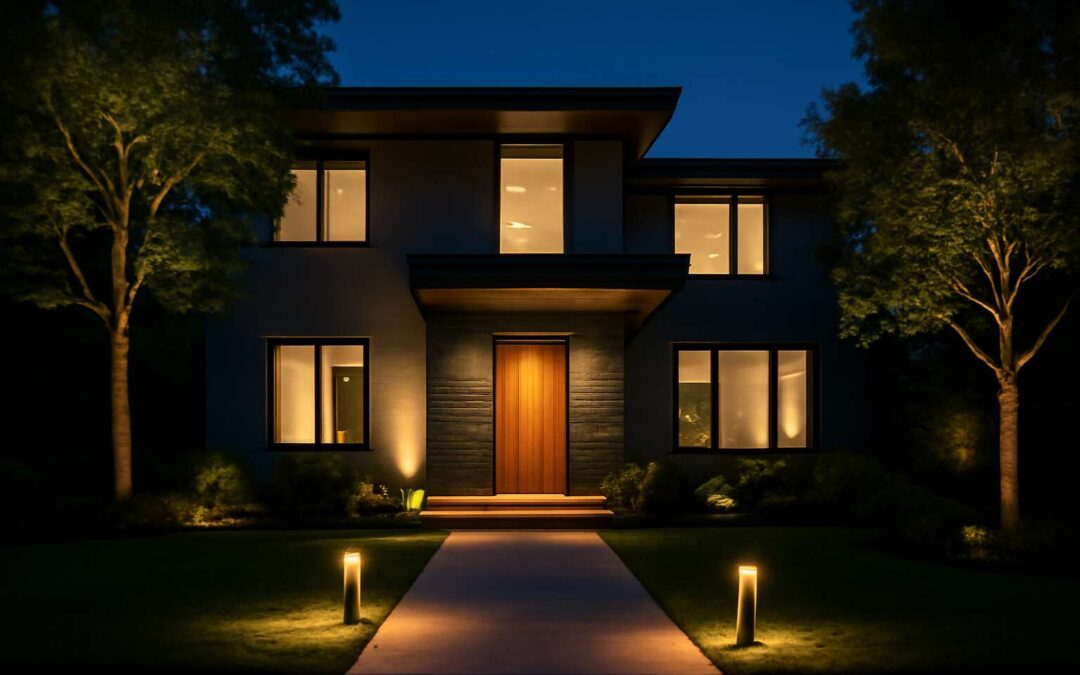
Outdoor flood light placement fundamentals
Define lighting objectives to balance security, safety, and curb appeal
A sharp flood light plan cuts through the night with purpose. Where should you put flood lights is less about brute brightness and more about objectives that balance security, safety, and curb appeal.
Define the goals: deter intruders, illuminate routes, and highlight architecture—without glare or spill. Here are essentials to guide placement:
- Security: cover entry points and gates
- Safety: light stairs, ramps, and verandas
- Curb appeal: accent architectural features and landscape edges
- Efficiency: minimize energy use and light trespass
With that framework, the answer becomes clear—functional, friendly, and visually cohesive for South African homes.
Assess landscape features and architectural elements to guide positioning
Light is a quiet sentry. A well-placed flood light can extend safety and curb appeal without washing out detail. So, where should you put flood lights? Position them to reveal entry points and pathways, while curbing glare. Assess landscape features and architectural lines to guide positioning—eaves, gates, steps, and façade contours tell you where to aim.
- Entry routes and gates, to deter and signal presence
- Stairs, ramps, verandas for safe, even illumination
- Architectural features and landscape edges for depth and cohesion
Light in layers helps the eye move through spaces. Ground-level washes soften the base, mid-height accents sculpt features, and higher beams pull architectural lines forward. Glare and spill are a consideration; beam control helps maintain harmony with surrounding spaces. In South Africa, a balanced approach preserves safety and ambiance through long evenings without washing out architecture.
Understand beam spread, wattage, and color temperature basics
“Light is a quiet sentry,” the saying goes, and in South Africa’s long evenings that sentiment feels true. So where should you put flood lights? The question blends purpose and poise, revealing entry points with gentle vigilance, and I notice how the night softens around stone and stucco while glare stays at bay.
Understanding beam spread matters: a narrow beam grips a doorway with precision; a wide wash welcomes a path; walls can be sculpted with a controlled wash to avoid hot spots.
- Beam spread: narrow for entries, wide for pathways, wall-washing for architecture.
- Wattage and lumens: measure brightness by lumens to balance coverage and efficiency.
- Color temperature: warm 2700–3000K for hospitality, 4000–5000K for clarity.
In the end, the right mix guides eyes, shapes space, and preserves the romance of dusk.
Plan for glare reduction, neighbor considerations, and compliance
Night approaches with a quiet pulse; a home gains character as shadows yield to purpose. The phrase “where should you put flood lights” informs the plan, guiding eye movement without blinding the street.
Plan for glare reduction, neighbor considerations, and compliance to shape the layout. The same question—where should you put flood lights—becomes a balance of angles, height, and respect for South Africa’s night skies and the street’s quiet hours.
- Glare reduction, sightlines, and harmonious night glow
- Neighbour considerations across property lines and streets
- Compliance with local by-laws and dark-sky guidelines
A well-placed glow feels inevitable, yet it remains a careful, almost supernatural ally in the dusk.
Placement by area and purpose
Entrances and walkways: enhancing visibility and safety
After dusk, entrances become theater stages for safety and welcome. In South Africa’s warm evenings, a single glow can extend the living space beyond doors and windows. Studies show well-lit entrances reduce accidents and deter unwelcome visitors. That question lingers: where should you put flood lights to guide footsteps and deter shadows? The answer begins at areas that meet street and door—places where people pause, unlock, and step inside.
- Front door canopy and porch perimeters to create a welcoming beacon.
- Path edges and handrails: line of sight along walkways.
- Stair landings and transitions: highlight steps to prevent trips.
- Corner pockets and landscaping silhouettes: minimize hidden corners.
Done well, entrances glow with a welcome that feels both safe and stylish, a threshold where hospitality and vigilance meet under the South African dusk. The right balance makes every evening feel like a homecoming rather than a worry.
Driveways and garages: improving access and deterrence
Light the path to security—driveways and garages are prime blind spots after dark. In South Africa, a well-lit approach speeds entry and deters intruders. So, where should you put flood lights to guide footsteps and deter shadows? The answer starts with the drive itself, then the garage doorway, then the edges that reveal boundaries and space.
- Above the garage door, angled to sweep the driveway
- At gate corners to cover entering angles
- Along the driveway line to illuminate approach and curb appeal
- On a high wall facing the drive to reduce glare and shadows
Keep brightness modest at the edges to avoid glare into neighbors’ homes. Use motion sensors to conserve energy while maintaining deterrence.
Patios and decks: creating ambiance with functional lighting
Patios and decks are the social heart of a South African home, where conversations linger and braai aromas drift into the night. This is the question: where should you put flood lights, and the answer lies in shaping atmosphere as much as ensuring safety.
Placements to consider include:
- Over railing or along the edge to wash the deck surface with a gentle, even glow
- Above dining zones to illuminate meals without creating harsh shadows
- At steps and transitions to guide feet on dark evenings
- Near focal plants or sculpture to add depth and drama
Opt for warm white tones, dimmable drivers, and fixtures rated for SA weather to preserve comfort as the seasons turn.
Gardens, trees, and facades: highlighting features without oversaturation
Night settles, and the garden reveals its secrets. Light becomes the storyteller, tracing trunks, textures, and edges with a quiet precision. “Light is architecture you feel,” an industry veteran once said, and the sentiment echoes as shadows soften and features emerge with graceful restraint.
— where should you put flood lights — for gardens, trees, and facades: highlight features without oversaturation. Consider these placements:
- Graze trunks and sculptural branches to reveal form with soft elevation
- Wash walls, hedges, and façades to illuminate texture while avoiding glare
- Spot focal plants or statues to add depth and guide the eye
In a South African setting, select fixtures that blend with the season, delivering a restrained glow that welcomes night rather than conquers it. The effect is a perimeter that breathes with the landscape, inviting twilight to linger just a moment longer.
Technical guidelines for mounting and angles
Optimal mounting height and tilt for even coverage
Lighting, done right, cuts through darkness like a stage spotlight. Technical guidelines for mounting and angles turn what could be a blunder into a balanced wash of light. When you plan, think height, tilt, and alignment in equal measure; the aim is even coverage that highlights paths and features without blasting neighbors or the night sky. For South African homes, practical heights and downward tilts help you avoid glare and skyglow while delivering security and curb appeal.
One guiding question is where should you put flood lights, so start with entrances, driveways, and salient façades, then fine-tune height and tilt for the space.
- Optimal mounting height: 2.5–4 meters; adjust for terrain.
- Tilt for even coverage: 15–40 degrees downward.
- Shielding: use full-cutoff fixtures to curb glare.
- Mounting options: wall, columns, or eave mounts.
Calculating angles for different beam patterns
One well-aimed flood light can turn a shadowed facade into a narrative—security, welcome, and beauty all at once. A common question is where should you put flood lights; the answer isn’t a single spot but a choreography of angles, height, and intent that reads the night rather than fights it.
Technical guidelines for mounting and angles start with understanding beam patterns. Calculating angles for different beam patterns means matching the spread to the feature, the distance, and the observer’s line of sight, not merely chasing brightness.
To illuminate choices, think in beam patterns:
- Wide wash for facades and paths
- Narrow spot for highlight features
- Asymmetric patterns to sculpt textures
In South Africa, guard against glare and skyglow with full-cutoff fixtures and mindful height—so the night remains a partner, not an adversary.
Rational calculations respect distance, height, and target textures, shaping a space that feels inevitable rather than lit by accident.
Avoiding backlighting and glare toward windows and neighbors
In South Africa, studies show a well-lit exterior can deter intruders by up to 20%, turning a facade into an invitation rather than a threat. So where should you put flood lights? The answer lies in mindful mounting and thoughtful angles that respect neighbors and windows as well as your own spaces.
Technical guidelines for mounting and angles begin with full-cutoff fixtures and controlled tilt to keep beams off glass. Position lights high enough to avoid glare, yet low enough for even coverage. A concise list helps:
- Choose full-cutoff fixtures to reduce skyglow
- Mount above eaves, aiming beams downward
- Aim away from windows and neighboring properties
- Use shields or diffusers for softer transitions
This approach maintains privacy, supports safety, and preserves the night as a partner in beauty.
Cable routing, weatherproofing, and durability considerations
Where should you put flood lights? The question unfurls like a map—cables tucked along the house, fixtures weatherproof as seasoned armour, and beams angled to flatter architecture while warding glare. This slice of guidance centers on cable routing, weatherproofing, and durability, ensuring your lights perform across summers, storms, and the quiet hours of night.
Treat cable routing as threading a loom: keep runs tidy, embed them in conduit where possible, and anchor them to structure away from walkways. Weatherproofing is non negotiable—outdoor-rated enclosures, rubber gaskets, and UV-stable cable protect the system from the elements. Durability rests on corrosion-resistant hardware and robust seals that resist sun, rain, and the occasional curious neighbour.
- Outdoor-rated cable and weatherproof connectors
- Conduit or trunking to shield runs
- Corrosion-resistant hardware and stainless fasteners
- Ventilation or heat management for enclosed fixtures
Together, these choices keep your exterior luminous without sacrificing resilience, turning a yard into a confident stage for night-time beauty.
Choosing between solar and wired options, including tradeoffs
Light is theatre for the outdoors, not a bonfire of vanity. In South Africa, night security and curb appeal share the same frame, so this isn’t about wattage alone. This brings us to the question: where should you put flood lights.
Technical guidelines for mounting and angles: use sturdy, corrosion-resistant hardware on walls or eaves; tilt to steer beams away from windows and toward walkways. Choosing solar or wired is a trade-off: solar is quick and cable-free but sun and battery-dependent; wired delivers steady output but needs conduits and weatherproofing.
In SA, outages push reliability to the foreground. Trade-offs:
- Solar: quick install and clean lines, but limited by sun and battery capacity.
- Wired: steady performance and future-proofing, but requires trenching and robust weatherproofing.
Energy efficiency, color temperature, and compliance
Selecting color temperature for outdoor ambiance and safety
A bright idea gains traction when it respects the night. In South Africa, outdoor lighting can trim energy waste by nearly a third while heightening security. So, where should you put flood lights to balance impact, efficiency, and civility?
Energy efficiency hinges on LED fixtures and thoughtful design that respects the dark. Favor high lumens-per-watt and well-shielded optics to illuminate paths with clarity rather than glare, preserving the night’s quiet charm.
Color temperature selection for outdoor ambiance and safety matters. For entrances, 2700K warm white; for perimeters, 3500K neutral white; for edges, 4000K cool white.
- 2700K warm white for hospitality and soft shadows
- 3500K neutral white for balanced contrast
- 4000K cool white for crisp edge definition
Compliance, after all, keeps the peace: respect local bylaws on light trespass and glare, shield beams to avoid shining into windows, and maintain courtesy toward neighbours.
Understanding lumens, efficacy, and runtime requirements
Illumination should bend to efficiency and atmosphere. In South Africa, wise LED choices trim energy waste while heightening security. So, where should you put flood lights to balance impact and restraint?
Energy efficiency hinges on lumens, efficacy, and runtime. Opt for high lumens-per-watt and well-designed optics to light paths clearly without glare. Knowing runtime helps avoid unnecessary consumption while maintaining dependable night coverage.
- Lumens describe brightness; it’s about light output, not power alone
- Efficacy equals lumens per watt; higher is more efficient
- Runtime is how long the fixture runs; plan per-night usage
Color temperature matters for mood and readability. For entrances, 2700K warmly welcomes; for perimeters, 3500K neutral white; for edges, 4000K cool white defines detail. Compliance remains essential: respect bylaws, minimize glare toward windows, and foster neighbourly peace.
Incorporating motion sensors and smart controls for energy savings
Night in a small South African town carries its own poetry, and a well-placed flood light can be the stanza that keeps it safe. A local designer reminds us: “Light should grant safety without shouting into the neighbours’ windows.”
Energy efficiency hinges on lumens, efficacy, and runtime. Opt for high lumens-per-watt and well-designed optics to illuminate paths clearly without glare. Motion sensors and smart controls turn on only when needed, trimming waste while keeping the precinct watched.
- Motion sensors that react to activity
- Smart controls for zone-based scheduling
- Timers to cap nightly runtime
Color temperature matters for mood and readability. At entrances, 2700K; for perimeters, 3500K; for edges, 4000K. Compliance remains essential: respect bylaws, minimize glare toward windows, and foster neighbourly peace. This is precisely about where should you put flood lights.
Permits, codes, and standards relevant to outdoor lighting
Night in a South African town hums with quiet poetry, and a well-placed flood light is its stanza. Energy efficiency blooms where lumens-per-watt climb and beam optics kiss the ground without spilling into windows. Timers and smart controls trim waste while keeping watch. So, where should you put flood lights? The answer rests on intention, not bravado, balancing safety with neighbourly peace.
- Permits and approvals: secure municipal clearance before any outdoor lighting work.
- Codes and standards: align with electrical and environmental benchmarks to minimize glare.
- By-laws on glare and light trespass: respect property lines and night skies.
Color temperature guides mood and readability: entrances invite warmth around 2700K, perimeters feel comfortable at 3500K, edges gain crisp clarity near 4000K. Compliance remains essential: observe permits, codes, and standards, and ensure fixtures are weatherproof and downward-facing.
Design considerations and best practices
Minimizing light pollution and embracing dark sky friendly designs
The night isn’t a backdrop; it’s a shared resource, and overlighting it erodes our skies. In urban South Africa, residents are increasingly demanding designs that favor privacy, safety, and a view of the stars rather than glare that travels beyond the property line.
Design considerations hinge on shielding and downward focus, using warm, low-intensity light, and selecting fixtures with tight beam control. Subtle lighting that accentuates pathways or features without spilling into neighboring yards keeps rhythms of the night intact and wildlife undisturbed.
The question where should you put flood lights remains central, and the answer is less about brute brightness and more about placement that respects dark-sky principles while preserving function, curb appeal, and a humane relationship with the surrounding environment.
Seasonal maintenance, cleaning, and bulb replacement tips
Seamless integration with landscape and architectural features
Night is a sculptor, and in South Africa the right glow can turn brick and timber into living sculpture. “where should you put flood lights,” a question that seeks harmony over noise, lies at the heart of design—an unseen breath that guides eyes to entrances and edges without shouting. I relish how a single glow reveals texture, mood, and welcome, turning a facade into something that feels alive as dusk lengthens.
- Anchor light at architectural cues and pathways
- Emphasize plant textures and stonework with careful contrast
- Highlight focal elements such as statues, water features, or sculptural walls
Fixtures with subdued finishes, soft whites, and shielding that keeps the night intact. Let the setting dictate placement, and light will become a quiet partner in the story of the property.